
Why Kenya’s AI ambitions now Depend on new internet infrastructure

Audio By Vocalize
Seacom, the Mauritius-headquartered firm that launched Africa’s first private subsea fibre optic cable in 2009, is planning the project, which is expected to be completed in 2030. With Mombasa as the main landing point for East Africa’s internet traffic, Kenya’s AI plans rely on how much capacity reaches its coast.
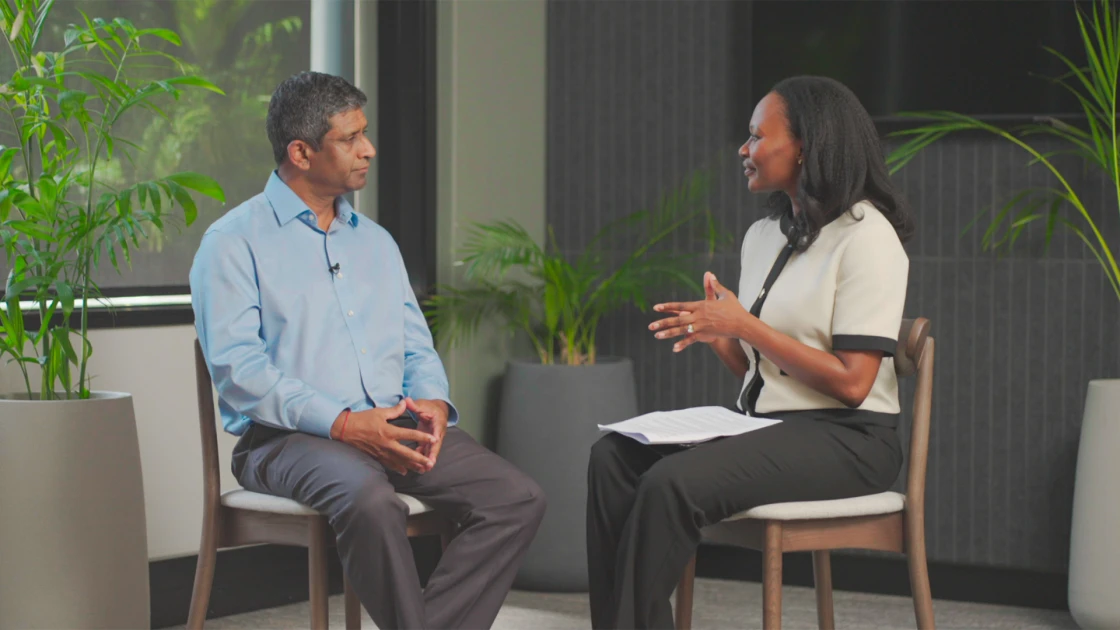
Speaking recently on BBC Africa Enterprise, Seacom Chief Technology Officer Prenesh Padayachee said the Indian Ocean basin is “fairly devoid of connectivity and very little subsea cables in that area” compared with the routes between Europe and North America.
The reason this matters now is that AI needs more connectivity than the existing subsea cables were built to carry.
“What you are going to find is that AI will drive high speed connectivity in a very elastic way,” Padayachee told the show host Nancy Kacungira. “So, not what we typically have in a home today, but now you’re looking at 10s or hundreds of gigabits of capacity. If you look at the cables that exist today, that technology won’t run on those older cables. So, we’re building a newer cable with newer technology that allows us to have high speed connectivity.”
Seacom is not the only company building its own cables. Hyperscalers such as Google and Meta are laying theirs too, which Padayachee said lets them “drive down the cost for their connectivity”, the same approach Seacom has followed since 2009.
Demand is already building in Kenya, where banks and tech startups are deploying machine learning that puts more load on the networks carrying their data. Yet the regulatory picture remains unsettled: a Senate committee has rejected the Artificial Intelligence Bill 2026, saying its penalties and regulatory reach would stifle local startups. With the bill stalled, the physical network matters more to delivering the National Artificial Intelligence Strategy 2025 to 2030, a five-year plan to position Kenya as Africa’s leader in AI innovation.
For Kenyan businesses, the shift to AI-ready networks will shape the cost, speed and reliability of the internet.
More capacity also means more sensitive data moving across borders, which increases exposure to cyber threats for banks, telcos and government agencies as they digitise. The Communications Authority of Kenya reported that distributed denial-of-service (DDoS) attacks surged by 114.3% to 72.16 million in the year to June 2026. On 2 November, Kenya inaugurated the board of its new National Cybersecurity Agency, which is tasked with protecting critical information infrastructure.
The companies that build and run the cables face the same threats, and Padayachee said Seacom is now looking at post-quantum cryptography to stay ahead of them.
“So, we’re using quantum physics, or we’ll start to use quantum physics, to encrypt data,” he said. “Cyber criminals will continue to be there and all of these threat actors will continue to be there. It’s about being one step ahead of them.”
Looking ahead to 2030, Padayachee said he hopes the cable will help change how connectivity is viewed across the continent.
“I think it’ll go part of the way to unleash the African continent,” he said. “For many, many years I said connectivity should be considered as an essential service, similar to electricity and water. If you start to look at it like that, you’ll then start to understand that this has become the lifeline for many things people can’t do.”
Until the cable is complete in 2030, Kenya’s AI ambitions will depend on networks that were not built for the capacity AI demands.
Join the Discussion
Share your perspective with the Citizen Digital community.
No comments yet
This discussion is waiting for your voice. Be the first to share your thoughts!