
WHO recommends new, improved treatment for Kal-azar
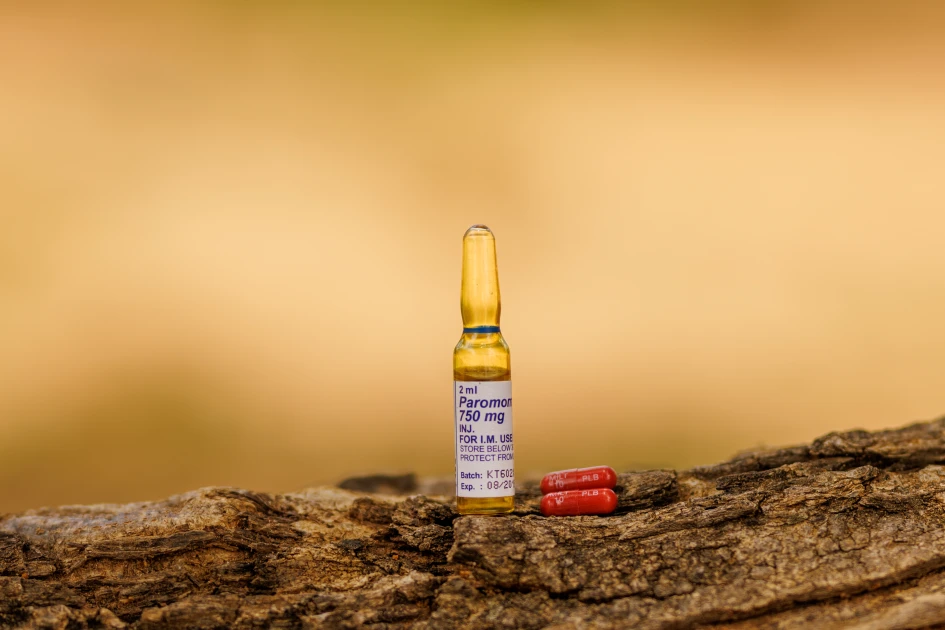
Paromomycin (PM) vial and miltefosine (MF) capsules. Photo: Handout/ Lameck Ododo-DNDi

Audio By Vocalize
In a statement released on Monday, WHO described Kala-azar as the world’s deadliest parasitic killer after malaria, which is transmitted through the bite of an infected sandfly. WHO revealed that the disease is endemic in 80 countries, with only 25% to 45 percent of over 50,000 cases reported to them.
The evidence behind these new guidelines came from clinical trials, including those conducted at Kacheliba Sub-County Hospital in Kenya led by the Drugs for Neglected Diseases initiative (DNDi) in partnership with the Ministry of Health and other partners. Trials were also conducted in Uganda, Ethiopia, and South Sudan.
According to the organisation, high fever, weight loss, anaemia, spleen and liver enlargement are some of the symptoms of Kal-azar which may lead to death if not treated.
The updated guidelines include alternative, shorter and safe treatment of primary VL in East Africa, relapse management in immunocompetent VL patients in South-East Asia and an update to the safety profile of miltefosine, incorporating the recommendations of the WHO Advisory Committee on the safety of Medicinal products, also providing allometric dosing for miltefosine.
“For a long time, treatment in Africa relied on an injectable drug called sodium stibogluconate (SSG), which requires lengthy treatments and painful daily injections and caused severe side effects.” read the statement in part.
The WHO has noted that it is the first time to recommend SSG-free regimen; however, it remains in use for patients who are not eligible for the newly recommended treatment options. In East Africa, WHO has advised the use of an oral drug, miltefosine, for the treatment of both VL and PKDL in combination with paromomycin injection.
However, in South East Asia, shorter combination therapies using liposomal amphotericin B infusion alone or in combination with oral miltefosine are recommended for PKDL patients. The new VL treatment in East Africa is given over 14 days with one injection and less toxicity compared to the current administration of two injections over 17 days.
WHO now believes that the new recommendations will replace the lengthy and cumbersome treatments for chronic PKDL that took over 30 days with toxic sodium stibogluconate and over 20 days with liposomal amphotericin, offering relief to the patients.
Leishmaniasis is a treatable and curable disease whose treatment depends upon several factors including the type of disease (clinical form), immune status of the patient, species of parasite causing it, concomitant pathologies and geographic location.
Join the Discussion
Share your perspective with the Citizen Digital community.
No comments yet
This discussion is waiting for your voice. Be the first to share your thoughts!