
Who are the Iraqi armed militants hit by US-Saudi strikes?
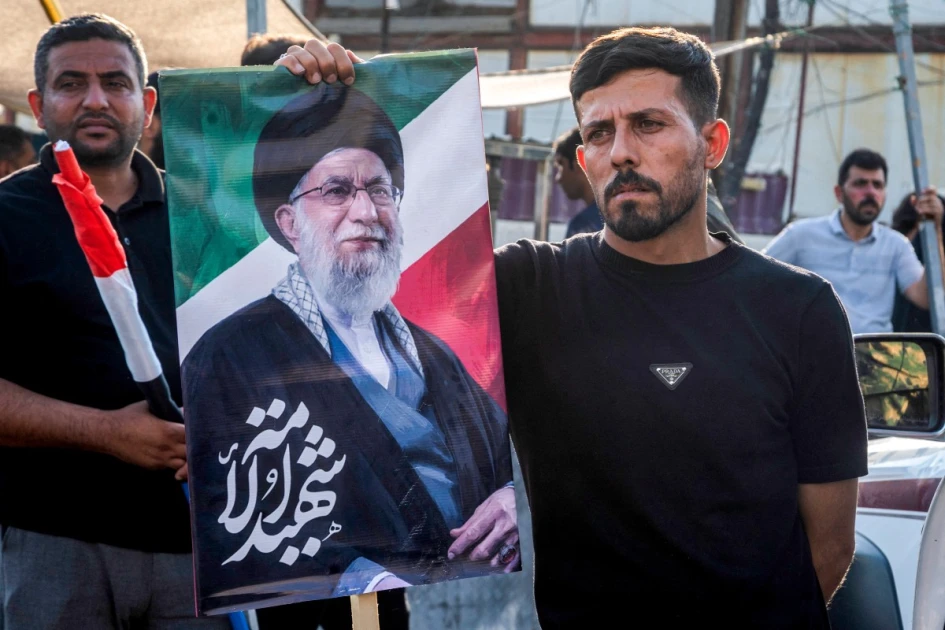
A mourner stands with a sign depicting Iran's slain supreme leader Ali Khamenei with text in Arabic reading "the martyr of the nation", during a funeral for members of Iraq's Hashed al-Shaabi, or Popular Mobilisation Forces (PMF) who were killed earlier in Diyala in central Iraq by US-Saudi strikes, in Baghdad on July 29, 2026. Photo by MURTADHA RIDHA / AFP

Audio By Vocalize
The United States and Saudi Arabia on Wednesday struck
positions belonging to the Hashed al-Shaabi, an armed Iraqi alliance including
powerful pro-Iran groups that have long threatened Washington.
The Hashed al-Shaabi, also known as the Popular Mobilisation
Forces (PMF), is a network of Shia-majority factions that was established in
2014 to fight the Islamic State group.
It was formed following a fatwa from Ayatollah Ali
al-Sistani, the highest Shia Islamic religious authority in Iraq, at a time when
IS was conquering swathes of the country.
Pro-Iran armed groups heeded the call and were also joined
in the fight by Iraqi volunteers from across the country.
The Hashed forces were mostly trained by Iranians and led by
Tehran-backed armed groups, which fought American forces after the US-led
invasion that toppled former ruler Saddam Hussein in 2003.
Their efforts were overseen by General Qasem Soleimani, the
former head of the Quds Force, the foreign operations arm of Iran's Islamic
Revolutionary Guard Corps.
Soleimani was killed in an American strike in Baghdad in
2020.
In 2016, a law integrated the Hashed into the regular
security forces, and a year later the alliance contributed to IS's defeat by
the Iraqi army, which was supported by the US-led anti-jihadist coalition.
The US has held major sway in Iraq since its 2003 invasion.
But Iran has also built its influence and seen its Shia allies installed in
Baghdad's halls of power.
- Groups loyal to Iran -
Today the Hashed encompasses dozens of groups, including
brigades belonging to powerful pro-Iran armed factions, which are blacklisted
as terrorist organisations by the US.
Some factions face accusations of collecting government
salaries for their fighters while acting independently of the state.
Over the years, they have seen their clout grow, with some
gaining seats in parliament, even as several group leaders, including the
Hashed's top commander, have been subjected to US sanctions.
Several pro-Iran groups are also part of the Islamic
Resistance in Iraq alliance, which has claimed hundreds of attacks against US
facilities in Iraq and the region during the Middle East war.
They pledge their allegiance first and foremost to the
Tehran-led "axis of resistance", which includes Lebanon's Hezbollah,
Hamas in Gaza and Yemen's Houthis.
The most active among them are Kataeb Hezbollah, which has
long spearheaded attacks on US interests in Iraq, and over the years has lost
key commanders in American strikes.
They also include Kataeb Sayyid al-Shuhada and the al-Nujaba
movement.
In some cases, these groups are present on Hashed al-Shaabi
bases. But they also have their own bases, arm depots and workshops, mostly for
making drones.
The groups mainly rely on explosive-laden drones but also
possess rockets, and are believed to have short-range ballistic missiles.
Join the Discussion
Share your perspective with the Citizen Digital community.
No comments yet
This discussion is waiting for your voice. Be the first to share your thoughts!