
What is Mini LED? Three things to check before buying your next TV
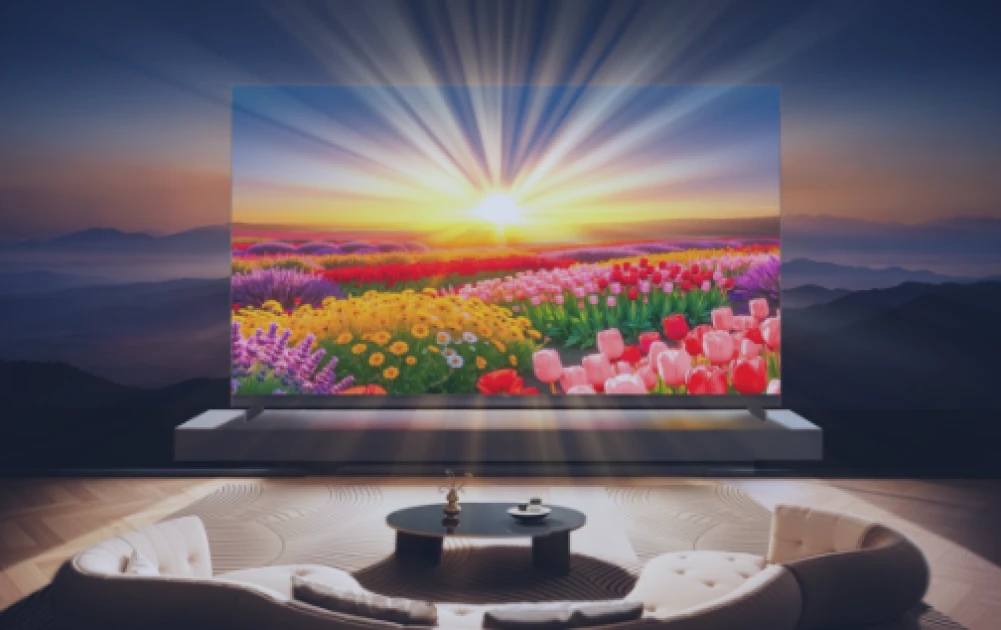
But while the technology has become a major selling point, not every television carrying the Mini LED label delivers the same picture quality.

Audio By Vocalize
But while the technology has become a major selling point, not every television carrying the Mini LED label delivers the same picture quality.
According to electronics manufacturer TCL, understanding what goes on behind the screen could help consumers make more informed decisions before spending thousands of shillings on a new television.
Mini LED technology uses significantly smaller light-emitting diodes (LEDs) than those found in conventional LCD television backlights.
These smaller LEDs allow manufacturers to fit more light sources behind a screen, improving their ability to control brightness and contrast.
Unlike conventional LCD televisions, where large portions of the screen may be illuminated together, Mini LED televisions can divide the backlight into independently controlled sections known as dimming zones.
This allows darker parts of an image to remain relatively dark while brighter areas receive more illumination, producing richer contrast and revealing details that might otherwise be lost in shadows.
However, TCL says the Mini LED label alone does not guarantee superior picture quality, as performance depends on how the technology is implemented.
The company has identified three key factors consumers should consider when comparing Mini LED televisions.
The first is hardware local dimming, which allows individual clusters of LEDs behind the screen to adjust their brightness independently.
This differs from software-based or virtual dimming, which relies more heavily on image processing to simulate contrast improvements without the same level of physical backlight control.
The second consideration is the number of dimming zones available on a television.
A higher number of independently controlled zones can allow a screen to distinguish more precisely between bright and dark areas, particularly in scenes featuring intense highlights against dark backgrounds.
While televisions with a few hundred dimming zones can deliver noticeable improvements over conventional LCD displays, models with several thousand zones may offer greater precision, depending on their overall design.
The third factor is the television's backlight architecture.
Some televisions use edge-lit technology, where LEDs are positioned around the screen's perimeter, while others use direct-lit systems that distribute light sources behind the display.
Full Array Local Dimming (FALD), meanwhile, distributes LEDs across the back of the panel and allows groups of them to be controlled independently.
According to TCL, this architecture forms the foundation of its Mini LED television range, including its entry-level and flagship models.
"Mini LED gets talked about as if it's a single technology, but it's really a family of approaches with very different results," said Alvin Wang, General Manager of TCL East Africa.
"The three things that actually decide the outcome, hardware versus software dimming, zone count, and backlight architecture, are things any shopper can ask about, for any brand, before they buy."
The growing attention around Mini LED comes amid increasing competition among television manufacturers seeking to improve picture quality across different price segments.
TCL says it ranked first globally in Mini LED television shipment volumes during the first half of 2026, citing data from market research firm Omdia.
According to the company, it shipped 2.43 million Mini LED televisions globally during the period, representing a 77.1 per cent increase compared to the corresponding period in 2025.
For consumers, the distinction means that two televisions advertised under the same Mini LED category may deliver noticeably different viewing experiences.
Beyond the marketing label, factors such as dimming-zone count, backlight design and brightness control could ultimately determine whether a television delivers the picture quality buyers expect.
Join the Discussion
Share your perspective with the Citizen Digital community.
No comments yet
This discussion is waiting for your voice. Be the first to share your thoughts!