
Welcome to the cult of Coster Ojwang
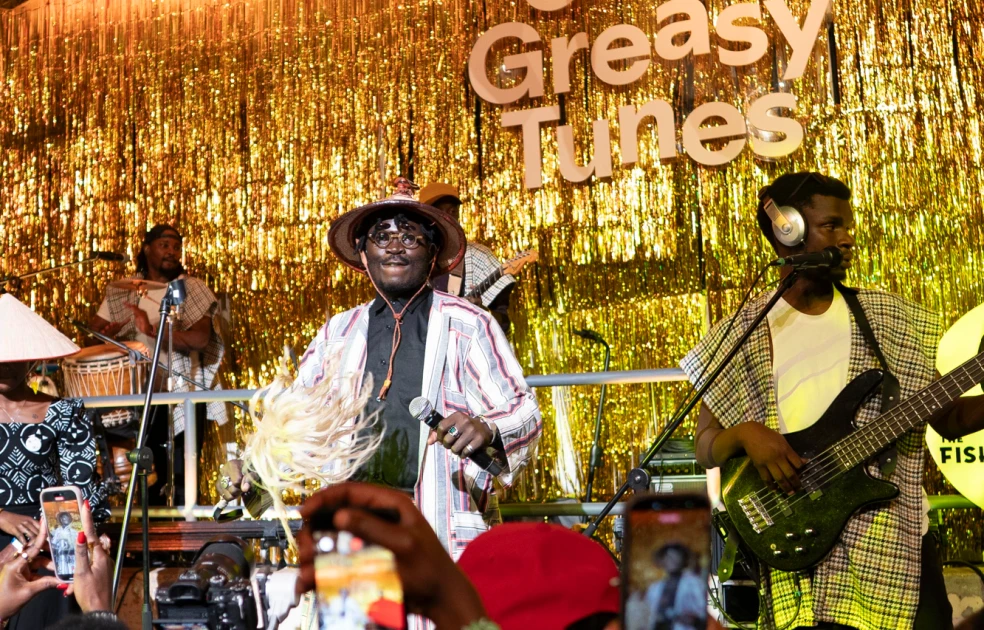
Coster Ojwang performs during Spotify's Greasy tunes showcase in Nairobi on July 17, 2026. PHOTO | COURTESY

Audio By Vocalize
There are artists whose concerts you casually tell yourself you'll attend "one of these days." Then there are artists whose performances somehow become unfinished business. Coster Ojwang has always been the latter for me.
For the better
part of the last two years, I've been trying, with varying degrees of
competence and spectacular failure, to attend one of his shows. Every single
time I thought I had finally cracked the code, life would emerge from the
bushes wearing a balaclava and hit me over the head with a completely avoidable
inconvenience.
The first attempt was
derailed by work. Coster was performing at Bar Next Door, and my elder brother
had already assembled what looked like a formidable delegation of friends who
were all making the pilgrimage. The plan couldn't have been simpler if we'd
hired a project manager to oversee it. Finish work, leave the office, meet the
boys, order a cold beer, sing ourselves hoarse and go home convinced we'd made
excellent life decisions.
But then I had
forgotten that I work in media. One breaking story became another. One edit
became three. Somebody else's deadline quietly became my deadline. Before long,
the newsroom had transformed into one of those places where clocks appear to
stop working altogether. By the time I finally shut down my computer and walked
out of the office, Coster was probably halfway through converting another
roomful of strangers into lifelong disciples. I briefly considered showing up
embarrassingly late, but even optimism has its limits.
The second attempt
should have been foolproof. It was December, and I was back home in the village
for the holidays. If there was ever going to be an easy Coster Ojwang concert
to attend, surely it would be one happening in Kisumu while I was down at the countryside. The
logistics had finally decided to cooperate. I was available. He was available.
The stars, for once, appeared willing to align. Except they didn't.
Somewhere between
"We've sorted your tickets" and "Eh...small issue," the
entire plan collapsed. My ticket disappeared into thin air. Nobody seemed
entirely sure who was supposed to have it, who was supposed to buy it or
whether it had ever existed in the first place. By the time the confusion was untangled,
the concert was well underway. Hell, I was beginning to suspect that perhaps
Coster Ojwang concerts and I simply occupied different timelines.
The third attempt,
unfortunately, removed all possibility of blaming external forces. Dala Fest had
organized a Luo VIP Exclusive Affair event at the Mass House on Ngong Road and
this time, there were no newsroom emergencies, there were no missing tickets, no
transport issues, and no mysterious acts of God conspiring against me. There
was only me…well, and a bottle.
Somewhere during
what had begun as "just a few drinks" at my brother’s house, I lost
the plot entirely. Time dissolved, and memories packed their bags and quietly
left the building. The next thing I knew, I was waking up at 2am with one shoe on,
a mouth that tasted like regret, and absolutely no recollection of how I'd
gotten home.
That one hurt. Not
because I'd missed another concert, but because I'd finally run out of excuses.
At this point, the whole thing had started to feel less like bad luck and more
like a curse. Every time Coster announced a show, some invisible cosmic
committee seemed to convene specifically to discuss fresh and innovative ways
of ensuring I wouldn't make it.
So, when Spotify
announced that Coster Ojwang would headline ‘The Fisherman's Experience’ during
the Greasy Tunes Nairobi showcase on July 17, I decided I was done leaving
things to chance. I set a reminder on my phone. Then I opened the reminder,
stared at it for a few seconds and added a personal note to myself that simply
read: “Don't you *mess* this up again!!” (Those asterisks are there because I used a
more colourful word than “mess” but you get the point.) Because sometimes
adulthood isn't about paying taxes or renewing your driver's licence. Sometimes
adulthood is recognising that you are your own biggest obstacle and writing
yourself threatening reminders accordingly.
For 12 straight
days in July, streaming giant Spotify transformed Heltz House in Ngara into a
creative playground dubbed Greasy Tunes. This wasn't merely another music
festival squeezed into Nairobi's already crowded events calendar. It was more
like someone had emptied the city's creative ecosystem into one venue and
simply allowed everyone to collide.
On paper, it
sounded almost too ambitious. There were live performances, of course, but
those only made up one piece of the puzzle. There were stand-up comedy shows,
spoken word sessions, fashion showcases, podcast recordings, creative
workshops, football watch parties, artist conversations, food experiences and
masterclasses.
Depending on which
day you showed up, you could leave having discovered your new favourite
musician, laughed at a comedian you've never heard of, bought a locally
designed jacket, listened to a podcast being recorded live and somehow still
found time to argue passionately with strangers about whether Nyashinski has
ever released a bad song. Spotify wasn't trying to host an event. It was
attempting to bottle Nairobi. And for the most part, it succeeded.
The downstairs
section of Heltz House had a semi-cosy café where conversations naturally lingered longer than intended. Step beyond that and the space opened into a surprisingly
intimate outdoor performance area that lookd almost accidental, as though
somebody had wandered into a corridor one afternoon and thought, ‘You know what
this place needs? A concert.’
The stage sat at
one end while the audience spilled naturally into the open space before it. Then
a flight of stairs past old, dilapidated walls led to an upper level where people could lean comfortably
against the railings, drinks in hand, peering down at the performances
unfolding below like spectators at some beautifully organised urban
amphitheatre.
Everything about Heltz
House feels carefully curated without becoming pretentious. Industrial enough
to look fashionable on Instagram. Intimate enough that you can actually see the
artist's facial expressions without relying on giant LED screens. And big enough to
create energy, yet small enough that everyone somehow feels involved.
It also has that
unmistakable aesthetic that makes you instinctively conclude that somewhere, at
some point, a white creative consultant enthusiastically pointed at it and
declared, "This is exactly the vibe we're looking for." I lamented
about it at first but, to be fair, it had grown on me by the fifth day.
By the time I
arrived that Friday night, Heltz House was already humming with the kind of
energy that tells you something significant is about to happen. Not chaotic. Not
impatient. Anticipatory. People weren't milling around wondering whether the
show would be any good. They already seemed convinced it would be. Groups
clustered around nursing beers and cocktails while discussing previous Coster
performances. Others queued for food, operating on the practical understanding
that once the show began, abandoning your spot would be an act of
self-sabotage.
I eventually made
my way upstairs because the downstairs section had already reached that
familiar Nairobi threshold where "there's still room" technically
means "if everyone inhales simultaneously." The balcony offered the
perfect compromise. From there I could watch both the stage and the audience; a
decision that, in hindsight, turned out to be one of the smartest I made all
evening because before long I would realise that the most fascinating
performance wasn't necessarily happening on the stage, but in front of it.
Now, on most
respectable evenings, my relationship with alcohol is measured and diplomatic.
An energy drink usually does the job just fine. My liver and I try to maintain
a cordial relationship built on mutual respect and occasional compromise. But
this wasn't most evenings. This was ‘The Fisherman's Experience’ with Coster Ojwang. There are
certain concerts that demand participation rather than observation. You simply
cannot stand there, stone-cold sober, attempting to intellectualise lyrics
while everyone else is busy singing like they've just remembered who they are. Some
experiences require beer. This was one of them.
As I stood
overlooking the crowd below, drink in hand, waiting for the evening to properly
begin, I couldn't shake the feeling that something about the atmosphere
felt...different. Not louder. Not bigger. Just different. At the time, I
couldn't quite explain why. A little later that night, the answer would arrive
wearing a fisherman's hat.
I've been to
enough concerts to know the unwritten script. The opening act comes on and does
their best to loosen up a crowd that is only pretending to pay attention.
People trickle in late because, well, Kenyan time. Friends shout over the music
while catching up on life. The bar does brisk business. Someone inevitably
spends the better part of 20 minutes taking photos they'll never post. All the
while, the artist everyone actually came to see remains backstage as anticipation simmers gently in the background.
It's a predictable,
familiar rhythm. Greasy Tunes, however, seemed determined to rewrite that
script. I had walked in and occupied my space by about 9:50pm, just as Iddi
Achieng was commanding the stage. Calling her a curtain-raiser almost feels
unfair because that title suggests someone merely filling time until the main
act arrives. Iddi wasn't filling anything, she was owning the stage. She
possessed one of those voices that seems physically larger than the person
producing it; deep, commanding and rich enough to make every cover song sound
like it had always belonged to her.
She didn't need
gimmicks. She didn't need elaborate choreography. She simply sang. And the
audience responded accordingly. Every few songs, another wave of cheers rolled
through the venue. People swayed with their drinks, sang along where they could
and applauded with genuine enthusiasm. If you'd walked in without knowing the
programme, you might easily have assumed that she was the evening's headline
performer.
Yet, even as she
held everyone's attention, there was an unmistakable sense that something else
was quietly building beneath the surface. The atmosphere wasn't restless, it
was expectant. There is a difference. Restless audiences constantly glance at
their watches. They check their phones. They complain about delays. They grow
impatient. This crowd did none of those things. Instead, it behaved with the
quiet confidence of people who already knew exactly what was waiting for them.
At around 10:15pm,
Iddi wrapped up her set and, before leaving the stage, smiled into the microphone
and announced: "Jalupo (Fisherman) is in the house!!" I have replayed
that moment in my head several times since that night because the reaction
still doesn't quite make sense to me.
Nothing had
actually happened. Coster hadn't appeared. No spotlight had found him. No music
had started. Nobody had even seen the man. And yet Heltz House exploded. The
roar that followed sounded closer to what happens in a stadium when a
football team scores a last-minute winner. It struck me as slightly irrational.
Then again, perhaps that's what genuine excitement always looks like from the
outside.
As the applause
slowly settled, Coster's band began making their way onto the stage. Ordinarily,
this is the least interesting part of any concert. Cables. Microphone checks. Guitar
tuning. Someone tapping a snare drum every few seconds. The kind of
behind-the-scenes housekeeping that audiences usually endure rather than enjoy.
Except no one
seemed particularly bothered. If anything, the anticipation became even
sweeter. The venue speakers filled the gaps with Ohangla classics, from Odongo
Swagg to Tony Nyadundo and Prince Indah, and suddenly what should have been
dead time transformed into another party altogether. Groups of friends broke
into spontaneous dances between conversations. Couples gently swayed where they
stood. A few people sang entire verses with remarkable confidence, while others
used the opportunity to make one last strategic trip to the food stalls or the
bar to stock up.
Around this time,
my friend Stephen finally arrived. Breathing slightly heavier than someone who
had almost certainly underestimated Nairobi traffic, he looked around, spotted
the band setting up and asked the obvious question.
"Has he
started?" "Not yet," I told him. "But you're cutting it
very, very close." He nodded thoughtfully before delivering what he
clearly believed was a perfectly reasonable request. "Let me just dash to
the washroom. Have a beer waiting for me when I come back."
Now, Stephen is a
really close friend, and I wish him nothing but prosperity and long life. But I
also believe that adulthood should be accompanied by a healthy commitment to
self-service. So, rather than becoming his temporary bartender, I simply handed
him one of the drink tokens I had so graciously been given by the Spotify team
and said; "Bwana you can pick a drink for yourself on your way back."
The space directly
in front of the stage was packed so tightly that if somebody sneezed in one
corner, people three metres away would probably say "Bless you." From
the balcony, though, I could see everything: the stage, the musicians preparing
below and, more importantly, the crowd itself.
Standing beside me
was a lady wearing one of the most beautiful kitenge dresses I'd seen in
months. Her Bantu knots were immaculate, sculpted with the sort of precision
that deserves its own architectural award. She was elegance personified. But she
was also producing enough mango-flavoured vape smoke to single-handedly alter
Ngara's weather forecast. Every few seconds another fragrant cloud drifted
directly into my face. I briefly considered moving. Then I looked downstairs,
where people were already packed together like books on an overfilled shelf,
and decided second-hand vape was probably the cheaper compromise.
The Fisherman
Arrives
There is an old saying in football that great strikers don't need many touches to announce themselves. One touch. One finish. The stadium erupts and everyone suddenly remembers why they bought a ticket. Truly gifted performers operate much the same way. They don't spend 30 minutes trying to win over a crowd. The crowd belongs to them long before they arrive.
By the time the
clock crept towards 10:50pm, Heltz House had settled into a strange, almost
ceremonial calm. The band had finished setting up. The last microphone had been
tested. Conversations had become shorter. The queues at the bar had disappeared
almost entirely. Even the people who had spent the better part of the evening
chatting animatedly with their friends now found themselves stealing glances
towards the staircase leading to the stage.
Everybody was
looking in the same direction. Then, without fireworks or dramatic countdowns,
it happened. The opening notes of the song ‘Hono’ floated through the speakers,
and for a brief second, nothing else mattered. Not the drinks. Not the
conversations. Not the vape smoke that had spent the better part of half an
hour introducing itself to my nostrils. Every pair of eyes instinctively turned
towards the staircase. And there he was.
Not emerging from
beneath the stage through some expensive hydraulic lift. Not descending from
the ceiling attached to elaborate wires. Just a tall man in his trademark
fisherman's hat making his way towards the stage with the easy confidence of
someone walking into his own living room.
For years, people
had tried to explain Coster Ojwang's stage presence to me. "He has
command." "You have to see him live." "The recordings don't
do him justice." I nodded politely every time. Secretly, I assumed they
were exaggerating. People always exaggerate about artists they love. Within five
minutes of watching him, I realised they had actually been underselling him.
The first thing
that struck me wasn't his voice. It wasn't even the music. It was his
stillness. Many performers mistake movement for energy. They sprint from one
end of the stage to the other, jumping, dancing, waving their hands frantically
in the hope that constant activity will somehow compensate for a lack of
presence.
Coster hardly
needed any of that. He occupied the stage the way a chief occupies the centre
of a village meeting. Without asking for attention. Without demanding silence. Simply
by existing within the space. Everything else naturally arranged itself around
him.
‘Hono’ flowed
effortlessly into ‘Iyana,’ and by then something remarkable had started
happening. He wasn't leading the audience. The audience already knew where he
was going. Every chorus arrived accompanied by hundreds of voices that required
no prompting. Entire verses came flying back at him with startling precision.
He would lean the microphone towards the crowd for a split second; not because
he had forgotten the words and needed encouragement, but because he knew they
had memorised them anyway.
As he sang into
the microphone, Coster smiled the smile of a man who already knew exactly what
was about to happen. He knew which lyric would trigger the loudest cheer. He
knew which pause the audience would instinctively fill. He knew precisely when
to take two steps backwards and allow several hundred people to sing his own
song back to him.
There was no
uncertainty anywhere on that stage. Only trust. And trust, I would later
realise, is perhaps the defining feature of every great live performer. The
audience trusts the artist to take them somewhere memorable. The artist trusts
the audience to meet him halfway.
By now, Heltz
House had completely transformed. People were no longer filming entire songs in
the desperate hope of proving they'd attended. Phones certainly came out, but
only in bursts, before quickly disappearing again. The experience itself had
become far more important than documenting it. That, in today's social media
age, is surprisingly rare. Modern concerts often resemble giant content
creation exercises. People watch performances through phone screens while
recording videos they'll probably never watch again.
But Coster's
audience seemed refreshingly uninterested in that arrangement. They wanted to
participate. To sing. To dance. To laugh. To lose themselves. The phones could
wait. This wasn't fandom, it was fellowship, and I was about to discover that the evening hadn't even reached
its most extraordinary moment. Because somewhere in the middle of the set,
Coster Ojwang performed ‘Jowi.’
Every artist has that
song. The one that doesn't merely entertain a crowd but transforms it. The one
that blurs the line between performance and participation. The one that makes
you wonder whether everyone attended the same rehearsal except you. For Coster
Ojwang, that song is ‘Jowi.’
The first few
notes had barely escaped the speakers before the atmosphere shifted. You could
almost hear the crowd inhale in unison, as though they collectively recognised
what was coming and instinctively prepared themselves for it. Then, without
warning, Heltz House erupted once again. Not with dancing. With conviction. People
stomped. Hard.
And not the gentle
foot-tapping you do when a spoken word poet delivers a punchline. These were
deliberate, thunderous stomps that seemed determined to wake up every ancestor
buried within a hundred-kilometre radius. The cemented floor beneath us groaned
under the weight of hundreds of feet crashing down in rhythm, each thud landing
with military precision.
Then came the
fists and the invisible spears. They shot into the air almost instinctively,
pumping with every chorus. Heads rocked back and forth with such vigour that I
briefly worried someone would require a physiotherapist by the end of the
night. Beer sloshed out of plastic cups. Voices cracked. Nobody cared.
If anybody had
walked into Heltz House at that exact moment, they might genuinely have
mistaken it for the opening minutes of a political rally. Except this wasn't
politics. It wasn't choreography either. Nobody had instructed people to do any
of this. There was no emcee shouting, "Everybody put your hands up!" No
carefully rehearsed audience participation segment. This was entirely organic.
It dawned on me
that these people weren't simply reacting to the music, they were inhabiting it. That,
perhaps more than anything else, is what separates Coster Ojwang from many of
his contemporaries. Plenty of artists have hit songs. Plenty can sell out
venues. But very few create the kind of emotional ownership where the audience
no longer feels like spectators but become custodians of the music.
For those few
minutes, Coster almost disappeared into the performance. He'd sing a line, lean
back from the microphone and allow the crowd to finish the thought. They never
missed their cue. It was less a concert than it was a conversation between a
man and hundreds of people who knew exactly what he was trying to say before he
said it.
Watching from the
balcony, I caught myself smiling. I'd spent years trying to attend a Coster
Ojwang show because people kept telling me he was a phenomenal live performer. Nobody
had thought to mention that the audience was half the show.
As the night wore
on, the guest appearances came and went almost like chapters in a well-written
novel.
At one point,
Coster invited an artist called Udulele onto the stage, ceremoniously placing
his now-iconic fisherman's hat on him before the two launched into their ‘Wololo’
collaboration. It felt symbolic, almost like a passing of the torch, or at the
very least, a warm embrace into the ever-growing world Coster has built around
his music.
Later, Serro
walked onto the stage to perform ‘Nyakachieng’ (which has that infectious and
danceable Oliver Mtukudzi ’Todii’ rhythm) and Heltz House responded with the
kind of applause reserved for artists who don't need lengthy introductions.
Their voices blended beautifully, offering a brief moment of calm after the
organised chaos that had characterised much of the evening. Even when she
exited barely ten minutes later, the applause seemed reluctant to let her
leave.
Another guest, Shad
Mziki, joined Coster later in the night for their smash ‘Wajue ni wewe’
collaboration, drawing yet another loud reception from a crowd that clearly
appreciated every surprise the evening had in store. But somewhere between the
collaborations, the singalongs and the seemingly endless chants, I found myself
looking away from the stage yet again.
That's when I spotted another friend of mine named Tobias B. And this immediately confused me because just that morning I'd seen him post on social media that he was in Mombasa. Not "headed to Mombasa." Not "travelling." In Mombasa. Beach. Palm trees. Coastal sunshine. The whole package. I made a mental note to ask him about it later, and after the concert, we finally caught up.
"So...weren't
you in Mombasa today?"
"I was,"
he replied matter-of-factly.
"I flew
back."
"For
this?"
As though that
wasn't astonishing enough, he casually added another detail that completely
changed how I viewed the evening. He told me he has never missed a single
Coster Ojwang performance. Not one. It doesn't matter whether the show is in
Nairobi, Kisumu, Mombasa or somewhere else entirely. If Coster is performing and Tobias
can physically get there, he'll be there.
He said it so
casually that I almost missed the weight of what he'd just admitted. Think
about that for a second. Most of us struggle to commit to birthday parties
we've already RSVP'd to. We invent elaborate excuses to avoid weddings. We
postpone lunch plans because it rained a little too hard.
This man abandoned
work in Mombasa, booked a flight back to Nairobi and showed up simply because
Coster Ojwang had a concert. That's not casual fandom. That's commitment. And
Tobias, I would soon realise, wasn't an exception. He was merely the first
person I'd spoken to.
Once I started
paying closer attention, versions of Tobias seemed to be everywhere. People
spoke about previous Coster concerts the way football fans reminisce about
historic World Cup finals. Others debated which performance had been his best.
Some had travelled from outside Nairobi. Several proudly wore fisherman hats
and t-shirs from older shows, almost like badges earned through years of
faithful attendance. It finally clicked.
Coster Ojwang
doesn't just have listeners. He has regulars. The kind of people who don't ask whether
they're attending the next show. Only where it will be.
The evening
eventually arrived at ‘Wabiro,’ and by then there was very little left to
prove. If ‘Jowi’ had shaken the foundations of Heltz House, ‘Wabiro’ was the
closing hymn. Phones finally emerged in greater numbers, not because people had
suddenly remembered social media existed, but because everyone wanted to
preserve at least one fragment of a night they already knew they'd spend the
following week talking about.
When the final
note faded and Coster took his bow, the applause lingered far longer than
convention requires. Nobody seemed particularly eager to leave. It felt less
like the end of a concert and more like the reluctant dispersal that follows a
good family gathering, where everyone keeps saying goodbye without actually
walking to the gate.
As I slowly made
my way out into the chilly Nairobi night, I found myself replaying Tobias'
confession. He had flown back from Mombasa for this. Not for a wedding. Not for
a funeral. Not for a business meeting. For a concert. It sounds mildly
irrational when I put it like that, but going by everything I'd witnessed over
those two hours, it made perfect sense.
Because Coster
Ojwang has quietly achieved something that many musicians spend entire careers
chasing and never quite attain. He has built a community. Not an audience. Not
a fanbase. A community. There is a difference.
Audiences consume.
Communities participate. Audiences applaud. Communities contribute. Audiences
leave once the lights come on. Communities carry the experience home with them.
That Friday night
at Heltz House, I realised I hadn't simply attended a Spotify event or finally
ticked a long-overdue concert off my bucket list. I had stumbled into a
gathering of people who had found pieces of themselves in one man's music and,
perhaps without even realising it, had found one another in the process.
Maybe that's why
words like ‘fan’ or ‘supporter’ feel strangely inadequate when describing
Coster Ojwang's followers. Fans stream songs. Fans buy tickets. Fans wear
merchandise. But the people inside Heltz House that night did something more.
They sang like
custodians of stories that belonged to them just as much as they belonged to
the man on stage. They stomped the ground as though every beat connected them
to somewhere greater than themselves. They raised their fists, shouted every
lyric and surrendered themselves completely to the moment, not because anyone
asked them to, but because that is simply what happens when Coster sings.
Long before I
finally attended one of his shows, people kept telling me, "You have to
experience Coster live." I understand now that they were only half right. You
don't go to experience Coster Ojwang. You go to experience what happens to
everyone else when he walks onto a stage. That's the real spectacle.
And if what I
witnessed at Greasy Tunes is anything to go by, the cult of Coster Ojwang isn't
growing because of clever marketing or viral moments on TikTok. It's growing
because every concert creates another believer. And on July 17, I became that new believer.
Join the Discussion
Share your perspective with the Citizen Digital community.
No comments yet
This discussion is waiting for your voice. Be the first to share your thoughts!