
Venezuela tells Court it has no jurisdiction in dispute with Guyana over oil-rich territory
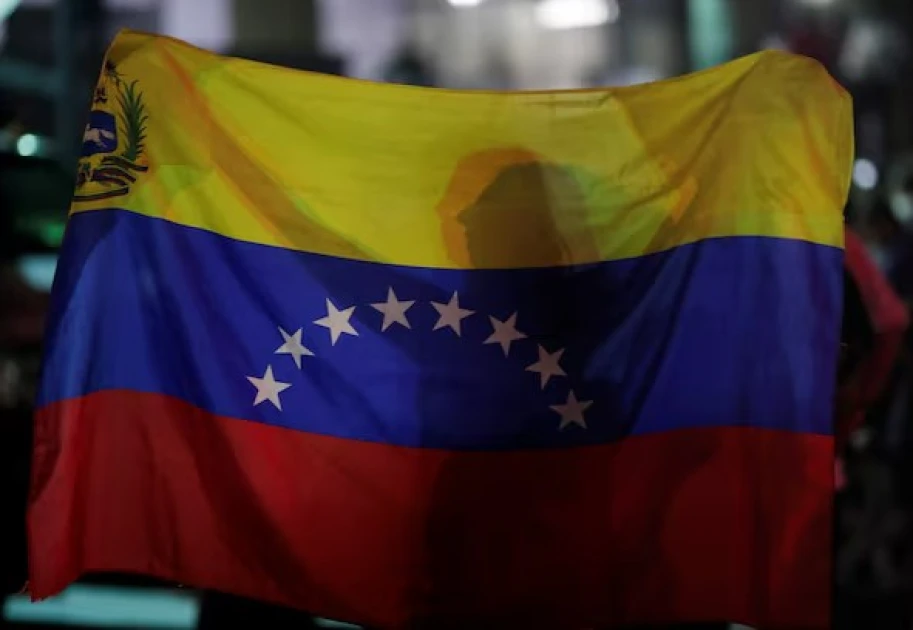
A woman holds a Venezuelan flag while participating in a candlelight vigil held for victims of recent violence in Caracas, Venezuela May 5, 2019. PHOTO/REUTERS

Audio By Vocalize
At issue is a 160,000-square-km (62,000-square-mile) border territory around the Esequibo river, which is mostly jungle, and an offshore area where significant discoveries of oil and gas have been made.
Guyana brought the dispute to the International Court of Justice in The Hague, also known as the World Court, in 2018.
"Venezuela does not accept the jurisdiction of the International Court of Justice," Venezuelan representative Samuel Reinaldo Moncada Acosta told the court.
After the capture of President Nicolas Maduro and his wife by U.S. forces in January, Venezuela is being run by an interim government that maintains its claim on the Esequibo region.
GUYANA SEEKS RULING ON BORDER
Guyana wants the court, which deals with disputes between states, to confirm the border laid down in an 1899 arbitration between Venezuela and the then-colony of British Guiana, according to which the territory belongs to Guyana.
On Monday, Guyana told judges that Venezuela's "unlawful" claim applies to more than 70% of Guyana's territory and is an existential threat.
Moncada on Wednesday dismissed the 1899 arbitral award as fraudulent and imposed by colonial forces in an example of gunboat diplomacy. He repeated Venezuela's position that the border dispute can only be solved by talks between Venezuela and Guyana.
He told judges Venezuela was "committed to continuing to act in good faith in direct negotiations with Guyana to achieve a mutually beneficial agreement".
A final judgment in the case is months away. Rulings of the ICJ are binding and without appeal, but the court has no way to enforce them itself, instead relying on the U.N. Security Council.
In a 2023 referendum, Venezuelan voters rejected the ICJ's jurisdiction over the territorial dispute with Guyana.
Join the Discussion
Share your perspective with the Citizen Digital community.
No comments yet
This discussion is waiting for your voice. Be the first to share your thoughts!