
U.S 'optimistic' court challenge against Ebola facility in Kenya will be resolved

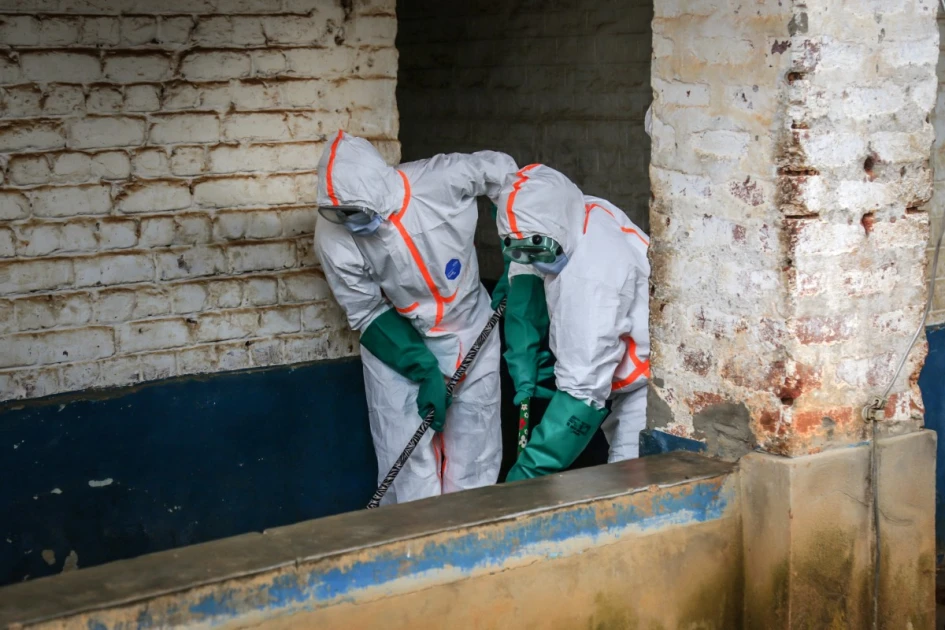
Health workers wearing protective equipment disinfect the isolation area for Ebola patients at the General Referral Hospital of Mongbwalu in DRC, on May 23, 2026.

Audio By Vocalize
The United States
government has expressed confidence that it will resolve concerns raised over
plans to establish an Ebola isolation and treatment facility in Kenya, even as the
High Court temporarily halted the project following a legal challenge.
In a statement
issued in response to the court action, the U.S. Under Secretary for Foreign
Assistance, Humanitarian Affairs and Religious Freedom said Washington was
engaging Kenyan authorities over the matter and remained optimistic that the
objections would be addressed.
“We are aware of
the court action filed in Kenya against the Ebola isolation facility. We are in
touch with Kenyan authorities and are optimistic we can resolve objections,” read
the statement.
The remarks come
after the High Court on Friday issued conservatory orders temporarily stopping the government from setting up an Ebola quarantine and treatment facility in
Kenya pending the hearing and determination of a petition challenging the
project.
The case was filed
amid growing public concern following reports that the United States was
considering sending American citizens exposed to the Ebola virus to Kenya for
monitoring and treatment as part of wider efforts to contain an outbreak in the
region.
The proposed
facility has generated sharp political and public debate, with critics
questioning the rationale for hosting foreign Ebola-exposed individuals and
demanding greater transparency from the government regarding any agreements
reached with Washington.
The court
intervention also followed opposition from a section of leaders, particularly from Laikipia County, where reports had suggested a U.S.-backed Ebola facility
could be established.
The leaders argued
that local communities had not been adequately consulted and called for full
disclosure of the project's scope, safety measures and potential risks.
Despite the
concerns, both the Kenyan and U.S. governments have consistently framed the
discussions as part of broader international health security cooperation rather
than a unilateral arrangement.
Health Cabinet
Secretary Aden Duale earlier this week confirmed that Kenya was engaged in ongoing discussions with the U.S. government and other global partners on
strengthening preparedness and response mechanisms for Ebola Virus Disease
(EVD) and other emerging public health threats.
“The Government of
Kenya notes ongoing discussions with US government and other global partners
regarding international collaboration on strengthening preparedness and
response mechanisms for Ebola Virus Disease (EVD) and other emerging public
health threats,” Duale said.
While
acknowledging the talks, Duale emphasized that any arrangements would be
subject to Kenya's laws and public health safeguards.
“Any arrangements
regarding international health cooperation will be guided by Kenya's national
laws, public health regulations, biosafety and biosecurity standards, and the
overriding responsibility of Government to safeguard the health and welfare of
the people of Kenya,” he said.
The CS further
stressed that “protection of Kenyan citizens, frontline health workers and
communities remains paramount.”
The latest U.S.
statement also comes after Secretary of State Marco Rubio held a telephone
conversation with President William Ruto to discuss the Ebola outbreak and
ongoing response efforts.
Following the
talks, the U.S. government announced plans to commit $13.5 million (about
Ksh1.75 billion) towards Kenya's Ebola preparedness programme, in addition to
$112 million already committed to the broader regional response.
According to the
State Department, Rubio and Ruto discussed securing vital medical supplies for
Kenya and ensuring the country's health system remains prepared to respond to
any potential Ebola cases.
Kenya has
maintained that it possesses the technical capacity and infrastructure required
to manage highly infectious diseases.
The Ministry of
Health says it has activated the National Incident Management System, enhanced
surveillance at points of entry, strengthened laboratory testing capacity and
intensified preparedness measures across the country.
Government figures
show that more than 55,000 travellers have so far been screened for Ebola at
various entry points, while ten suspected cases tested in Kenya have all
returned negative results.
Join the Discussion
Share your perspective with the Citizen Digital community.
No comments yet
This discussion is waiting for your voice. Be the first to share your thoughts!