
OPINION: University report revives concerns over medical and dental training standards
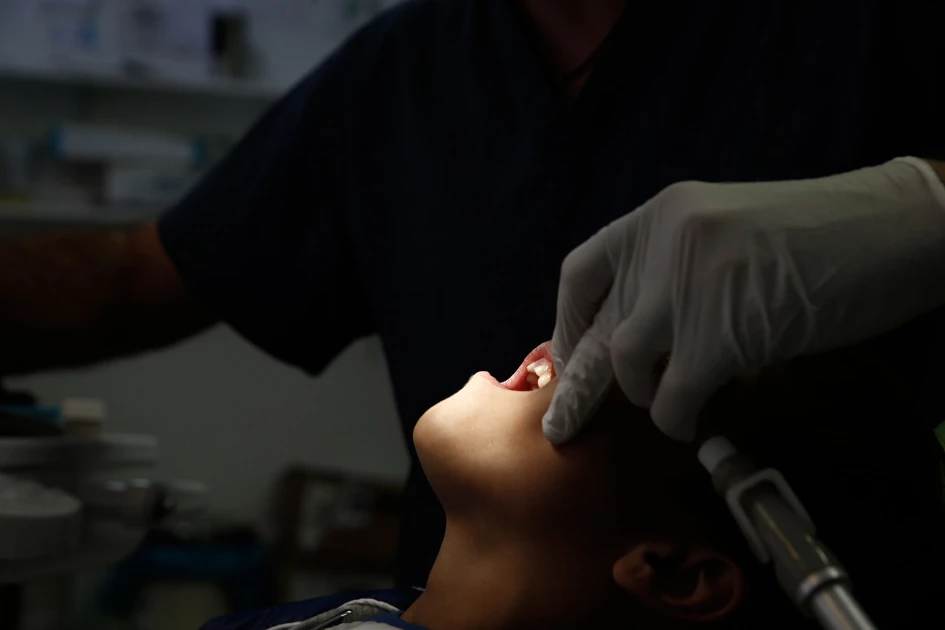
Dentist Christos Naoumis treats a young boy at a Doctors of the World clinic in central Athens last week. The medical humanitarian group helped 7,754 children with free dental care last year. REUTERS/Alkis Konstantinidis

Audio By Vocalize
Rather than investing in strengthening academic programmes, infrastructure, and training standards, certain institutions have sought to leverage regulatory processes, inspections, and perceived endorsements as marketing tools to gain a competitive advantage.
The misuse of accreditation exercises and quality assurance mechanisms for promotional purposes not only misleads students and parents but also undermines the integrity of professional education and regulatory oversight.
In March 2020, a joint team comprising the East African Community (EAC) Medical and Dental Regulatory Boards and Councils conducted inspections of medical and dental schools and teaching hospitals in Kenya. The exercise targeted eleven training institutions and was intended to assess compliance with regional standards and guidelines for health professions education.
Six years later, serious concerns remain regarding the relevance, integrity, and credibility of this exercise and any continued reliance on its findings.
The inspections were undertaken in a completely different educational, legal, and institutional environment. Since then, significant changes have occurred in health professions training, regulatory frameworks, staffing, infrastructure, and academic programmes across Kenyan universities. Any attempt to rely on or revive the findings of an inspection undertaken over six years ago is outdated, unreasonable, and incapable of accurately reflecting the current status of any institution.
There are also growing concerns that the exercise itself was rigged and failed to provide an objective, transparent, and equitable assessment of all institutions. Questions persist regarding the methodology employed, the standards applied, and whether all institutions were subjected to the same level of scrutiny and afforded procedural fairness.
Equally troubling is the allegation that some universities exploited this exercise as a marketing opportunity rather than as a genuine quality-assurance process.
Institutions that had struggled to attract prospective students reportedly used the EAC inspection exercise to create a perception of superiority and legitimacy, promoting their programmes under the guise of regional accreditation and endorsement. This undermined the integrity of the exercise and potentially misled students and the public regarding the actual status and quality of certain programmes.
Regulatory decisions affecting the recognition, accreditation, or licensing of training programmes cannot be founded on stale inspections conducted more than six years ago, nor should inspection exercises be manipulated to serve commercial or institutional interests.
Good governance and sound regulation demand periodic, transparent, and evidence-based inspections that accurately reflect the present realities of institutions and training programmes.
If the objective of the EAC framework is to promote quality assurance and harmonisation of health professions education within the region, then fresh inspections should be undertaken in 2026 immediately, with full transparency, stakeholder participation, and publication of objective criteria and findings.
Any continued reliance on the March 2020 inspection exercise undermines the principles of fairness, accountability, and legitimate expectation and risks eroding public confidence in the regulation of medical and dental education in Kenya and across the East African Community.
The writer of this Article is the President of the Kenya Dental Association (KDA), Dr Kahura Mundia
Join the Discussion
Share your perspective with the Citizen Digital community.
No comments yet
This discussion is waiting for your voice. Be the first to share your thoughts!