
Ukraine drone strikes expose cracks in Putin's grip on war

Audio By Vocalize
Ukraine's recent drone strikes deep inside Russian territory
have delivered more than just military damage, they have struck at the heart of
President Vladimir Putin's image as a leader firmly in control of the war.
According to a new analysis by the Atlantic Council, Ukraine's
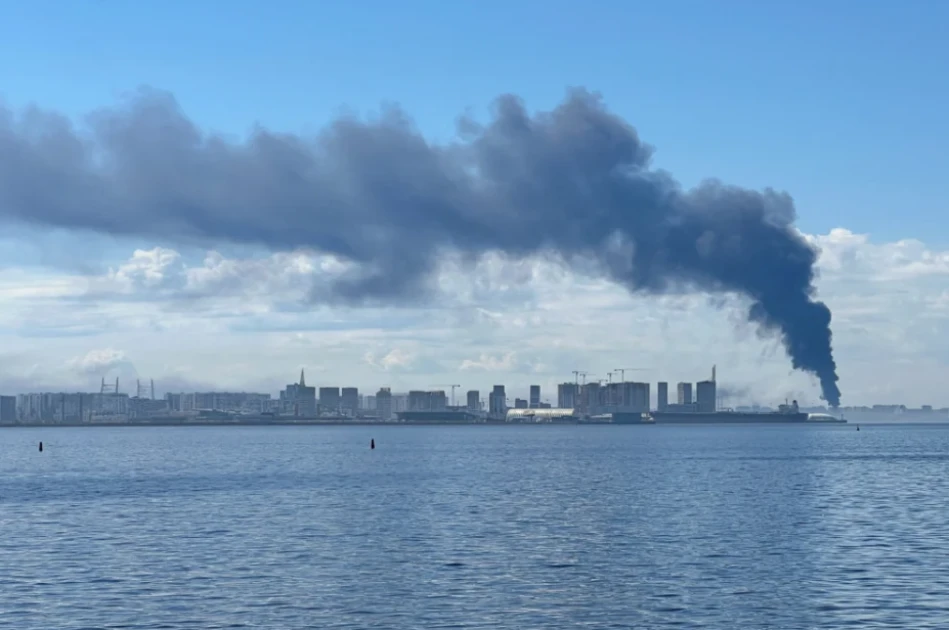
audacious drone attack on St. Petersburg during a major international economic
forum dubbed "Putin's Davos" sent a powerful message to both domestic
and international audiences: Russia is increasingly unable to shield its own
territory from Ukrainian retaliation.
The strike, which reportedly saw Ukrainian drones travel more
than 1,000 kilometres through Russian airspace before reaching strategically
important targets, unfolded as Putin hosted foreign guests in his hometown.
Analysts say the incident was particularly embarrassing for
the Russian leader, who has spent years cultivating an image of strength and
projecting confidence in Russia's eventual victory.
The attack has intensified concerns within Russia over the
country's vulnerability to Ukrainian aerial assaults.
Prominent Russian military bloggers and pro-war commentators
reportedly criticised the Kremlin's preparedness following the strike, warning
that similar attacks could become more frequent in the months ahead.
The St. Petersburg operation followed another symbolic setback
for Moscow earlier this year when security concerns over potential Ukrainian
drone attacks forced authorities to scale down Russia's annual Victory Day
celebrations.
The traditional military spectacle proceeded without much of
the heavy military hardware usually showcased on Red Square, highlighting fears
that Ukraine's expanding drone capabilities could reach even the Russian
capital.
Ukraine has emerged as a global leader in drone warfare since
the war began in 2022, developing a vast domestic drone industry that now forms
a critical pillar of its military strategy.
In recent months, Ukrainian forces have repeatedly targeted
military installations, industrial facilities and energy infrastructure deep
inside Russia.
Data cited by the Atlantic Council indicates that long-range
Ukrainian drone attacks reached record levels in May 2026.
The campaign has increasingly focused on Russia's oil and gas
sector, a key source of revenue for Moscow's war effort. Russian officials have
also acknowledged a decline in oil production this year following months of
sustained Ukrainian strikes on energy facilities.
Beyond the drone war, the report points to wider challenges
facing the Kremlin. Russian forces are struggling to achieve significant
battlefield gains in Ukraine despite continuing offensives and heavy troop
losses. At the same time, Ukrainian strikes on logistics hubs and supply routes
are disrupting Russian military operations and threatening supply lines to occupied
Crimea.
Independent assessments have similarly suggested that Russia's
territorial gains have slowed dramatically, while Ukrainian forces have managed
to regain some ground in recent months.
Analysts say Moscow has increasingly relied on missile and drone
attacks against Ukrainian cities as battlefield progress stalls.
The mounting military pressure is also being felt
economically. According to the Atlantic Council analysis, concerns are growing
among Russian officials and business elites over the long-term sustainability
of the war amid rising military expenditures and slowing economic growth.
While Putin continues to reject calls for compromise and
insists on pursuing Russia's broader objectives in Ukraine, observers argue
that recent developments suggest the strategic initiative may be shifting.
The sight of Ukrainian drones operating over major Russian
cities, including Moscow and St. Petersburg, has become a potent symbol of that
change.
For Ukraine and its supporters, the latest attacks serve as
evidence that Russia's war machine is no longer operating with the freedom and
dominance it once enjoyed.
For the Kremlin, they represent an increasingly visible
challenge to the narrative that Putin remains firmly in control of the
conflict.
Join the Discussion
Share your perspective with the Citizen Digital community.
No comments yet
This discussion is waiting for your voice. Be the first to share your thoughts!