
TVET students to use work attire during graduations in new directive

Audio By Vocalize
Principal Secretary in the State Department for TVET, Esther Muoria, instructed all institutions under the TVET framework to adopt an attire that reflects each trainee’s technical discipline.
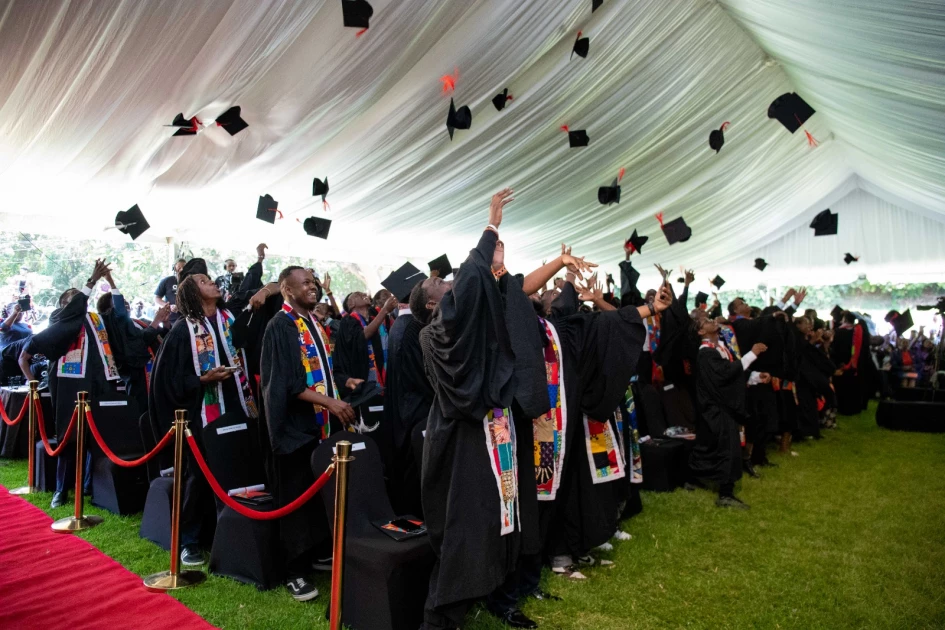
Under the new directive, graduates will don work-specific uniforms aligned with their areas of training, replacing the conventional academic robes commonly associated with universities.
Muoria said the move is aimed at ensuring that graduates are easily identifiable by their skills and specialisations, while also reinforcing the practical nature of TVET education.
“Going forward we are not going to be graduating our graduates in gowns like we have been doing. Gowns are academic and we are technical, so graduands in the different technical departments will henceforth graduate in their respective work attire; mechanics will wear overalls, and chefs will wear the chef’s uniform,” she stated.
“We want to communicate to the world that we are doing the right thing. We are not only doing the right thing but we also want to communicate by lining up for graduation in the correct attire. As it is right now, nobody can tell what specialty we are graduating from because they are all dressed the same," she added.
The PS made the remarks during the 6th graduation ceremony at Nyeri National Polytechnic, where 2,500 graduands received certificates and diplomas in various technical and artisan courses.
Muoria noted that the traditional use of academic gowns, largely borrowed from universities, does little to promote the skills and competencies acquired in TVET institutions and instead misrepresents their core focus on practical training.
She reaffirmed the government’s commitment to strengthening the sector, citing plans to modernise infrastructure and equip institutions with up-to-date training tools.
With student enrolment rising from 350,000 in 2022 to 850,000 currently, the PS said the government plans to recruit 1,000 additional trainers this year to bridge the staffing gap.
At the same time, she revealed that efforts are ongoing to align trainers’ skills with Competency-Based Education and Training (CBET), with retraining programmes currently being undertaken at the Kenya School of TVET.
“The Kenya School of TVETs has had an overflow of applications of trainers who want to train CBET and because they cannot all fit at the Kenya School of TVET, what we have allowed is for the trainers to go to any reputable institution so that we are able to bring all our TVET trainers up to speed so that they are able to train CBET in our TVETs,” she stated.
Muoria also urged institutions to reduce reliance on government funding by exploring alternative revenue streams, noting that public resources are limited and must be shared across multiple sectors.
She called for the adoption of cost-saving measures such as solar energy and rainwater harvesting, while encouraging institutions to leverage their internal expertise to cut operational costs.
“We have already directed that the buildings that are coming up in our institutions be done by the staff and the students in the civil and building departments. There is no reason why we should bring other people from outside to come and build our space, yet we are the builders,” Muoria noted.
“We should be the consumers of our own knowledge and training even before it goes out there.”
Join the Discussion
Share your perspective with the Citizen Digital community.
No comments yet
This discussion is waiting for your voice. Be the first to share your thoughts!