
Trump announces deal for huge US stake in Venezuelan oil reserves
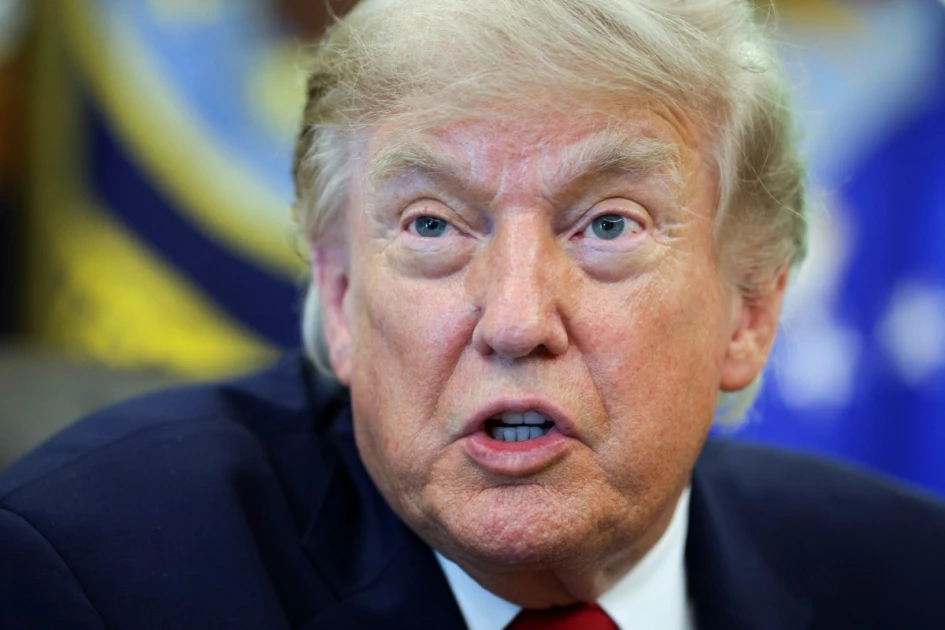
U.S. President Donald Trump talks to reporters after signing an executive order dealing with automobile repairs with Environmental Protection Agency Administrator Lee Zeldin in the Oval Office at the White House on June 29, 2026 in Washington, DC. Trump followed up the signing by answering questions about the SAVE America Act. Alex Wong/Getty Images/AFP (Photo by ALEX WONG / GETTY IMAGES NORTH AMERICA / Getty Images via AFP)

Audio By Vocalize
The deal -- which Trump proclaimed as "the biggest oil deal in world history" -- will bring nearly $100 billion in private investment to Venezuela, US and Venezuelan officials said.
Venezuela has the world's largest proven oil reserves. Its government has operated under intense pressure and close scrutiny from the Trump administration since the US ousted and captured long time ruler Nicolas Maduro in January.
Washington allowed his vice president, Delcy Rodriguez, to stay on and serve as interim leader so long as she toes the US line.
Trump has made no secret of his desire to secure Venezuelan oil for the US, and in his post announcing the deal on his Truth Social platform, he said it will more than double US oil reserves.
Interim leader Rodriguez confirmed what she called a "historic agreement" that would "have a significant impact on the rebirth of our nation."
Writing on social media, she hailed potential investment of "more than $100 billion and more than $209 billion in tax revenue for the State."
Trump said Secretary of State Marco Rubio and Defense Secretary Pete Hegseth had reached the deal with Rodriguez "through a partnership with private business."
"This Transaction will greatly strengthen the already growing relationship between Venezuela and the United States!" Trump wrote.
- Many questions remain -
Rubio said the deal demonstrated how "President Trump's bold foreign policy is driving America First wins: securing stable reserves and low-cost oil in our Hemisphere and lowering gas prices here at home."
"For the Venezuelan people, this deal will bring nearly $100 billion in private investment, support thousands of high-paying jobs, and drive the reconstruction of Venezuela's economy," Rubio wrote on X, without providing further details.
Jorge Pinon, a senior researcher at the Energy Institute at the University of Texas at Austin, said the agreement was unconventional and many questions remained about how the oil assets would be transferred, "not to a private enterprise, but to another country."
"We don't know how the transfer would take place," he said. "Is it a sale? Is it a title transfer? Is it only transferred once the reserves are actually produced?"
The news site Axios had reported Thursday that the two countries were in talks on a dozen productive oil fields with 90 billion barrels of proven reserves -- about a third of Venezuela's total proven reserves of 300 billion barrels.
In return for a US ownership stake, private companies, including American firms, would develop the fields and return more oil revenue to Venezuela, according to Axios.
Axios also said the deal would more than double US oil reserves at a time when the US strategic petroleum reserve is at a 40-year low.
High gasoline prices for Americans is a major political issue for Trump, whose approval ratings have fallen ahead of November's midterm elections after launching a war on Iran that has disrupted global oil supplies.
The Trump administration has been urging US companies to invest in Venezuela, but they remain wary due to dilapidated infrastructure and past appropriation of assets of foreign investors by the government in Caracas.
Chevron, the only US oil company that was still operating in Venezuela when Maduro was ousted, said in July that it had raised its daily crude production to 280,000 barrels and plans to increase output by 50 percent by the end of 2028.
John Kilduff, energy expert at Again Capital, said the biggest problem for companies to operate in Venezuela is "the safety and security of your investment."
Join the Discussion
Share your perspective with the Citizen Digital community.
No comments yet
This discussion is waiting for your voice. Be the first to share your thoughts!