
Treasury CS Mbadi now warns Ksh.3.6 trillion revenue target may not be realised
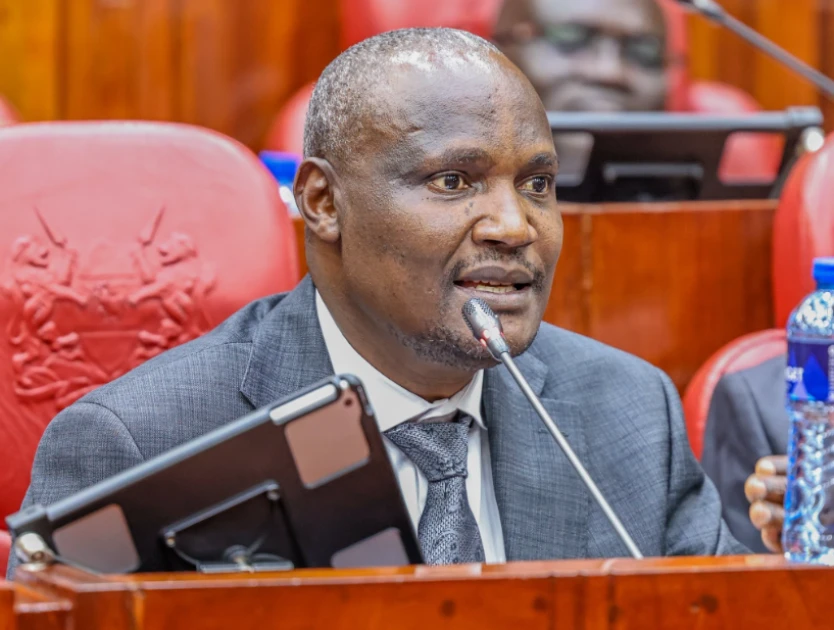
Treasury CS John Mbadi during a past Parliamentary committee appearance. PHOTO | COURTESY

Audio By Vocalize
The National Treasury is now raising the alarm over the
expansive nature of the 2026/2027 budget, with Treasury Cabinet Secretary John
Mbadi warning that, owing to the global shock and heightened geopolitical
activity, the projected Ksh.3.6 trillion revenue may not be achieved.
CS Mbadi, who has on several occasions defended the expansive Ksh.4.8
trillion budget, expressed frustrations with the inflexibility of the budget.
Economic experts, however, say there is room for a trade-off
that could help the government live within its means.
The Ksh.4.82 trillion budget for the coming financial year was
set to be financed through a Ksh.3.63 trillion revenue, including taxes and
Appropriations-in-Aid (A-I-A).
Out of this, ordinary revenue is projected to account for Ksh.2.99
trillion, up from the current year’s Ksh.2.78 trillion target.
But it is this revenue that the National Treasury now says
might not materialise, throwing the fate of the country’s budget in jeopardy.
CS Mbadi says the ongoing geopolitical activities could hinder
the government's ability to collect the targeted revenues.
“Even the projection that we have for 2026/2027 is not looking
very good because if you look at 2026/27 budget, you'll notice that in our
projection of Ksh.3.6 trillion which is rarely achievable and with the dynamic,
the economic shocks that we are facing as a country and globally we are not
even likely to collect the Ksh.3.63 trillion,” he said.
This admission has seen economic experts now call for a
downward revision of the budget, to avoid burdening Kenyans with additional
borrowing which continues to constrain the country’s fiscal space.
But, on his part, Mbadi says the country's budget is inflexible
with nowhere to cut, citing debt servicing, salaries, transfers to counties,
and other compelling expenses that have to be met.
“You can hear teacher principals are still making noise…JSS is
Ksh.31 billion, you have Ksh.7 billion for free primary…I can go on and on, I’m
just giving you a tip of what’s happening that is why this budget even if you
shout at me that I should cut it down I have nowhere to cut,” stated Mbadi.
John Kinuthia, Deputy Executive Director of Bajeti Hub, opines
that: “Budgets are all about choices between choice A and choice B on the
expenditure side as well as on the revenue side, so there is always room for a
discussion on what trade-off we can make that will save us some money or reduce
the pressure for the need for more revenue measures.”
With the government set to finance nearly 90 per cent of the
budget deficit from domestic borrowing, experts warn that this could further
curtail credit to the private sector, limiting economic activity.
They propose halting of non-priority project expenditure,
total eradication of duplicity in government, and further cut back on travel
and hospitality expenditure to cut down on administration cost.
Churchill Ogutu, Head of Research at Capital A Investment Bank,
said: “If you thought of areas of reducing the budget, it's now the
discretionary items, the expenditures that are going to the national
government, the ministries, departments, and agencies. I think that is an area
that realistically the government can now be able to reduce it.”
“A third of our budget goes to state corporations, and there
has been an effort to evaluate which one of these corporations are just a
burden to the taxpayer,” Kinuthia added.
Join the Discussion
Share your perspective with the Citizen Digital community.
No comments yet
This discussion is waiting for your voice. Be the first to share your thoughts!