
Traders warn of food price surge over high fuel costs

Audio By Vocalize
Traders at Wakulima Market say they are now spending at least Ksh.10,000 more to transport produce from farms to the capital, a burden currently shared with farmers but one they say will eventually be passed on to consumers.
They are now calling on the government to reintroduce fuel subsidies to cushion Kenyans from the rising cost of living.
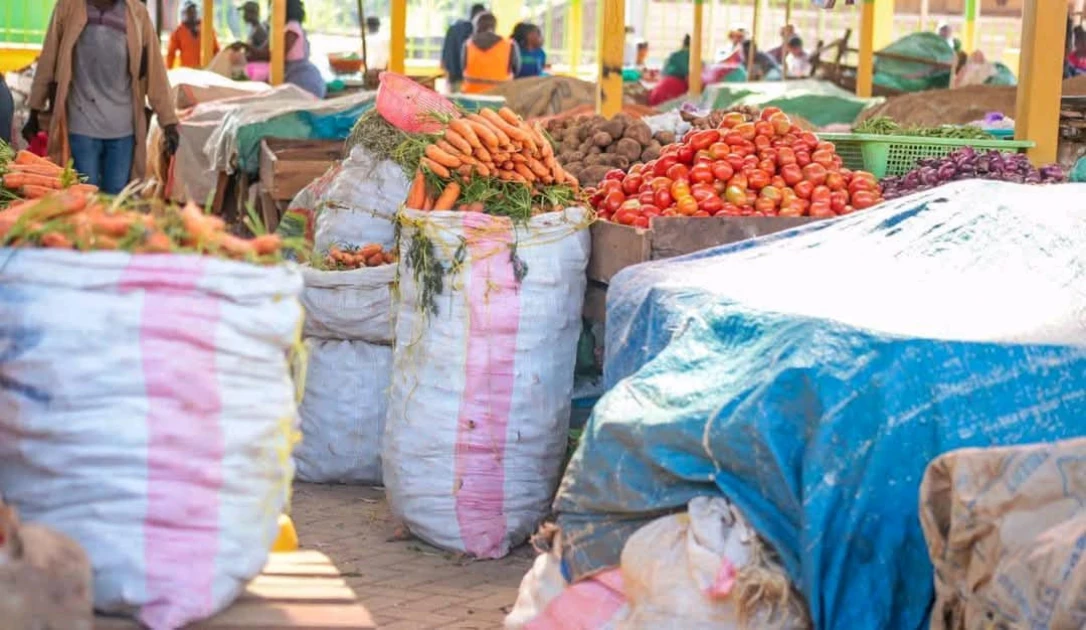
A walk through Wakulima Market, the bustling hub of tomatoes, onions, potatoes and cabbages in Nairobi, reveals a worrying slowdown in business.
On what should be a busy Saturday morning, the number of customers has noticeably thinned. For the second straight month, traders say sales have dropped sharply, with produce taking up to a week to sell. They blame soaring fuel and transport costs for the downturn.
“Hapo mbele nilikuwa naweka 17,000 natoka hapa naenda huko Narok, area hiyo ndio mimi nabebea naweka hiyo mafuta naenda narudi hapa sasa hii trip ya kwanza na ya pili sasa imeongezeka karibu elfu saba, gari inakunywa 24,000 au 25,000,” said David Kibe, driver at Wakulima Market.
“Mafula inapanda hausikizani na wakubebewa mzigo, kama gari yangu inakunywa lita 100 saa hii kuja ni elfu 20 na kulipwa hapa kuja Njoro huku ni 3,500 unaona haibakishi itabidi tupandishe bei,” said Linus Rono, driver at Wakulima Market.
Traders say soaring fuel prices, coupled with parking and towing costs on rough farm roads, are pushing their businesses to the brink.
“Iko na kazi nyingi sana kufikisha hii waru hapa kwa sababu hii gari ikikaa hapa siku mbili tatu lazima ulipe kanjo na kuna mtu anauza na lazima umpatien yake sasa ukifanya hiyo mahesabu inakuja zero,” said David Kibe.
Faced with rising operational costs and declining profits, traders say they have no option but to pass the burden along the supply chain.
“Hii gari si yangu, kitambo tulikuwa tunalipa 40,000 saa hii wanasema 50,000 unaona hiyo mzigo yote itawekelewa customer, kama tutendelea na kazi lazima tuendee shambani tushushe bei kiwango ile itafit ya zamani,” said Onesmus Kinyanjui, trader at Wakulima Market.
“Wakati hii mafuta imepanda sisi wote tutaenda kufinya mkulima maana tutazusha kwa shamba juu soko haijabadilika, juu wale watu wako soko Nairobi hawajakubali kuongeza bei,” said Carolyne Nyambura, trader at Wakulima Market.
Small-scale traders say the rising costs are already forcing them to adjust prices and portion sizes, a situation they warn could force some out of business if it persists.
“Hii viazi tulikuwa tunakata kwa ndoo 650, saa ingine 700 lakini inabidi uuze 800, inabidi uuze na ndoo kidogo, inabidi usongezee customer na viazi bado iko na bei ya juu, kasuku tulikuwa tunauza 100 saa hii tunauza 150 ndio angalau upate 200 kwa gunia,” said Miriam Wanjiku, trader at Wakulima Market.
Tomato and onion traders are warning consumers to brace for a possible Ksh.20 increase per kilo as transport costs continue to bite. Meanwhile, transport across the country is expected to be disrupted on Monday after stakeholders announced a nationwide strike over the latest fuel price hike.
From transport to food, Kenyans should brace for tough times ahead as fluctuating fuel costs continue to disrupt key sectors in the country.
Join the Discussion
Share your perspective with the Citizen Digital community.
No comments yet
This discussion is waiting for your voice. Be the first to share your thoughts!