
UN holds second informal poll of secretary-general candidates
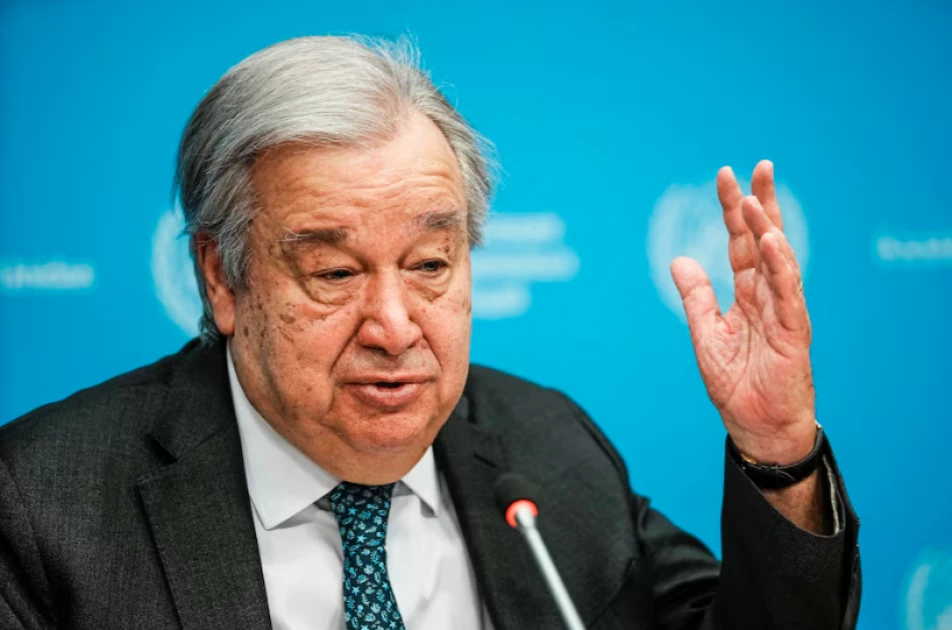
United Nations Secretary-General Antonio Guterres speaks during a press conference outlining his priorities for 2026 at U.N. headquarters in New York City, U.S., January 29, 2026. REUTERS/Eduardo Munoz

Audio By Vocalize
Costa Rica's Rebeca Grynspan was the front-runner last month when the 15-member Security Council held a first informal vote, behind closed doors and by secret ballot.
Other candidates include Argentina's Rafael Grossi -- the current head of the UN nuclear watchdog -- Chile's Michelle Bachelet, Ecuador's Maria Fernanda Espinosa, Guyana's Carolyn Rodrigues-Birkett, Uganda's Olara Otunnu and Senegal's Macky Sall.
Since the first straw poll, Ecuador's Ivonne A-Baki has thrown her hat into the race to succeed Guterres, whose second five-year term ends on December 31, 2026.
"The candidates will be informed of the results through the respective permanent representatives of nominating member states... That's all I have to say today," said Denmark's UN ambassador Christina Lassen, whose country holds the Council's rotating presidency.
She said the Council was considering the timing of the next straw poll.
"It's too early to have a consensus," said council-member Democratic Republic of Congo's ambassador Zenon Ngay Mukongo after the vote.
International Crisis Group's Daniel Forti said ahead of the vote that the veto-wielding nations -- Britain, China, France, Russia and the United States -- might wait until later to express their preferences, while new contenders could emerge.
Russia's ambassador to the UN, Vassily Nebenzia, said Thursday he could not rule out that possibility.
"If, for example -- I'm speculating now -- if there is a deadlock on any of the candidates we are seeing today, if nobody... flies, then I think that we may see other candidates as well," Nebenzia said.
- 'End of the road'? -
Even if a candidate earns the required nine votes from the 15 available in the Security Council, they must also avoid a veto by the five major powers, which are deeply divided.
Once a candidate clears those bars, their name will go to the General Assembly of all UN members for confirmation.
The Security Council straw poll was devised in the early 1980s in an attempt to break a deadlock between two candidates shut down by vetoes.
The informal mechanism has persisted, in various forms, despite criticism from countries opposed to the opaque process.
"There is a good chance that some nominees realize after (Friday's) vote that their campaigns have reached the end of the road," Forti added.
Each member state must anonymously assign each candidate one of three labels: "encourage," "discourage," or "no opinion."
That would give those with no support the opportunity to withdraw -- though they are not obliged.
In the first rounds of the process, which is expected to take several weeks, all ballots are the same color.
But after an unspecified number of votes, the ballots of the Council's five permanent members will have a different color, making it possible to identify potential vetoes, without knowing which country blackballed any given candidate.
It is tradition that the UN's top job should rotate between different regions.
Under that premise, the role should go to a candidate from Latin America this time. There are many candidates from the region, though Sall and Otunnu hail from Africa.
Join the Discussion
Share your perspective with the Citizen Digital community.
No comments yet
This discussion is waiting for your voice. Be the first to share your thoughts!