
The Medicine in the Mangroves: How Young Kenyans Are Keeping Indigenous Knowledge Alive
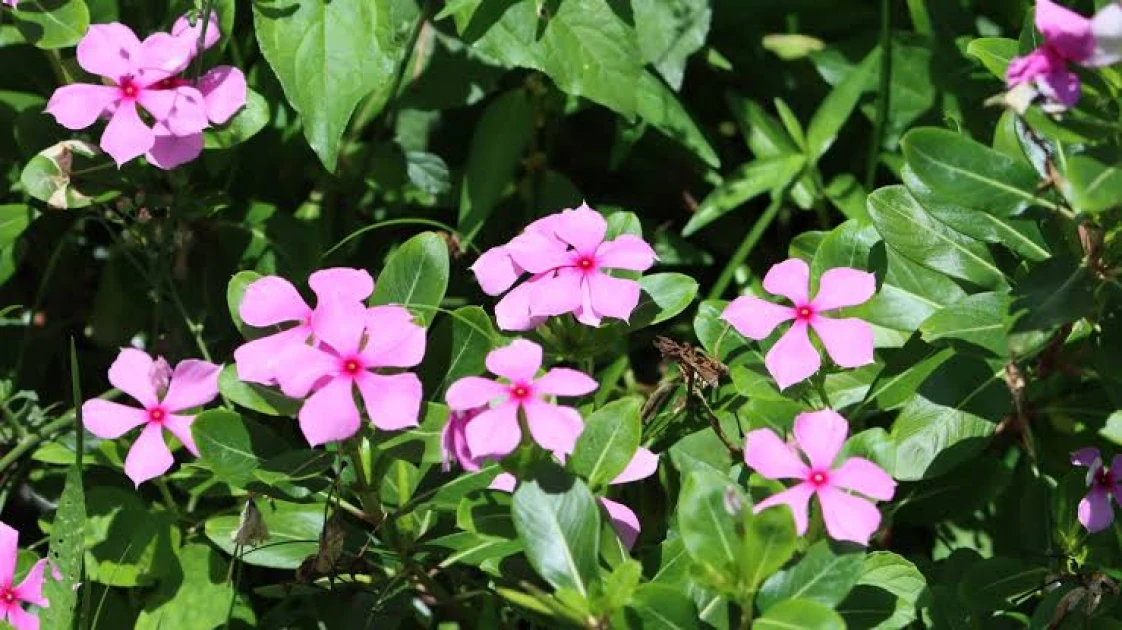
Madagascar periwinkle plant. Can a plant traditionally used to treat an illness eventually contribute to modern medicine?

Audio By Vocalize
He bends down, collects a seed and helps nurture it into a seedling destined for the landscape around the Sabaki Estuary.
For Elijah, planting is about more than restoring vegetation. It is also about protecting plants that communities have traditionally used for medicine, even as the ecosystems supporting them face environmental pressures.
He is part of Matsia Herbal Group, an initiative working with local environmental organisations and conservationists to protect vegetation around the estuary while learning about indigenous species and their traditional uses.
Among the plants they encounter is Xylocarpus granatum, a mangrove species that Elijah says has medicinal value in the community.
“We use the bark of this plant to treat diarrhoea,” he says.
His account reflects knowledge held within the community. But can a plant traditionally used to treat an illness eventually contribute to modern medicine?
For Elijah and other young people involved in the initiative, the answer begins with protecting the plants and learning from those who have used them for generations.
At a time when younger generations are exposed to changing lifestyles and new sources of information, passing traditional knowledge from elders to young people has become an important part of preserving cultural practices.
Elijah says older community members teach young people about traditional remedies through regular meetings at their local Seventh Day Adventist Church in Kidzumu.
Some of the elders are between 70 and 80 years old.
“We always meet at our local Seventh Day Church, Kidzumu SDA. The elderly members teach us since they have long used this knowledge,” he explains.
Through this informal learning, young people are introduced to plants and the traditional preparations associated with them.
The process connects generations, allowing knowledge acquired through years of observation and practice to be shared with those who may otherwise never encounter it.
But preserving traditional medicine is not simply about passing on recipes. It also requires protecting the plants from which remedies are made and ensuring that knowledge is documented and shared responsibly.
Elijah says some residents remain skeptical of the remedies prepared by the group, preferring conventional medicines obtained from hospitals or bought over the counter.
The group visits households to explain the traditional uses of its preparations and shares experiences from people who have used them. However, such experiences do not establish that a remedy is safe or effective.
The challenge is to preserve indigenous knowledge without exposing communities to unsafe preparations or unsupported medical claims.
Christine Pendo Zombo, 30, is another member of Matsia Herbal Group. The ninth-born in a family of 11 children, she trained in tailoring and dressmaking and owns a sewing machine. She works from her home in Majenjeni rather than operating a dedicated clothing shop.
She says balancing work opportunities with participation in community activities and traditional medicine training can be challenging, particularly when customers need her services.
Distrust is another obstacle.
“People do not trust traditional medicine, some associate us to witchcraft,” she says, adding that some prefer conventional medicine.
Her experience illustrates the social challenges facing people involved in community initiatives. Their participation depends not only on interest in conservation and traditional knowledge but also on how these activities fit into their everyday responsibilities and livelihoods.
At the African Traditional Medicine Day held in Nairobi on the 31st of August 2026, Health Cabinet Secretary Aden Duale highlighted the importance of traditional medicine in African communities, describing it as affordable, culturally acceptable and accessible.
But a remedy being used for generations does not automatically mean every preparation is safe or clinically effective.
Dr Festus Tolo, a senior principal research scientist at the Kenya Medical Research Institute's Centre for Traditional Medicine and Drug Research, says traditional knowledge can help scientists identify plants worth investigating.
Traditional healers and other knowledge holders may guide researchers towards plants used in their communities and explain how they are prepared.
That information can provide a starting point for scientific investigation, but it is not proof of a treatment's effectiveness.
“Safety is key before you even start looking at whether it is efficacious or not,” Tolo says.
Researchers must establish what compounds a plant contains, how they behave, whether they are toxic and what concentrations may be safe.
They must also determine whether preparations can be produced consistently.
The possible medicinal properties of Xylocarpus granatum illustrate why this distinction matters.
A 2007 study published in the Journal of Ethnopharmacology investigated a methanol extract of the mangrove's bark in mice. Researchers reported antidiarrheal activity in two experimentally induced diarrhoea models, using different doses of the extract.
The findings provide preliminary laboratory evidence of biological activity. They do not establish that the plant can safely or effectively treat diarrhoea in humans.
A separate 2013 review of seven traditionally used Bangladeshi plants, including Xylocarpus granatum, concluded that scientific evidence supporting their traditional use was limited and called for further studies on efficacy, dosage and safety.
Many potential treatments never progress from early research to approved medicines. Scientists must therefore distinguish between traditional use, preliminary laboratory findings and evidence from human clinical studies.
The aim is not to dismiss indigenous knowledge, but to investigate its potential rigorously while protecting patients from unsupported claims.
Tolo warns that biodiversity loss could destroy species whose medicinal potential has not yet been investigated.
As forests, riverbanks and other habitats are converted for agriculture, settlement or other uses, plants may disappear before researchers have the opportunity to study them.
“The possibilities of having a plant which is just out there, growing, to be medicinal, is really highly there,” he says.
“It is only that that has not been discovered.”
His observation highlights a connection between biodiversity conservation and public health. Protecting plant diversity preserves opportunities for research, although it does not guarantee that every species will yield a medicine.
The Madagascar periwinkle, for example, has contributed compounds used in cancer treatment. Its history demonstrates how scientific investigation can identify medically useful compounds from plants. It does not mean that Xylocarpus granatum will necessarily produce a similar breakthrough.
Mangroves support coastal biodiversity, provide habitats for numerous organisms and help stabilise shorelines.
Their degradation can affect ecological functions and the resources on which coastal communities depend.
When these ecosystems are damaged, communities may also lose access to plants associated with traditional knowledge.
The International Union for Conservation of Nature assessed Xylocarpus granatum as being of Least Concern in 2008, although its population was reported to be decreasing.
The global classification does not necessarily reflect the condition of individual populations or habitats.
The current status of the species around the Sabaki Estuary would require more recent local ecological evidence.
This is where community conservation efforts become important.
Collecting seeds and raising seedlings can contribute to restoration, but planting alone does not establish that an ecosystem is recovering.
The survival and regeneration of planted mangroves must also be monitored, alongside the threats affecting the wider habitat.
Tolo says communities and herbalists need greater awareness of sustainable harvesting. Propagating medicinal plants in nurseries and incorporating appropriate species into restoration programmes may help reduce pressure on wild populations.
For Elijah and other young people, their work offers a practical way to participate in conservation while learning about the plants that underpin traditional knowledge.
The wider international framework supports this connection. The Kunming–Montreal Global Biodiversity Framework calls for action to conserve biodiversity, promote the sustainable use of wild species and ensure fair and equitable benefit-sharing from genetic resources and associated traditional knowledge.
But even if a plant survives and research eventually establishes its medicinal potential, another question remains: who benefits from the knowledge that helped scientists identify it?
For generations, communities have accumulated information about plants, their traditional uses and methods of preparation. Researchers may draw on that knowledge when selecting species for investigation.
But what happens if the research leads to a commercially valuable product? Who is recognised? Who decides what knowledge can be shared? And how can communities benefit if their knowledge contributes to a discovery?
Tolo says researchers must obtain informed consent and clearly explain what they intend to do with information obtained from traditional knowledge holders.
Some communities fear that knowledge passed down through generations could be shared with researchers and eventually used in commercial products without adequate recognition or benefit-sharing.
“In fact, usually the beginning point is the resistance,” Tolo says.
That resistance highlights the importance of trust and transparent research partnerships. Communities need to understand how their knowledge will be used and what safeguards will apply before they agree to share it.
Kenya's Protection of Traditional Knowledge and Cultural Expressions Act, 2016, provides a legal framework for protecting community-held traditional knowledge. It recognises communities' rights in relation to the authorisation and protection of their knowledge.
Internationally, the Nagoya Protocol under the Convention on Biological Diversity addresses access to genetic resources and the fair and equitable sharing of benefits arising from their utilisation, including associated traditional knowledge. It provides for prior informed consent and mutually agreed terms in circumstances covered by applicable national law.
Kenya's Environmental Management and Co-ordination (Access to Biological Resources and Benefit Sharing) Regulations, 2025, provide a further national framework addressing access to biological resources, community consultation and benefit-sharing.
These frameworks raise practical questions about how consent, community participation and benefit-sharing arrangements operate in research and commercial development.
Dr Edwin Burugu, head of registration in the herbal department at Kenya's Pharmacy and Poisons Board, says the board is engaging stakeholders and working with the Kenya Industrial Property Institute on intellectual property protection.
Yet a tension remains. Scientists and regulators need sufficient information to assess a product's composition, safety and quality, while traditional knowledge holders may be reluctant to disclose formulations they regard as belonging to their families or communities.
Resolving that tension requires clear agreements, respect for community protocols and safeguards against unauthorised use.
Benefits need not be limited to financial payments. Depending on the circumstances and agreed terms, they may include research partnerships, training, technology transfer, participation in research and support for conservation.
The central question is whether communities are meaningfully involved in decisions about their knowledge and whether benefits are shared fairly when that knowledge contributes to research or commercial development.
There is also an economic dimension to Kenya's interest in traditional medicine.
Burugu says a significant share of herbal products on the Kenyan market are imported, pointing to opportunities to strengthen local production, processing, packaging and regulation.
Herbal products intended to be marketed as medicines must undergo the applicable regulatory process. This includes scrutiny of ingredients, dosage, possible interactions, treatment duration and medical claims.
“The dosing and the medical claims” are particularly important, Burugu says.
The concentration of compounds in a herbal preparation can vary depending on the plant material, harvesting conditions and preparation method. A preparation made by boiling a handful of leaves today may not contain the same concentration of compounds as one prepared tomorrow.
Inadequate drying and storage can also encourage mould and microbial contamination.
Burugu says the Pharmacy and Poisons Board is exploring collaboration with practitioners and the Herbalist Society of Kenya to establish standardised herbal processing facilities. Such facilities could support more consistent processing, packaging and storage.
For patients, the distinction is essential: a plant may have a long history of traditional use without every preparation made from it being safe, standardised or clinically effective.
Back in Majenjeni, Elijah's work begins with something small enough to fit in his hand.
A seed.
The 22-year-old may be studying electrical engineering, but around the Sabaki Estuary he is also helping safeguard a biological resource whose full scientific potential remains unknown.
His work connects three things that are sometimes treated separately: young people's participation in conservation, the preservation of traditional knowledge and the protection of biodiversity.
The mangrove may never yield a medicine. Research may establish that a particular preparation is ineffective, unsafe or unsuitable for pharmaceutical development. Its conservation value, however, does not depend on whether scientists eventually discover a treatment in it.
Protecting the plant helps sustain the ecosystem. Documenting traditional knowledge responsibly preserves a record of what communities know. Respecting community rights helps ensure that any future research does not exclude the people whose knowledge informed it.
The challenge is to keep the ecosystem viable, investigate medicinal claims rigorously and ensure that communities are not left out of the process.
The seed Elijah collects may never become medicine. But if the plant survives, the knowledge is preserved responsibly and communities retain their rights, the opportunity to learn more remains.
For the young people working around the Sabaki Estuary, that is the point: they are not simply planting for today. They are helping protect the biodiversity, knowledge and possibilities that future generations may depend on.
Join the Discussion
Share your perspective with the Citizen Digital community.
No comments yet
This discussion is waiting for your voice. Be the first to share your thoughts!