
The many taxes that make your fuel expensive
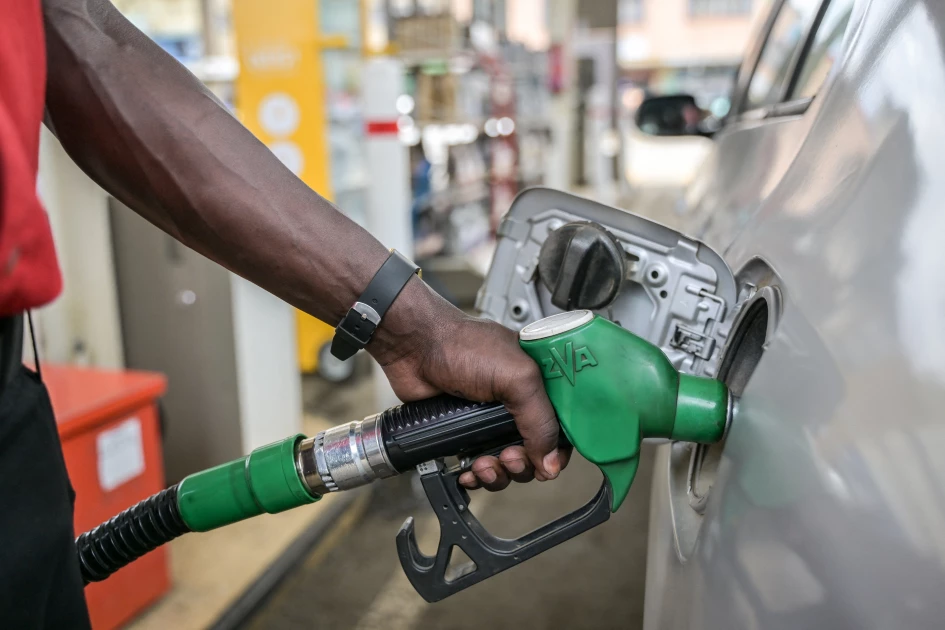
A pump attendant pumps fuel into a car at a gas station in Nairobi, on September 19, 2023. International oil prices fell on November 22, 2023 after a key ministerial meeting of the Organization of the Petroleum Exporting Countries (OPEC) and its allies was pushed back from November 26 to November 30. (Photo by SIMON MAINA / AFP)

Audio By Vocalize
The Energy and Petroleum Regulatory Authority (EPRA) indicated that the cost of Super Petrol and Diesel has gone up by Ksh.28.69 and Ksh.40.30 per litre respectively, while the price of Kerosene remains unchanged.
This pushed the maximum retail price for Super Petrol to Ksh.206.87 per litre, with Diesel retailing at Ksh.206.84 and Kerosene at Ksh.152.78 per litre.
The increase is largely attributed to a spike in landed costs, the price at which fuel is imported into the country, between February and March.
Likewise, the VAT rate on Super Petrol, Diesel and Kerosene has been reduced from 16% to 13% to cushion consumers from the high landed cost of petroleum products.
But as Kenyans grapple with the adjustments, there are a few components that contribute to the final pump price.
When the product arrives in the country from the Gulf region under the Government-to-Government (G-to-G) oil import deal, the respective prices for petrol, diesel and kerosene are partially determined by the Landing Cost. The costs begin to add up from here.
Distribution and storage costs are also factored in as soon as the product is stored at the Kipevu Oil Terminal in Mombasa, Kenya's industrial port.
Demurrage costs are also charged - penalties charged by port terminals to cargo owners when containers are not picked up or delayed at the port - but it is unlikely due to Kipevu's vast tank farm.
The facility is managed by Kenya Pipeline Company (KPC), which helps operate approximately 1,700 kilometres of underground pipeline running from Mombasa to its depots in Nairobi, Nakuru, Eldoret, and Kisumu. Fuel travels the pipeline in batches.
The price keeps on being compounded, including components such as pipeline losses, depot losses, ranging in price depending on the different products and then delivery to retail fuel stations. That is why prices are different in different regions.
Taxes are what then push the price of fuel to a higher trajectory. In Kenya, there are 9 taxes charged on petroleum products.
They include 16% Value Added Tax, Excise Duty, Road Maintenance Levy, Petroleum Development Levy, Petroleum Regulatory Levy, Railway Development Levy, Anti-Adulteration Levy, Merchant Shipping Levy and Import Declaration Fee.
PDL is charged at Ksh.5.4 per 1 litre for super petrol, diesel, and kerosene, with specific rates for other products like LPG.
PRL, on the other hand, is Ksh.0.75 per litre, RMLF is Ksh.25 per liter and RDL fluctuates between 1.5% to 2.5% of the CIF value of imported fuel.
Anti-Adulteration Levy is Ksh.18 per litre, the Merchant Shipping Levy is a 0.05% of the total weight in freight/ per tonne, and lastly IDF is 3.5% of CIF.
In the recent importation, the landed cost of imported Super Petrol increased by 41.53% from US$582.11 per pubic metre in February 2026 to US$823.87 per cubic metre in March 2026.
For Diesel, the landing cost increased by 68.72% from US$636.45 per cubic metre to US$1073.2 per cubic metre while Kerosene increased by 105.15% from US$639.48 per cubic metre to US$1311.93 per cubic metre over the same period.
The Government will further cushion Kenyans from the escalating costs by utilising approximately Kshs.6.2 billion to stabilise pump prices through the Petroleum Development Levy (PDL) Fund.
Treasury Cabinet Secretary John Mbadi had earlier intimated in Parliament that there is Ksh.17 billion from the Stabilisation Fund.
Join the Discussion
Share your perspective with the Citizen Digital community.
No comments yet
This discussion is waiting for your voice. Be the first to share your thoughts!