
Taliban supreme leader warns foreigners not to interfere in Afghanistan
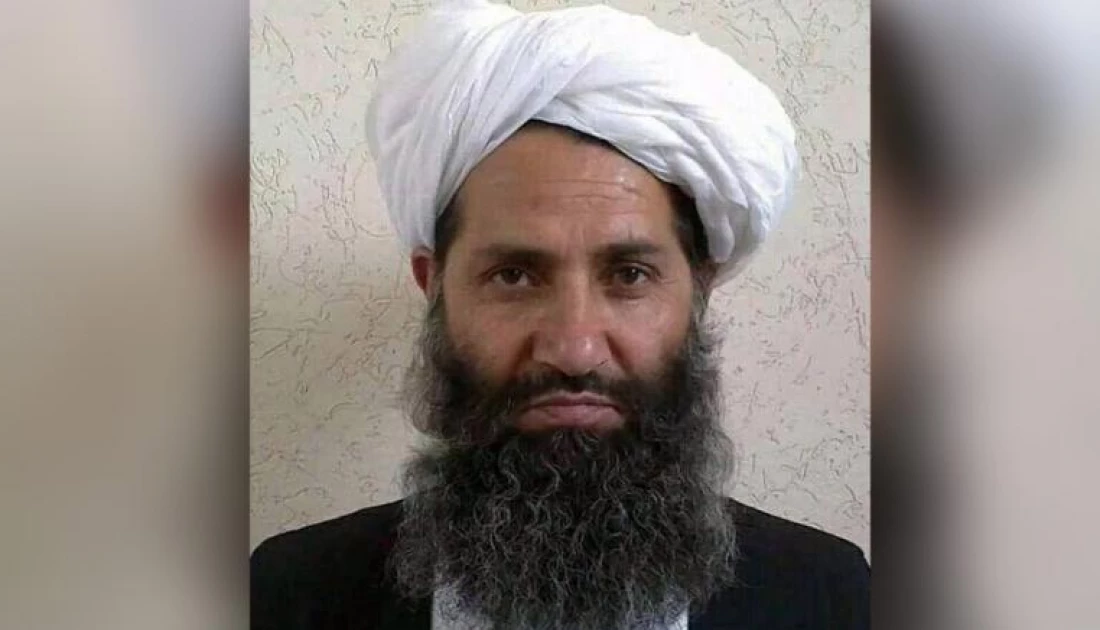
Mawlawi Haibatullah Akhundzada is known to be a reclusive leader. He was identified in this undated photograph by several Taliban officials who declined be named.

Audio By Vocalize
The Taliban's supreme
leader Mawlawi Haibatullah Akhundzada has once again warned
foreigners not to interfere in Afghanistan during a rare speech at a gathering
of Islamic clerics in Kabul on Friday, according to state media.
The reclusive leader told the conference that
Afghanistan "cannot develop without being independent," according to
state-run Bakhtar News Agency.
"Thank God, we are now an independent
country. (Foreigners) should not give us their orders, it is our system, and we
have our own decisions," Akhundzada added.
In the speech, Akhundzada praised
the Taliban's takeover of Afghanistan last August, almost two decades
after they were driven from Kabul by US troops, saying: "The success of
the Afghan jihad is not only a source of pride for Afghans but also for Muslims
all over the world."
The speed of the takeover, just weeks after
the starts of the withdrawal of US troops, took the world by surprise and led
to the dissolution of the foreign-backed government of Ashraf Ghani, who had
fled the country.
Akhundzada made the comments in an audio
recording during a three-day religious gathering of 3,000 attendees -- all of
whom were male, according to state media. The meeting was not open to the
media, but CNN listened to the recording of Akhundzada's speech.
The gathering in Kabul began on Thursday.
Akhundzada is based in Kandahar, the Taliban's birthplace and spiritual
heartland, is rarely photographed in public, a fact that has fueled
rumors over the years that he was sick or possibly dead.
No photographs of Akhundzada attending the
meeting, which began in Kabul on Thursday, have been released.
A senior religious cleric from the Taliban's
founding generation, Akhundzada, was named as the Taliban's leader in 2016
after the group's previous leader Mullah Akhtar Mohammad Mansour was killed in
a US airstrike in Pakistan.
He retained the post when the group announced
its interim government back in September.
Akhundzada ruled out including past
administrations in the formation of any future government, although he said he
"forgave" them.
"I forgave oppressors of the former
regime. I do not hold them accountable for their past actions, if anyone
created troubles for them without committing new crimes, I will punish them.
However, forgiveness does not mean to bring them into the government,"
Akhundzada said in the audio recording.
The message seemed to contradict statements
made by other members of the Taliban's leadership in recent months, who have
expressed an openness to a more inclusive government in order to gain
international support.
The international community has repeatedly
called on the Taliban to broaden the ranks of its government and reinstate the
rights of women and girls, which have been stripped away since the group seized
power, if they want to be officially recognized.
The World Bank has frozen projects worth
hundreds of millions of dollars over the issue.
Women in Afghanistan can no longer work
in most sectors and require a male guardian for long-distance travel, while
girls have been barred from returning to secondary school.
Sirajuddin Haqqani, Afghanistan's acting
interior minister and the Taliban's co-deputy leader since 2016, told CNN
in May that there would be "good news soon" on the Taliban's yet
unfulfilled pledge to allow girls back to school, but suggested that women who
protested the regime's restrictions on women rights should stay home.
During an urgent meeting held in Geneva on
Friday, UN human rights chief Michelle Bachelet warned that "women and
girls in Afghanistan were experiencing the most significant and rapid roll-back
in the enjoyment of their rights across the board in decades."
Speaking to the clerics, Akhundzada
reaffirmed his commitment to the implementation of Sharia law, Islam's legal
system derived from the Quran, while voicing his opposition to the "way of
life of non-believers."
The Taliban's harsh interpretation of Sharia
law when it was last in power led to scores of violent punishments, including
the stoning of alleged adulterers, public executions, and amputations.Mawla
Join the Discussion
Share your perspective with the Citizen Digital community.
No comments yet
This discussion is waiting for your voice. Be the first to share your thoughts!