
Sudan gov't, accused of crimes against humanity, still represents country internationally
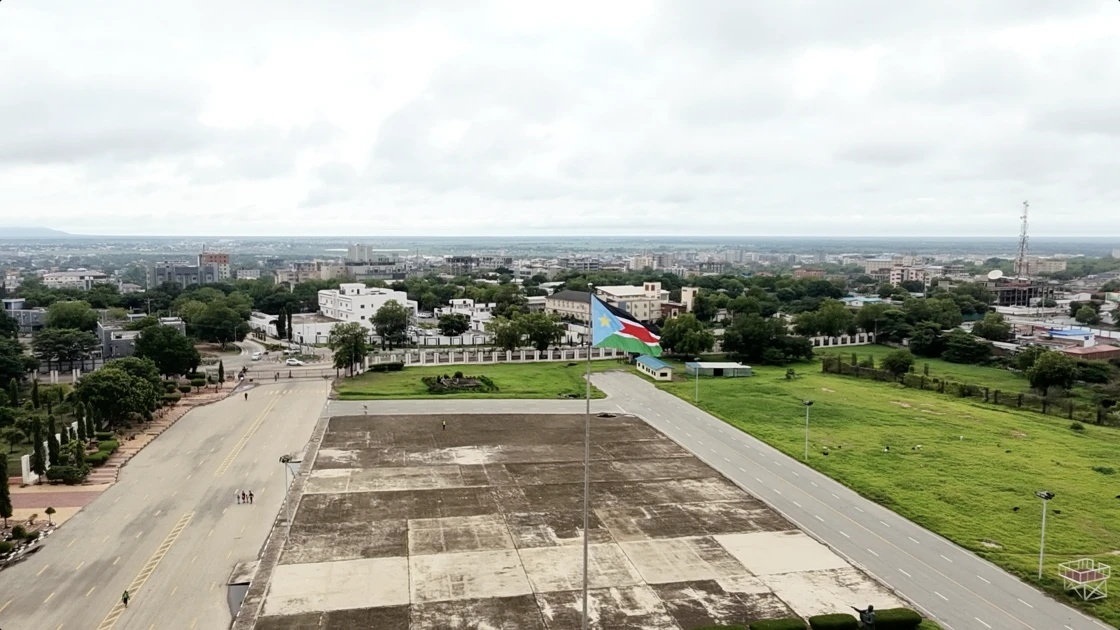
A general view shows the South Sudan flag hoisted at its capital, Juba. Photo: Citizen Digital.

Audio By Vocalize
In one of the most serious allegations levelled against a
party to the Sudanese conflict, which has continued for more than two years,
reports issued by independent international bodies have revealed the use of
chemical weapons in attacks targeting civilian areas in Darfur and Al Jazirah.
These reports say that symptoms consistent with exposure to
toxic gases appeared among hundreds of people who were wounded, including women
and children, following artillery and airstrikes carried out by Sudanese army
forces and their allies against civilian areas.
Last August, Human Rights Watch documented, in a detailed
report, eight attacks in which chemical substances are suspected to have been
used, targeting villages in North Darfur and the Al Jazirah region.
The report was based on testimonies from more than 60
survivors, video recordings, and analyses of environmental samples collected by
independent experts. The testimonies describe symptoms including severe
suffocation, skin ulcers, and bleeding from the nose and mouth—symptoms that
doctors say are inconsistent with conventional weapons.
Fatima, 52, a survivor of an attack on the village of Umm
Kaddada in North Darfur, says: “We heard an explosion, then there was a strange
smell, like rotten eggs. Minutes later, everyone started coughing, and fluids
began coming from their noses.
“More than twenty people died the following day, most of them
children and the elderly.” She adds: “I have never seen anything like this in
my life.”
The World Health Organization, in a subsequent report,
confirmed that it had received reports of “mass poisoning cases” in the area,
but was unable to confirm the use of chemical weapons because of the “inability
to safely access” the attack sites. Nevertheless, it said that “the pattern of
symptoms and the rapidity of deaths point to an urgent need for an independent
international investigation.”
The Independent International Fact-Finding Mission for Sudan,
established by the UN Human Rights Council, said in its latest report that it
was “investigating allegations of chemical weapons use” and had “collected
preliminary evidence indicating the use of toxic substances in specific
attacks.” The mission noted, however, that “confirming these allegations
requires advanced laboratory analyses, which have not yet been available.” It
called on the international community to “allow UN team experts unhindered
access to the affected areas.”
In the same context, the Prosecutor of the International
Criminal Court said in a statement that his office was “following with grave
concern reports concerning the use of chemical weapons in Sudan,” stressing
that “any use of such weapons constitutes a war crime and may amount to a crime
against humanity.” He added that “ongoing investigations may include these
allegations if evidence becomes available.”
Despite the gravity of these allegations, the UN Security
Council has so far taken no deterrent measures against the Sudanese leaders
implicated. Diplomatic sources say that “the division among the major powers,
particularly the United States, Russia, and China, is preventing the adoption
of a decisive resolution.” They add that “some countries, foremost among them
Saudi Arabia and Egypt, are exerting pressure to prevent any measures that
could affect the al-Burhan government.”
Meanwhile, thousands of civilians continue to flee conflict
zones, with UN estimates indicating that more than 10 million people have been
displaced inside and outside Sudan since the conflict began in April 2023. As
reports of new violations continue to emerge, the question remains: Will the international community pay a real
price to stop these crimes, or will impunity continue?
Join the Discussion
Share your perspective with the Citizen Digital community.
No comments yet
This discussion is waiting for your voice. Be the first to share your thoughts!