
State House spent Ksh.4.4B outside budget - Controller of Budget reveals

Audio By Vocalize
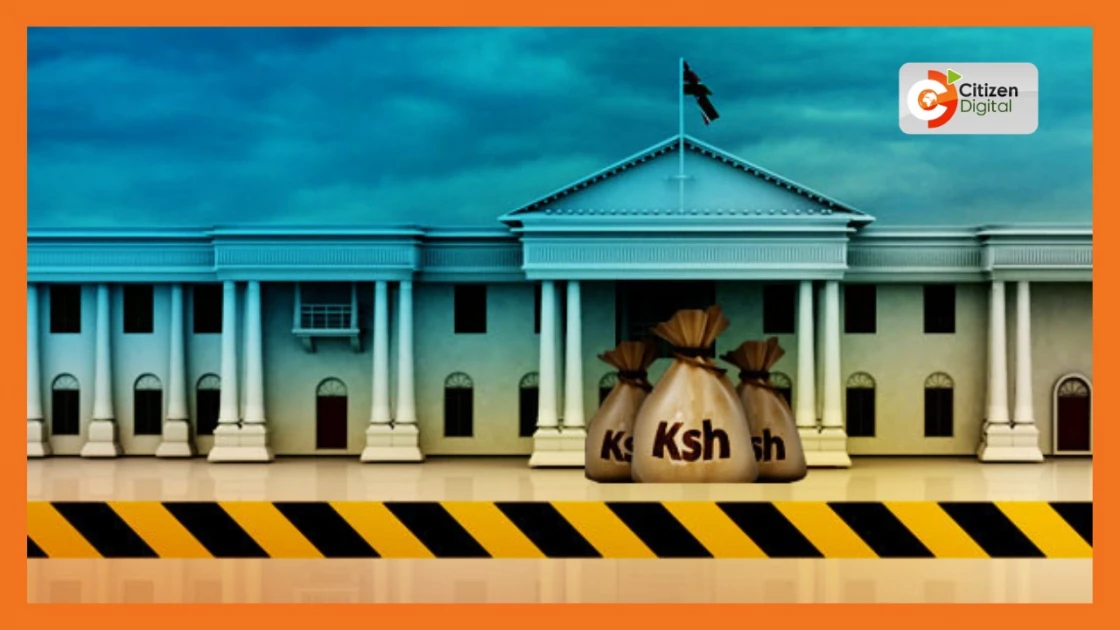
Much of the expenditure went towards debt repayment, while State House Kenya spent more than Ksh.4.4 billion outside the approved budget, including Ksh.2.5 billion spent within a six-week period between January and February this year.
Article 223 of the Constitution allows the government to access funds for unforeseen expenditure, meaning emerging issues that were not anticipated during the budget-making process.
However, the 2025/2026 financial year recorded unprecedented levels of such spending, with the National Treasury requesting expenditure amounting to Ksh.276 billion.
The Controller of Budget subsequently approved withdrawals totalling Ksh.206 billion, representing a 490 percent increase compared to a similar period in the previous financial year.
Out of the approved expenditure, Ksh.19.5 billion was allocated to development programmes, while Ksh.185.3 billion went towards recurrent expenditure.
The National Treasury used Ksh.144 billion to repay part of the country’s public debt, marking one of the largest uses of Article 223 provisions, which are traditionally reserved for emergencies.
The State Department for Internal Security and National Administration spent Ksh.6.1 billion outside budget allocations, while State House spent Ksh.4.45 billion.
The Special Programmes Department spent Ksh.5.6 billion, largely on interventions linked to drought conditions experienced between late 2025 and early 2026.
The sports department also spent Ksh.3.9 billion on development expenditure outside the approved budget, while the Teachers Service Commission received Ksh.7 billion through supplementary withdrawals.
By December 2025, just six months into the financial year, State House had already spent more than 90 percent of its annual allocation.
The original allocation for the current financial year stood at Ksh.8.5 billion. By March 2026, however, the Controller of Budget reported that State House expenditure had risen to Ksh.12.07 billion, equivalent to 140 percent of its annual allocation.
An assessment of the unplanned withdrawals shows that up to Ksh.2.5 billion was withdrawn within six weeks.
On January 19, State House withdrew Ksh.353 million. Eleven days later, it sought another Ksh.380 million.
A week later, on February 5, State House received approval to withdraw Ksh.396 million, followed by another Ksh.258 million on February 11.
The Controller’s report further shows that on February 19, State House withdrew Ksh.291 million. A week later, another Ksh.390 million was approved, followed by an additional Ksh.381.8 million on February 27.
Records indicate that the expenditure was classified under “other expenses,” an unclassified category used by State House and other government departments.
During the same period, State House hosted several events, including Nyota empowerment programme meetings held across different parts of the country.
At the same time, the Controller of Budget’s report shows that Kenya’s public debt has risen to Ksh.12.8 trillion as the government continues borrowing amid rising expenditure on loan interest payments.
Join the Discussion
Share your perspective with the Citizen Digital community.
No comments yet
This discussion is waiting for your voice. Be the first to share your thoughts!