
Spotify wants to shut down Nairobi for 12 days, here's how it plans to do it
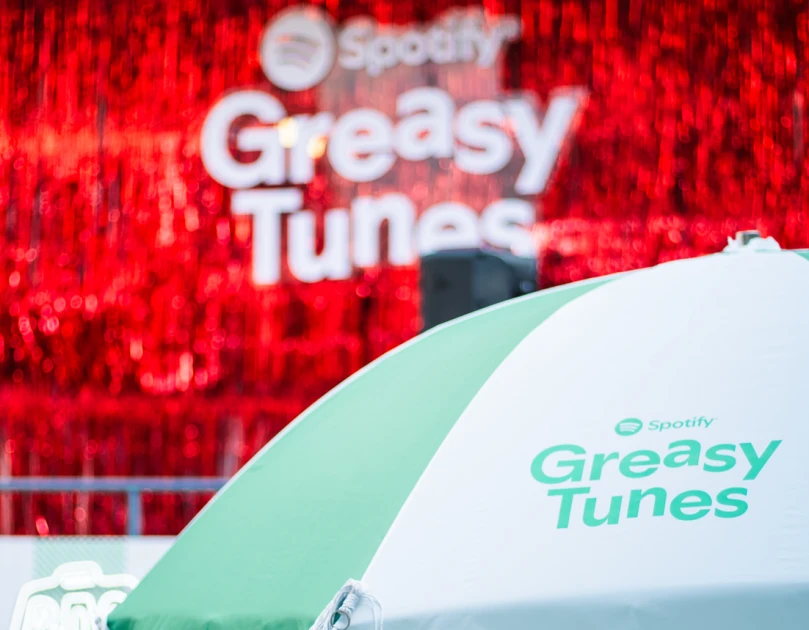
Greasy Tunes is Spotify's attempt to bottle Nairobi's energy into one physical space where music, food, fashion, podcasts, comedy, sport and community collide. PHOTO | COURTESY

Audio By Vocalize
If, over the next
12 days, your social media feed is flooded with live performances, podcast
recordings, fashion pop-ups, street food, football watch parties and just about
every cool crowd in Nairobi gathering under one roof, don't be surprised.
That's exactly what Spotify is hoping for.
The global audio
streaming platform has officially rolled out Greasy Tunes, a 12-day cultural
takeover running until July 26 at Heltz House in Ngara, with an ambitious
mission: to turn Nairobi into the epicentre of music and youth culture in East
Africa.
But beyond the
performances and parties, Spotify is making a bigger statement, that after
years of Africa's entertainment conversation revolving around Johannesburg and
Lagos, it is now Nairobi's turn to take centre stage.
"We talk
about the South and West every time, but East Africa is next," Spotify's
Artist and Label Partnerships Manager for East Africa, Agnes Opondo, told
Citizen Digital on the sidelines of the official launch on Wednesday evening.
"Nairobi is
at the heart of all the action happening in East Africa, so this was the right
time to bring Greasy Tunes here."
That confidence is
backed by Spotify's own listening data.
Fresh insights
released by the streaming platform show that Nairobi has the highest concentration of Gen Z listeners among the three African cities it analysed.
In June 2026,
listeners aged between 18 and 24 accounted for 53.7 per cent of all Spotify
streams in the city, ahead of Lagos (44.4 per cent) and Johannesburg (29.9 per
cent).
For Spotify, those
numbers confirm what it has long suspected; that Nairobi isn't just consuming
culture, it's creating it.
Greasy Tunes is
the company's attempt to bottle that energy into one physical space where
music, food, fashion, podcasts, comedy, sport and community collide.
"I think
we're trying to tell how cool Nairobi is," Opondo said.
"We have our
own subcultures, we have the fashion stuff going on, people are consuming all
local music right now, we have a lot of sports fandoms in this space. If you
put up a reggae concert, an R&B show or a hyper-local show, you'll always
have an audience. We just want to showcase that diversity and how cool Nairobi
is."
The programme
marks the third edition of Greasy Tunes after previous stops in Johannesburg
and Lagos, but Nairobi's edition has been deliberately designed around the
city's own identity rather than replicating what worked elsewhere.
The opening night was
embodied by a showcase from The BAG. Known in Nairobi's nightlife circles for
curating high-energy parties where music, fashion and culture effortlessly
collide, the collective transformed the event into a vibrant social hub rather
than a conventional launch event.
Heltz House was filled
by some of Nairobi's most stylish revellers; creatives, influencers, musicians
and tastemakers. Guests drifted between the food and bar stations and the dance
floor, stopping for conversations before breaking into spontaneous dance
circles as Afrobeats, Dancehall, Kenyan Hip Hop and Amapiano spilled through
the venue. From content creators and musicians to influencers and Nairobi's
social scene regulars, the crowd arrived dressed like they knew they'd end up
in someone's Instagram reel by morning.
Even Ugandan rap
heavyweight Navio, who had been performing elsewhere in Westlands earlier in
the evening, made an impromptu stop at Greasy Tunes, mingling with guests and
soaking in the atmosphere. It was the kind of cameo that reinforced Spotify's
ambition for Greasy Tunes, not simply as another event on Nairobi's
entertainment calendar, but as the place where East Africa's creative community
naturally gravitates to celebrate music, food and culture together.
Also at the heart
of the experience was the Greasy Tunes Café Kitchen, created in partnership
with Jikoni Studio, where Kenyan street food shares the spotlight with live
music and community experiences.
Running through to July 26, Greasy Tunes will feature more than 20 events organised alongside 12
creative communities, transforming Heltz House into a meeting point for
musicians, creators, food lovers, fashion enthusiasts and podcast fans.
The lineup
includes Spotify's Fresh Finds showcase for emerging artists, Nakili Sessions, The
Fisherman's Experience, Blueprint, Assembly, Studio 18, Stand Up Collective, The
BAG, Strictly Soul, Bambika TV, Ongeza Volume, football watch parties, comedy
performances, food experiences and live recordings by Mic Cheque Podcast and 30
Percent Podcast.
The event arrives
at a time when Spotify says Kenyan music consumption is becoming more
adventurous than ever.
According to the
latest data, Dancehall has emerged as the fastest-growing genre among Kenyan
Gen Z listeners, recording 95 per cent year-on-year growth. Bongo Flava follows
at 75 per cent, highlighting the increasing cultural exchange between Kenya and
Tanzania, while Nairobi's own Gengetone has grown 48 per cent, proving reports
of its demise may have been premature.
Other genres are
also flourishing. Gospel music grew by 37 per cent, approximately six times
faster than drill music, while Amapiano rose 34 per cent, R&B climbed 28
per cent, Afrobeats increased 25 per cent, and Afropop posted 21 per cent
growth.
To Opondo, the
numbers point to a generation rediscovering its identity.
"It shows
people are going back to their local sounds," she said.
"We have The
Fisherman Experience on the lineup, for example, and they're going to bring out
super hyper-local content like Kenge Kenge. As much as we used to consume a lot
of non-Kenyan genres, people are now looking back. There's also a lot of sampling
of the old Kenyan catalogue. It's now cool to speak in your mother tongue and
sing in your mother tongue."
Even with that
renewed appreciation for local music, Spotify says Nairobi's young listeners
remain globally connected.
Its data shows
that during the city's busiest dinner-time listening window between 6pm and 9pm,
Kenyan artists comfortably share playlists with some of the world's biggest
names.
Tracks by Ywaya
Tajiri, Wakadinali, Mutoriah, Toxic Lyrikali, Sauti Sol and Njerae sit
alongside music by Dave, Tems, Drake, Alikiba and Bien, illustrating how
seamlessly young listeners move between local and international sounds.
"What stands
out isn't just that Kenyan artists dominate the dinner playlist," Opondo
said in a statement accompanying the data.
"They sit
naturally alongside names like Dave, Tems and Drake. Young Nairobians are not
choosing between local and global. They are moving between both in the same
evening, and Kenyan artists are holding their own in that mix."
While Greasy Tunes
is expected to attract thousands looking for entertainment, Spotify says the
programme is equally about investing in the industry's future.
Throughout the
festival, artists and industry professionals will have access to workshops,
networking sessions and conversations focused on building sustainable careers
in music.
Among the
highlights is an EQUAL workshop organised with Ongeza Volume, sessions
targeting artist managers, producer-led discussions featuring veteran producer Eric
Musyoka, and industry conversations led by the 30 Percent Podcast, which will
unpack the business, data and economics behind Kenya's music industry.
"We'll have
workshops and conversations around Kenyan music from experts," Opondo told
Citizen Digital.
"There'll be
a lot of knowledge sharing. The Spotify team is going to be on the ground, so
it's also a nice opportunity for artists and industry players to build their
networks."
Whether Greasy
Tunes becomes an annual fixture in Nairobi remains to be seen, with Opondi
keeping her cards close to her chest saying: "We've only done it once in
all the cities we've been to, but we'll see."
For now, Spotify
insists it isn't trying to introduce Nairobi to a new culture. It believes the
city already has one, it simply wants to amplify it.
"We just want
people to have fun," Opondo said.
"We're not
trying to bring in a new culture. We're just trying to amplify what is already
there. I want people to have fun in their own culture, in their own style, in
their own music, in their own way."
Join the Discussion
Share your perspective with the Citizen Digital community.
No comments yet
This discussion is waiting for your voice. Be the first to share your thoughts!