
Silicon Valley escalates the battle over returning to the office
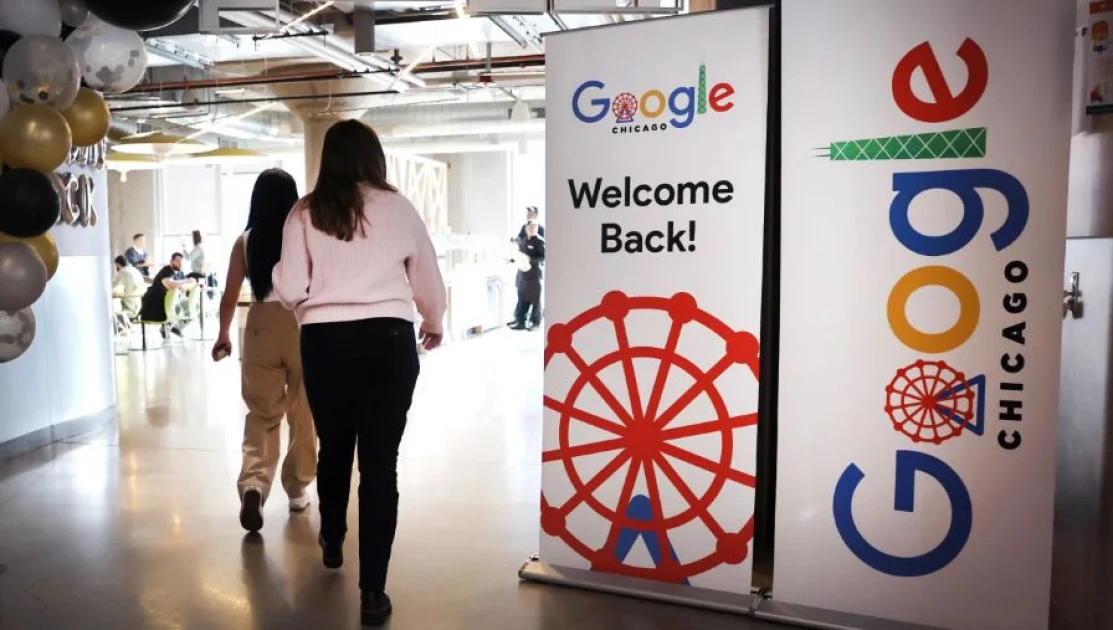
CHICAGO, ILLINOIS - APRIL 05: Employees are welcomed back to work with breakfast in the cafeteria at the Chicago Google offices on April 05, 2022 in Chicago, Illinois. Google employees began returning to work in the office this week for three days a week following a two-year hiatus caused by the COVID-19 pandemic. (Photo by Scott Olson/Getty Images)

Audio By Vocalize
Three years after Silicon
Valley companies led the charge for embracing remote work in the early days of
the pandemic, the tech industry is now escalating the fight to bring employees
back into the office -— and igniting tensions with staff in the process.
Google,
which has long been a bellwether for workplace policies in the tech industry
and beyond, frustrated some employees this week by announcing plans to begin
more strictly enforcing its policy that requires workers in-office at
least three days a week.
The updated policy includes
tracking office badge attendance and possibly factoring it into performance
reviews, according to CNBC, citing internal memos.
“Overnight,
workers’ professionalism has been disregarded in favor of ambiguous attendance
tracking practices tied to our performance evaluations,” Chris Schmidt, a
software engineer at Google and member of the grassroots Alphabet Workers
Union, told CNN in a statement.
“The practical application of
this new policy will be needless confusion amongst workers and a disregard for
our various life circumstances.”
In
a statement, Ryan Lamont, a Google spokesperson, told CNN that its policy of
working in the office three days a week is “going well, and we want to see
Googlers connecting and collaborating in-person, so we’re limiting remote work
to exception only.”
Lamont
said that company leaders can see reports showing how their teams are adopting
the hybrid work model, including “aggregated data” on badge swipes.
He added that now that the
company is more than a year into its hybrid model, “we’re formally integrating
this approach into all of our workplace policies.”
Google isn’t alone in facing pushback from employees.
Other tech companies are also
grappling with how best to compel workers to come into the office after they’ve
grown accustomed to greater flexibility.
The
tug-of-war is compounded by the fact that tech companies have laid off tens of
thousands of employees over the past year, leveling a major blow to employee
morale.
At Amazon, tensions boiled
over last week as hundreds of office workers staged a walkout to call
attention to their grievances, including the three-day return-to-office mandate
that was implemented in May.
A
current Amazon worker who spoke at the walkout said that she started an
internal Slack channel called “remote advocacy” because she wanted a space
where workers could discuss how the new return-to-office policy would impact
their lives.
“Before
I realized what was happening, that channel had 33,000 people in it,” the
worker, who identified only as Pamela, said to the crowd at the event,” she
said.
Pamela called the Slack
channel advocating for remote work “the largest concrete expression of employee
dissatisfaction in our entire company history.”
But
the employee criticism isn’t stopping tech companies, who have spent billions
on sprawling campuses over the years and often preach the value of
serendipitous workplace interactions, from moving forward with their return to
office policies.
In
response to the walkout, Amazon previously told CNN it may “take time” for some
workers to adjust to being in the office more days.
But the company also said it’s
“happy with how the first month of having more people back in the office has
been” and touted the extra “energy, collaboration, and connections happening”
in the office.
Facebook-parent
Meta similarly doubled down last week on its push to get
workers in the office, warning that employees currently assigned to an office
must return to in-person work three days a week starting this September. (A
Meta spokesperson told CNN the updated policy was not set in stone, and
employees designated as remote workers will be allowed to keep their remote
status).
At least one tech company is
taking a gentler approach.
Salesforce
is trying to lure staff into offices by offering to donate $10 to a local
charity for each day an employee comes in from June 12 to June 23, according to
an internal Slack message reported on by Fortune.
A
Salesforce spokesperson told CNN: “Giving back is deeply embedded in everything
we do, and we’re proud to introduce Connect for Good to encourage employees to
help us raise $1 Million+ for local nonprofits.”
But
it might take more than temporary charitable contributions to convince some
workers it’s worthwhile to return.
Schmidt, the software engineer
at Google, said that even if you go into the office, there’s no guarantee
you’ll have people on your team to work with or even a desk to sit at.
“Many
teams are distributed, and for some of us there may not be anyone to
collaborate with in our physical office locations,” Schmidt said.
“Currently, New York City workers do not even
have enough desks and conference rooms for workers to use comfortably.”
“A
one size fits all policy does not address these circumstances,” he added.
“We deserve a voice in shaping
the policies that impact our lives to establish clear, transparent and fair
working conditions for all of us.”
Join the Discussion
Share your perspective with the Citizen Digital community.
No comments yet
This discussion is waiting for your voice. Be the first to share your thoughts!