
Second-hand car dealers, lawyers to be probed over 'wash wash' links

Audio By Vocalize
Local second-hand car
dealers as well as lawyers are set to be probed over potential links to money
laundering.
This is according to a new
report dubbed the Money Laundering and Terrorism Financing National Risk
Assessment which has recommended that the dealers and lawyers be subjected to
AML/CFT requirements.
The motor vehicle dealers
industry has been flagged as a sector highly vulnerable to money laundering and
terrorism financing abuse.
At the same time, the legal
sector has been viewed as highly vulnerable to the same abuses largely due to
the role played by lawyers in relation to their client’s transactions.
The report now recommends
that both industries be placed under the ambits of anti-money
laundering-countering financial terrorism requirements.
Currently, motor vehicle
dealers do not fall under the Financial Action Taskforce (FATF) which has the
backing of G7 countries and which birthed policies to combat money laundering
across the globe.
“Whereas the FATF
recommendations are not applicable to motor vehicle dealers, the National Risk
Assessment (NRA) found that motor vehicle dealers’ industry, especially
second-hand dealership, is highly vulnerable to money laundering and financing
terrorism abuse in the country,” noted the report.
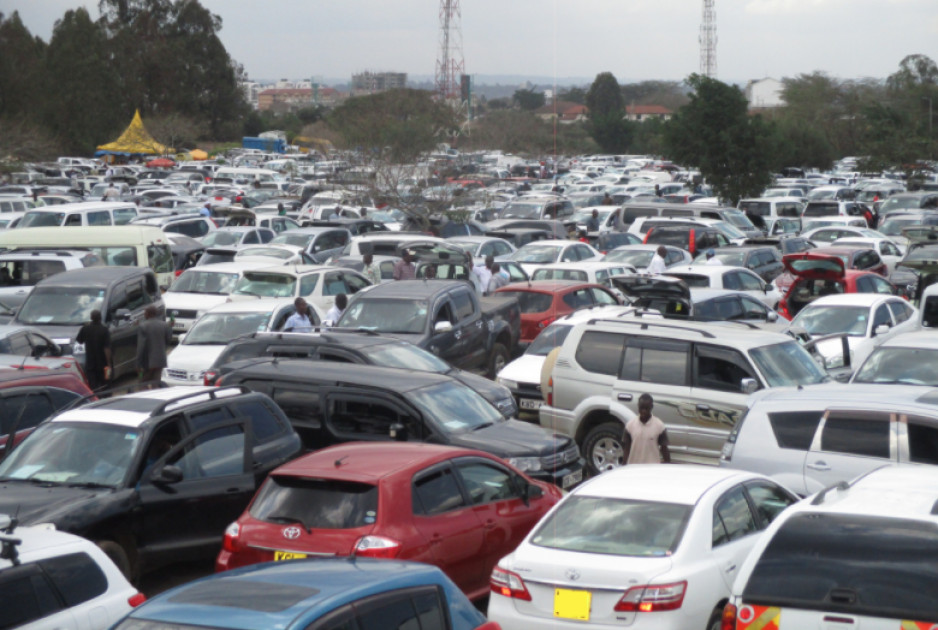
Second-hand car dealership
is a lucrative industry with more than three-quarters of motor vehicles sold in
the country coming from the sector according to data from multiple sources.
The proliferation of the
second-hand car market is mirrored by growing car sale yards along major roads
in Kenya’s Capital City Nairobi including Kiambu Road and Ngong Road.
The banking industry has
nevertheless been assessed as the sector with the highest impact on national
money laundering vulnerability due to the role played by banks in the economy.
The lenders are
nevertheless under the ambit of AML/CFT requirements where the Central Bank of
Kenya (CBK) oversights compliance including enforcing rules such as the
reporting of cash transactions above Ksh.1 million.
Real Estate, mobile
remittance providers (MRPs), Savings and Credit Cooperatives (Sacco’s) have
also been assessed as vulnerable sectors due to the nature of industries as
well as weak frameworks on money laundering, terrorism financing and
proliferation financing (PF) oversight.
Money laundering risks in
sports betting has been assessed as low for betting individuals but high for
the owners of betting companies.
The common methods of
laundering money in Kenya have been assessed as the opening of suspicious bank
accounts and the making of periodic deposits which do not correspond to the
suspects’ known sources of income.
Other crimes related to
money laundering include fraud and forgery, corruption, drug trafficking,
environmental crimes and tax evasion.
The proliferation of money
laundering in the country has seen the coining of the phrase ‘wash-wash’ which
proverbially references the ‘cleaning’ of cash obtained through illegal means.
The Central Bank of Kenya
(CBK) the National Risk Assessment Report affirming its commitment to combat
money laundering and financial terrorism violations.
“CBK is committed to
continue working with the sector and other players in implementing actions
indicated in the Strategy and Action Plan to strengthen the banking sector
AML/CFT supervisory and regulatory framework. This will play a critical role in
maintaining and enhancing Kenya’s standing as a premier financial services hub
in Eastern Africa,” CBK said in a statement on Wednesday.
Join the Discussion
Share your perspective with the Citizen Digital community.
No comments yet
This discussion is waiting for your voice. Be the first to share your thoughts!