
Rwanda’s crackdown on 'indecent dressing' at youth concerts draws sharp criticism

Audio By Vocalize
The crackdown, which recently happened during a major concert featuring Tanzanian Afrobeats star Diamond Platnumz, have seen young women turned away at event entrances or arrested for wearing outfits deemed "shameful" or "indecent" by authorities.
The enforcement stems from broader directives by the Rwanda National Police (RNP) aimed at curbing what officials describe as escalating public immorality among urban youth.
In prominent instances, festivalgoers wearing sheer fishnet attire, mini-dresses, or revealing cutouts were intercepted by officers enforcing laws against public indecency - offenses that carry potential prison sentences under Rwanda’s penal code.
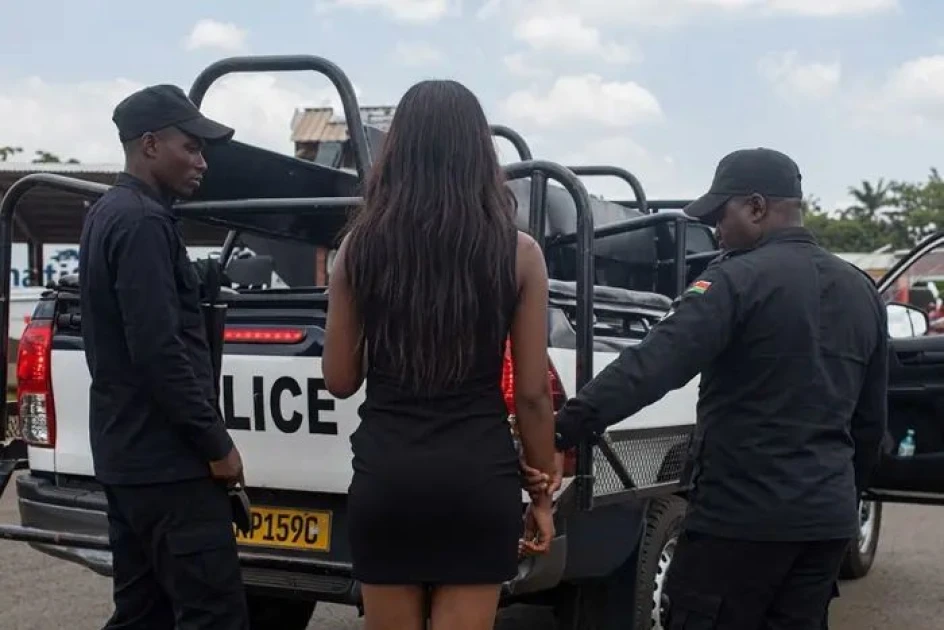
One particular incident which has drawn public reactions show officers forcibly apprehending a young woman wearing a black mini skirt at a bus park in the western district of Rubavu.
After much furore online, the Rwanda National Police released a statement saying that the officers recorded arresting the woman had been detained, while the woman had been set free.
"The police officers appearing in these images have been arrested and detained. The young woman was also cleared," Rwanda National Police said in a statement.
"All police officers have been given instructions and strongly cautioned to ensure that actions such as these do not happen again," it added.
Police spokesperson ACP Boniface Rutikanga said investigators had not yet determined the specific charges the officers could face.
Police did not disclose the number or identities of the detained officers or say whether they would face internal disciplinary proceedings, criminal prosecution or both.
The video emerged days after police warned against conduct and clothing considered indecent in public, prompting debate over how decency standards are defined and enforced.
The debate intensified after some women were reportedly denied entry to a Diamond Platnumz concert at the BK Arena parking lot in Kigali because security personnel considered their clothes too revealing.
Critics questioned whether a clear dress code had been communicated and warned that subjective enforcement could expose women to humiliation or harassment.
Former Miss Rwanda contestant Pamela Uwicyeza was one of the most prominent voices who criticised the reported treatment of women.
“A woman’s body is not an invitation for control. No woman should be told what she is ‘allowed’ to wear, and no one deserves violence, humiliation or fear because of her clothing,” Uwicyeza said.
She argued that modesty should remain a personal choice and should not be enforced through intimidation or violence.
Rwandan law criminalises public indecency but does not prescribe a detailed dress code, leaving uncertainty over which clothes may constitute an offence.
Government officials and police representatives maintain that youth fashion trends are drifting too far toward public nudity.
Authorities argue that enforcing dress codes protects traditional Rwandan values (Umutuco) and urges parents to take a stronger role in guiding young people.
Authorities also view massive entertainment venues and nightlife hubs as public spaces subject to regulatory oversight, warning event organizers that allowing revealing attire undermines civic order.
Supporters of stricter standards say the measures protect cultural values and encourage responsible behaviour among young people.
Critics say enforcement must be based on clear rules and carried out proportionately, without degrading treatment or unnecessary force.
The Rubavu case has broadened the discussion from clothing and public conduct to police professionalism and the obligation of officers to protect the dignity and rights of people they encounter.
Police said officers nationwide had been cautioned against repeating the conduct shown in the video as investigations continued.
Join the Discussion
Share your perspective with the Citizen Digital community.
No comments yet
This discussion is waiting for your voice. Be the first to share your thoughts!