
From Ghana to Uganda: Russia’s deceptive war recruitment schemes continue to ensnare young Africans
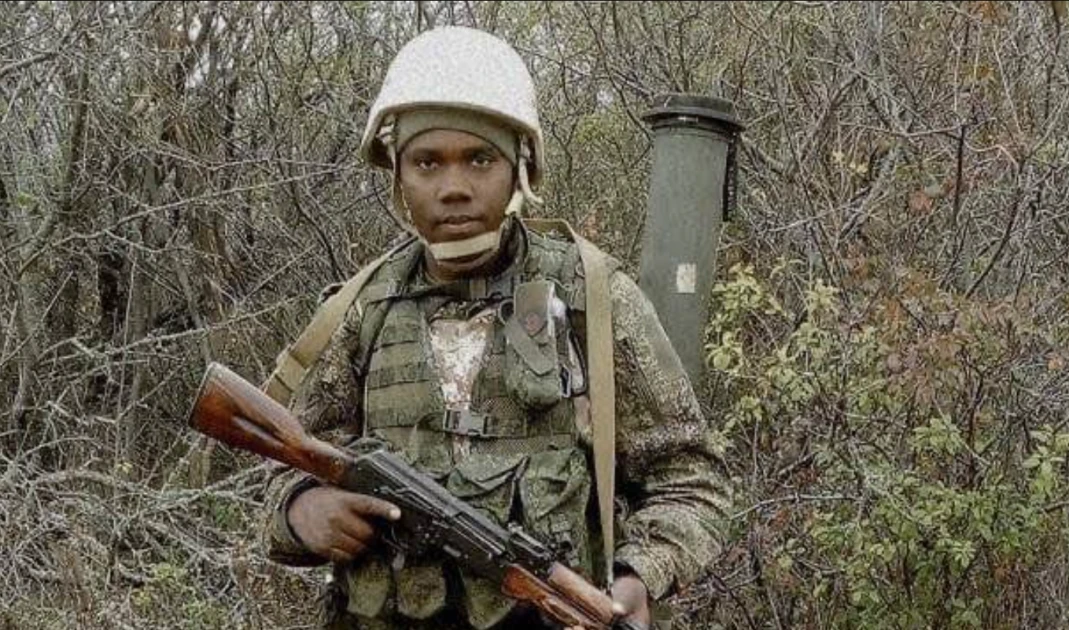
Security analysts report that these recruiters do not operate at random; instead, they selectively target African nations characterized by high youth populations and strong societal aspirations for international migration.

Audio By Vocalize
Recent investigative data and reports from grieving families reveal a devastating toll, particularly in Ghana and Uganda, where hundreds of youth seeking to escape high domestic unemployment have instead vanished into the ranks of the Russian armed forces.
In West Africa, Ghana has emerged as a primary target for these sophisticated recruitment rings.
According to the Foreign Casualty Database of the Ukraine-backed "I Want to Live" project, Ghana now ranks among the countries with the second-highest losses of foreign nationals on the battlefield.
At least eighty-five Ghanaian citizens have been confirmed killed while serving in the Russian military.
Security analysts report that these recruiters do not operate at random; instead, they selectively target African nations characterized by high youth populations and strong societal aspirations for international migration.
Using targeted job postings on social media and direct outreach within Telegram and WhatsApp groups, recruiters entice candidates with promises of monthly salaries ranging from $2,000 (Ksh. 250,000) to $3,000 (Ksh. 380,000) - a small fortune for those facing severe economic hardship at home.
The reality awaiting these recruits on the frontlines stands in stark and brutal contrast to the promises of secure employment.
Russian military bloggers have repeatedly warned that the survival rate for untrained, first-time soldiers thrown into high-intensity combat is staggeringly low, with some newly deployed foreign fighters surviving only minutes after reaching the trenches.
Military analysts confirm that these foreign recruits are routinely deployed on the most perilous assault missions with minimal or entirely inadequate training, essentially serving as highly disposable frontline forces.
For the families left behind in Ghana, the consequences of this modern-day trafficking are catastrophic.
Men who traveled abroad to secure financial stability for their parents, spouses, and children are instead returning as statistics on casualty lists, if they are accounted for at least.
Following a pattern also observed in Kenya, relatives of the deceased report that many of those killed remain unregistered by Russian authorities.
This lack of official registration allows the Russian military to avoid accountability and indefinitely delays the compensation legally owed to the families.
Left without their primary breadwinners, these families are trapped in a state of double victimization, mourning their relatives without receiving official answers or financial recourse.
Further east, Uganda’s deeply entrenched history of labor migration has similarly left its youth highly susceptible to predatory recruitment schemes. Facing chronic underemployment and a lack of domestic opportunities—realities regularly highlighted by the World Bank’s Uganda Employment Assessment—thousands of young Ugandans rely on overseas migration to survive.
Predatory agencies have seized on this desperation, masquerading as legitimate employment firms only to funnel unsuspecting young men into military service.
While public protests in neighboring Kenya eventually forced a government response to similar recruitment scandals, Ugandan families report facing a wall of official silence.
Many have spent months desperately petitioning government agencies for information about loved ones with whom they lost contact, but these appeals have yielded virtually no results.
Although Uganda’s incoming Minister for Gender, Labour and Social Development, Lieutenant General Henry Tumukunde, has publicly vowed to dismantle the human trafficking networks linked to these overseas recruiters, families remain highly skeptical.
Across the continent, grieving relatives have heard similar political promises of reform and accountability go unfulfilled.
Ultimately, it is the profound uncertainty that inflicts the deepest wound on these families. Without official confirmation of death or the return of remains, families are unable to hold traditional burials or find closure.
Trapped in a agonizing limbo, they are left unable to move forward, suspended between the pain of grief and the fading torment of hope.
Join the Discussion
Share your perspective with the Citizen Digital community.
No comments yet
This discussion is waiting for your voice. Be the first to share your thoughts!