
Rescuing Lake Victoria: How the aquaculture revolution is restocking the blue economy
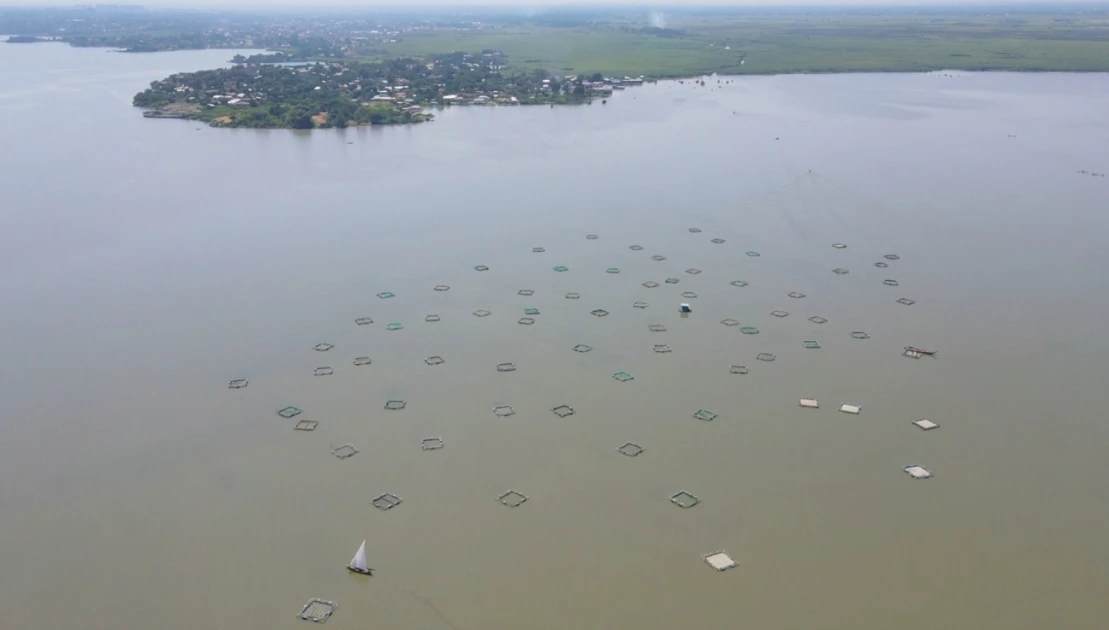
LBDA and its strategic partners have set up a state-of-the-art hatchery to produce fingerlings, restock the lake, and sustain local aquaculture.

Audio By Vocalize
Across Nyanza and Western Kenya, fish is more than food on a plate: it is the lifeblood of the region's economy and nutrition. But as the population in these two regions has surged, fish stocks in Lake Victoria have struggled to keep pace with demand.
To bridge that
gap, the Lake Basin Development Authority (LBDA) and its strategic partners have
set up a state-of-the-art hatchery to produce fingerlings, restock the lake,
and sustain local aquaculture.
Philip Oloo,
Director of Agriculture and Natural Resources at LBDA, traces the authority's
role back to the 1980s, when falling catches first raised alarm.
"Lake Basin
Development Authority started this project way back in 1983. At that time, it
had already been confirmed and really detected that the level of fish catch in
Lake Victoria had dropped far below the demands of the farmers and the people
in this region," Oloo says.
Beyond breeding,
capacity building has been central to the initiative. Sharly Andeo, a Fisheries
Officer at LBDA, points to the scale of community outreach over the past
financial year.
"Our
financial year starts in July up to the end of June. So we have trained
approximately 2,000 farmers. That includes groups and single farmers,"
Andeo says.
At the heart of
the intervention is the DABD AquaRech project in Kibos, a fully operational facility
where staff work around the clock. Young fish are nurtured in well-aerated,
carefully maintained and regularly fed waters before being handed over to local
farmers.
For Victor
Ochieng, a fish cage farmer at Dunga Beach, aquaculture has grown from a simple
trial into a thriving venture.
"Fish farming
is a new adventure to me. It is quite an experience with both ups and downs,
but it is a good thing. It has impacted me for the three years I have been
doing it; I have seen a positive change," Ochieng says.
"The cages
that are here are 15, and there is another new one furthest out. Out of the 15,
I only own almost six cages, but we are making another one out there. The rest
belong to investors."
Ochieng's growth
has been backed by LBDA's targeted support for organised farmer groups. "I
get my fingerlings from AquaRech, bought from Kibos and Yala. With these
fingerlings, we have seen a difference. Because I was once an investor, I have seen
the growth rate change. Initially, we could feed this fish for like 10 or 11
months, sometimes a year. But now, the cycle has reduced to around eight or
nine months, and you can start harvesting," he explains.
Support has gone
beyond fingerlings, he adds: "At times, they also give us feeds. There was
a program known as HISA. Through HISA, those who normally buy fingerlings from
AquaRech were contacted based on data, and we received feed last year."
The lake can still
turn unpredictable: sudden fish deaths remain a constant threat for cage
farmers, even as LBDA maintains that modern aquaculture techniques can manage
the risk.
CPA Wycliffe
Ochiaga, LBDA's Managing Director, outlines the authority's roadmap for
expanding fish farming, cage culture and pond management.
"What we do
as an authority is to produce fingerlings. At the moment, we are doing around 2
million fingerlings per month. We are working on enhancing that to around 4 to 5
million fingerlings per month," Ochiaga says.
"Away from
supporting fingerling production, we have also brought on board a number of
development partners or players in fish farming: those that provide fish feeds,
those that support farmers with training, and also those that support farmers
with best practices in fish farming. That happens in Kisumu, and of course, we
have fish farming not only in Kisumu, but in the entire lake region."
Join the Discussion
Share your perspective with the Citizen Digital community.
No comments yet
This discussion is waiting for your voice. Be the first to share your thoughts!