
Relief for 7 Supreme Court judges as High Court quashes JSC removal notices
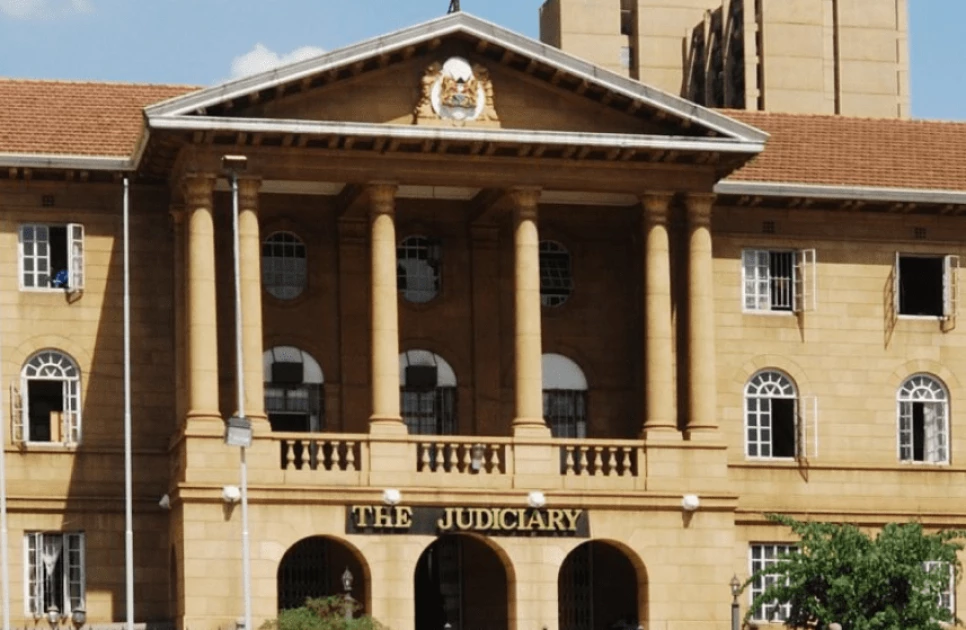
File image of the Judiciary building. PHOTO | COURTESY

Audio By Vocalize
A three-judge bench led by Justices Charles Kariuki, Lawrence Mugambi and Bahati Mwamuye declared the communications, notices and directions issued by the JSC unconstitutional, legally ineffective, null and void.
The court also prohibited the JSC from taking any further steps or commencing or continuing proceedings based on the defective notices or the complaints arising from the same set of facts.
In its orders, the court found that the JSC had failed to demonstrate that the notices were issued following a lawfully convened meeting of the commission.
The judges further held that the commission failed to meet the preliminary threshold required to safeguard the petitioners' right to fair administrative action under Article 47 of the Constitution.
The court also found that the JSC had proceeded against the judges in a collective and omnibus manner contrary to the Constitution and the law.
It ruled that the commission had failed to set out the grounds and particulars contemplated under Article 168(1)(a) to (e), which provides the constitutional grounds for the removal of a judge.
As a result, the court issued an order of certiorari quashing the notices dated January 27, 2025, together with related communications, decisions, actions and proceedings arising from three JSC petitions.
The court further issued an order of prohibition barring the JSC, its agents or anyone acting on its behalf from taking further action based on the notices or the complaints founded on the same set of facts.
The judgment followed petitions challenging the manner in which the JSC handled complaints seeking the removal of all seven Supreme Court judges.
Among the complaints was one filed by former Law Society of Kenya President Nelson Havi.
The judges had argued that the JSC was required to first determine whether the complaints disclosed any of the constitutional grounds for removal before requiring them to respond.
They also challenged the commission's assertion that a subcommittee had considered the complaints and made recommendations that were adopted on January 24, 2025, arguing that no supporting minutes, deliberations or resolutions had been produced.
Justice Mugambi, delivering the judgment on behalf of the bench, held that complaints against judges must undergo rigorous initial screening before the removal process can proceed.
The court said the preliminary assessment serves as an important safeguard for judicial independence, public confidence in the judiciary and the right to fair administrative action.
The judges found that the notices issued to the Supreme Court judges merely communicated the complaints and required responses within 21 days, without setting out the factual allegations with sufficient particularity or identifying the specific constitutional grounds for removal.
The court said a judge could not fairly be required to respond to an unrefined collection of allegations without being told the precise constitutional grounds on which those allegations were based.
Although the court affirmed that the JSC has the constitutional mandate to receive and consider complaints against judges under Article 168, it held that the exercise of that mandate remains subject to constitutional and legal safeguards.
The High Court also rejected the argument that Article 168 shields the JSC's actions from judicial review, holding that the court has jurisdiction to determine whether the commission has acted within the Constitution, the Judicial Service Act and principles of fair administrative action.
Join the Discussion
Share your perspective with the Citizen Digital community.
No comments yet
This discussion is waiting for your voice. Be the first to share your thoughts!