
How Middle East oil crisis led to Ksh.2 trillion Dangote refinery in Lamu: Ruto reveals

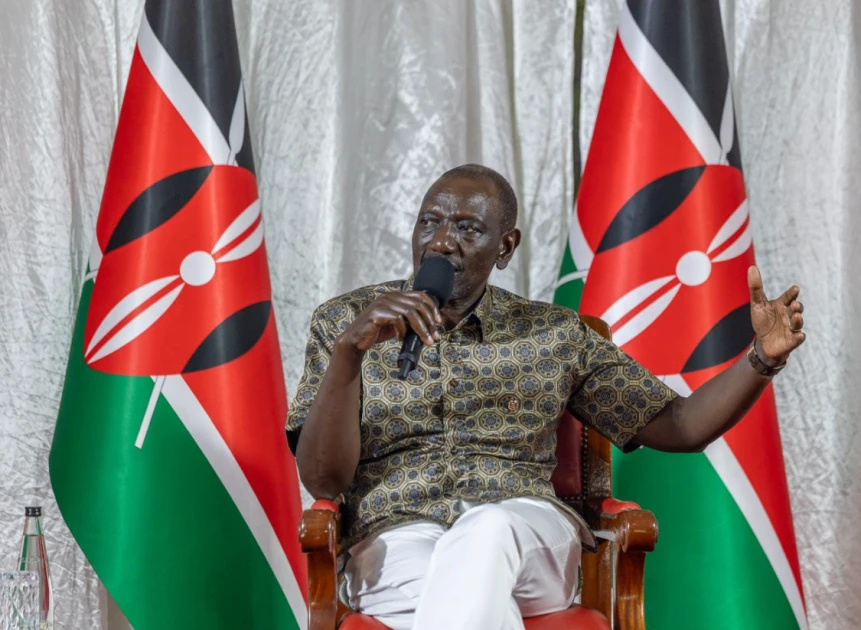
President William Ruto speaks during a media engagement at State House, Mombasa, on October 1, 2026. PHOTO | PCS

Audio By Vocalize
President William
Ruto has detailed how the Ksh.2 trillion Dangote East Africa Oil Refinery in
Lamu County came to be, saying the project was conceived as part of efforts to
shield Kenya and the wider region from disruptions in the global oil supply
chain.
Speaking to the
media on Thursday evening at State House, Mombasa, a day after the
groundbreaking ceremony in Lamu, Ruto said the idea gained momentum after Kenya
experienced challenges in accessing fuel during disruptions linked to tensions
in the Middle East.
“Huu ni mradi
ambao nilifikiria kwa muda. Na kwa sababu tulianza kupata changamoto hapa ya
mafuta wakati matatizo yalitokea kule Middle East, Iran ilipopata shida, kuna
sehemu inaitwa Strait of Hormuz,” Ruto said.
“Hatukuaki tuwe na
matatizo ya kila mara bila ya kutafuta mbinu za kuyatatua, ili tusije wakati
mwingine tena tukaingia katika shida hiyo hiyo."
Despite having
been thinking about the idea way earlier, Ruto said he subsequently sent
officers from his office to meet Dangote and visit one of his refineries, after
which they advised that further research was needed before the project could
proceed.
“So, wakati
nilifikiria vile tutafanya, vile mlisikia, nikatuma officers kutoka ofisi yangu
wakaenda kumtembelea Bwana Dangote. Wakaona ile refinery, wakarudi, wakasema
kuna utafiti lazima ufanywe,” he said.
The President said
he also engaged Ugandan President Yoweri Museveni and Tanzanian President Samia
Suluhu Hassan on the need for the refinery, as discussions on its location
began.
Ruto said Tanga in Tanzania was initially considered as a possible
site because Uganda had planned to transport its crude oil through a pipeline
to the Tanzanian port.
“Utafiti wa kwanza
ukasema pengine ijengwe Tanga. Na kwa sababu ni kiwanda ambacho
kinatushughulikia sisi wote na tayari crude oil kutoka Uganda ilikuwa iende
Tanga, tukaona pengine pale itakuwa sawa,” he said.
However,
subsequent studies involving Dangote and Kenyan officials identified Lamu as a
more suitable location, with Ruto citing the depth of the sea as one of the
reasons.
“Lakini utafiti
mwingine ulipofanyika na huyu mwekezaji mwenyewe, na officers wetu
wakashirikiana, mwisho ikaonekana ni vizuri ijengwe Lamu,” Ruto said.
“Na ikajengwa
Lamu. Sababu kubwa ya Lamu kujengwa ni kwamba pale Lamu bahari iko na draft
nzuri. Depth ya pale ni nzuri kwa sababu ile meli ambayo itakuwa inabeba mafuta
ni nzito.”
Ruto said his
meeting with Dangote in Nairobi later helped advance the project, explaining
that the Nigerian businessman attended the ‘Africa We Build Summit’ hosted in
Nairobi.
“Sasa nikamuuliza,
(Dangote) tunataka ujenge kiwanda cha kusafisha mafuta hapa Kenya,” he said.
"Ndiyo sasa majadiliano yakaendeshwa tangu hiyo April. Na jana tukafika
pale Lamu kuanzisha kiwanda kile."
The President said
the refinery is expected to create jobs and attract investment while supporting
the development of industries linked to petroleum processing.
“Kiwanda hicho ni
kiwanda cha muhimu sana. Itatupatia nafasi za ajira. Itatupatia nafasi za
uwekezaji. Itatupatia nafasi za biashara. Itatupatia nafasi nyingi; viwanda
nyingi. Viwanda vya plastiki, viwanda vya petrochemicals,” he said.
Ruto said Dangote
had previously invited him to visit his refinery in Lekki, Lagos, describing it
as a large industrial complex that had been developed on about 7,000 acres,
noting that the government had already set aside 9000 acres for the project in
Lamu.
“So, hapa Kenya
tayari tumepata ardhi ekari elfu tisa. Tunataka tuongeze zingine elfu tatu
ndiyo tujenge refinery, lakini pia tuwe na Special Economic Zone ambayo sasa
itakuwa ekari kama elfu tano,” he said.
According to the Head
of State, the development would transform the area into a major industrial
centre, with benefits expected for the national economy and residents of the
Coast region.
“So, pale kutakuwa
na city kubwa sana na uchumi wa taifa letu utaridhika, uchumi ya watu wapwani
utaimarika na uchumi ya watu wa Lamu vilevile utainuka,” Ruto said.
Ruto further
described the refinery as a major investment, claiming that its value was
equivalent to 12% of Kenya’s Gross Domestic Product (GDP).
“Ukipima katika
mizani ya GDP, it is 12% of our GDP. Yaani, ule utajiri wote tulio nao Kenya,
12% ni kiwanda kimoja,” he said.
He also said the
project would significantly boost Kenya’s Foreign Direct Investment (FDI),
noting that the FDI had risen from USD 1.6 billion when he assumed office to USD
3.1 billion in 2025.
“Hiki kiwanda
kitainua hii Foreign Direct Investment. Itafikia between 6 and 7 billion
dollars next year, na hivyo hivyo the next year, kwa miaka minne mfululizo, our
FDI is going to be around 6 or 7 billion dollars,” he said.
“It will be almost
five times what we have in Kenya for the last many years. So, it's a very
important piece of infrastructure. Na nimefurahi sana kwamba imewezekana sisi
kuwa na kiwanda kile."
Join the Discussion
Share your perspective with the Citizen Digital community.
No comments yet
This discussion is waiting for your voice. Be the first to share your thoughts!