
Reasons why your ballot paper may be rejected during IEBC tallying
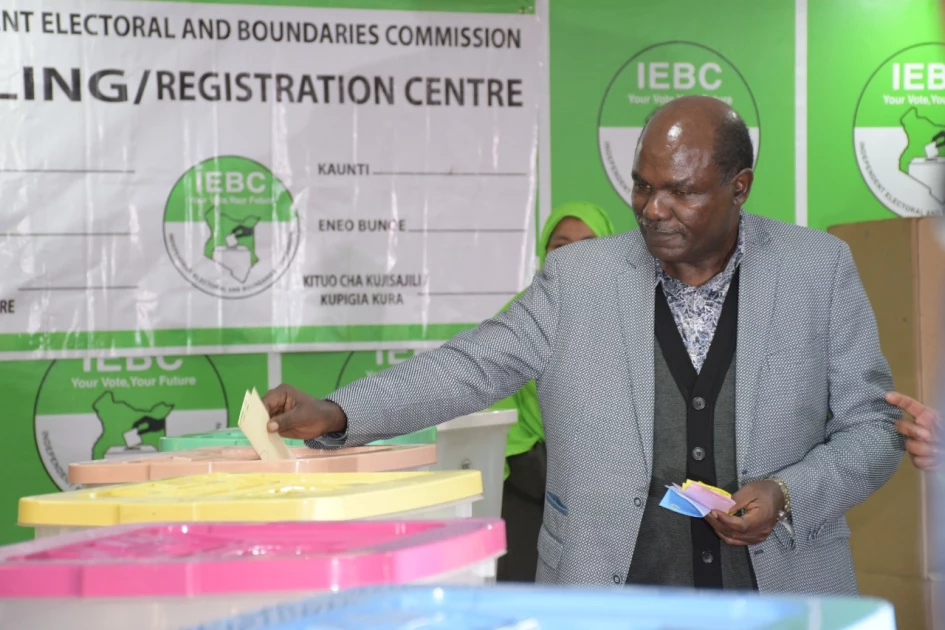
IEBC Chairman Wafula Chebukati casts a vote during a simulation exercise on Sunday, August 7. PHOTO/ IEBC

Audio By Vocalize
The clock is ticking, and only 12 hours are
left before Kenyans head to polling stations to elect their next legislators,
largely, the 5th President of the Republic of Kenya.
On Sunday, IEBC Chairperson Wafula
Chebukati performed a simulation exercise to show voters how they will cast
their votes on Tuesday, August 9.
At the polling station, a voter will be
identified biometrically using the KIEMS kit, and where one’s finger prints do not reflect their identity, their photo will be taken using the kit for
facial recognition on the IEBC system. A manual voter register will also be
used to identify voters.
Thereafter, they will be given 6 ballot papers to elect a President, Governor, Senator, Member of Parliament, Woman
Representative and Member of County Assembly.
However, the commission has notified voters
that not all the votes cast on the ballot will be considered valid.
Some votes will be rejected during the tallying
process, others will be declared stray or disputed.
According to IEBC, a ballot paper will be
rejected if;
1. The
voter marked more than one candidate
2. It
has not been marked in favour of any candidate
3. It
bears a serial number that doesn’t fall within those issued in that polling
station
4. The
ballot paper does not bear the security features as given by IEBC
After a ballot paper is rejected during the
tallying process, IEBC will put a stamp on it to show so.
To curb incidences of a voter casting their
votes twice, IEBC will mark indelible ink on their small finger to show they
have already casted their votes.
Additionally, voters who are also meant to
assist People Living With Disabilities will cast their votes and mark their
ballots as a pair.
Thereafter, their fingers will be marked,
with the guide having two marks to show they not only voted but assisted
someone else to vote.
Join the Discussion
Share your perspective with the Citizen Digital community.
No comments yet
This discussion is waiting for your voice. Be the first to share your thoughts!