
PS Kimotho roots for farmer-led irrigation in talks with World Bank delegation
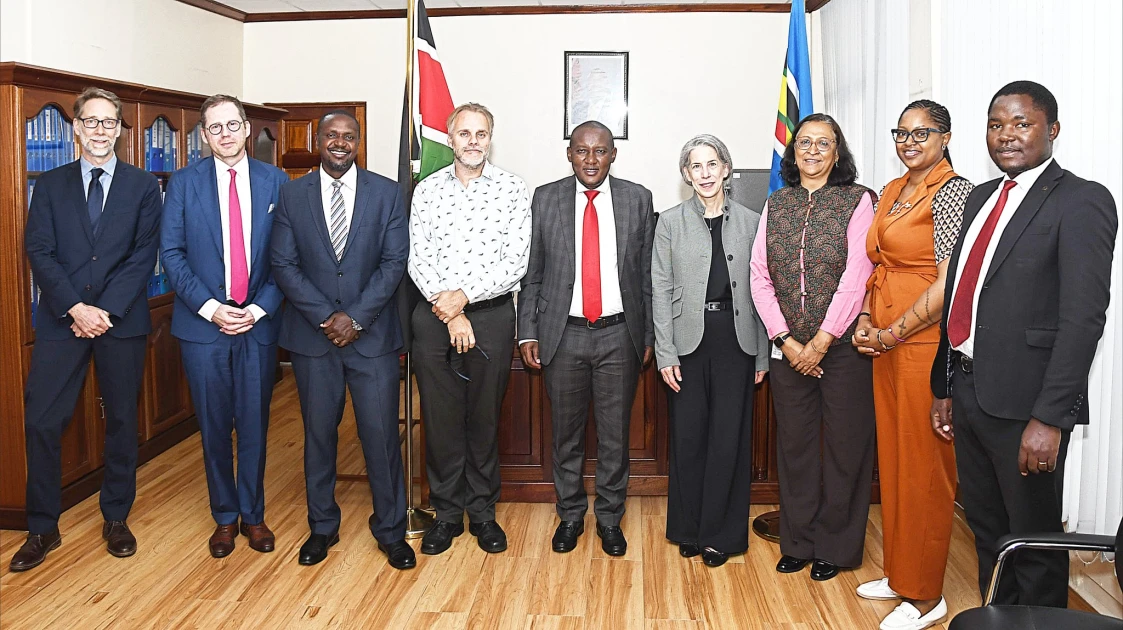
Irrigation PS Ephantus Kimotho at Maji House in Nairobi during a high-level meeting with a World Bank delegation led by the Regional Practice Director for the Water Department, Anna Wellenstein. PHOTO | COURTESY

Audio By Vocalize
Irrigation Principal Secretary Ephantus Kimotho Kimani has rooted for the expansion of farmer-led irrigation programmes as the government moves to strengthen food security, climate resilience and agricultural productivity across the country.
Kimotho spoke at Maji House in Nairobi during a high-level meeting with a World Bank delegation led by the Regional Practice Director for the Water Department, Anna Wellenstein.
“The FLID programme is directly linked to poverty alleviation, employment creation and improving the livelihoods of farmers across the country. We anticipate a high uptake of the programme because it addresses the real needs of farmers while promoting climate-smart agriculture and sustainable food production,” said the PS.
The Thursday meeting focused on the progress of ongoing collaborations between the World Bank and the State Department for Irrigation aimed at enhancing irrigation development, water management and climate change resilience in Kenya.
Among the key issues discussed was the implementation of the Kenya Sustainable Irrigation for Resilient Economy (K-RISE) programme, which seeks to improve agricultural productivity, increase household incomes and strengthen community resilience through sustainable irrigation investments.
The programme comprises four key components: the Farmer-Led Irrigation Development (FLID) Programme, High Performance Public and Community Irrigation Schemes, Water Security and Climate Resilient Landscapes, and Sector Coordination.
The PS also pointed out the importance of collaboration among stakeholders in the implementation of irrigation programmes.
“We must avoid working in silos. Coordination among sectors and partners will ensure that programmes are aligned to support farmers in realising increased production, value addition and market access,” he added.
Kimotho further highlighted the role of County Irrigation
Development Units and agricultural extension officers in supporting farmers at
the grassroots level, saying the government is exploring ways of strengthening
the units to improve service delivery.
On her part, Wellenstein reaffirmed the World Bank’s
commitment to supporting Kenya’s irrigation expansion agenda, noting that
investments in water security and climate-resilient infrastructure would
improve efficiency and sustainability in irrigation schemes.
“We are encouraged by the Government’s clear vision and
ambition in the irrigation sector. The alignment between Kenya’s food security
agenda and the World Bank’s priorities on economic and social development
presents a strong foundation for impactful investments,” said Wellenstein.
She noted that the programme’s results-based financing model
and establishment of farmer databases would help track the performance of
irrigation schemes and ensure investments directly benefit farmers.
The meeting also highlighted the need for a coordinated approach involving the national government, county governments, development partners and the private sector in enhancing food security and improving livelihoods through irrigation.
Join the Discussion
Share your perspective with the Citizen Digital community.
No comments yet
This discussion is waiting for your voice. Be the first to share your thoughts!