
Promises, poverty, and the frontlines: Inside Russia’s covert African war recruitment machine

Audio By Vocalize
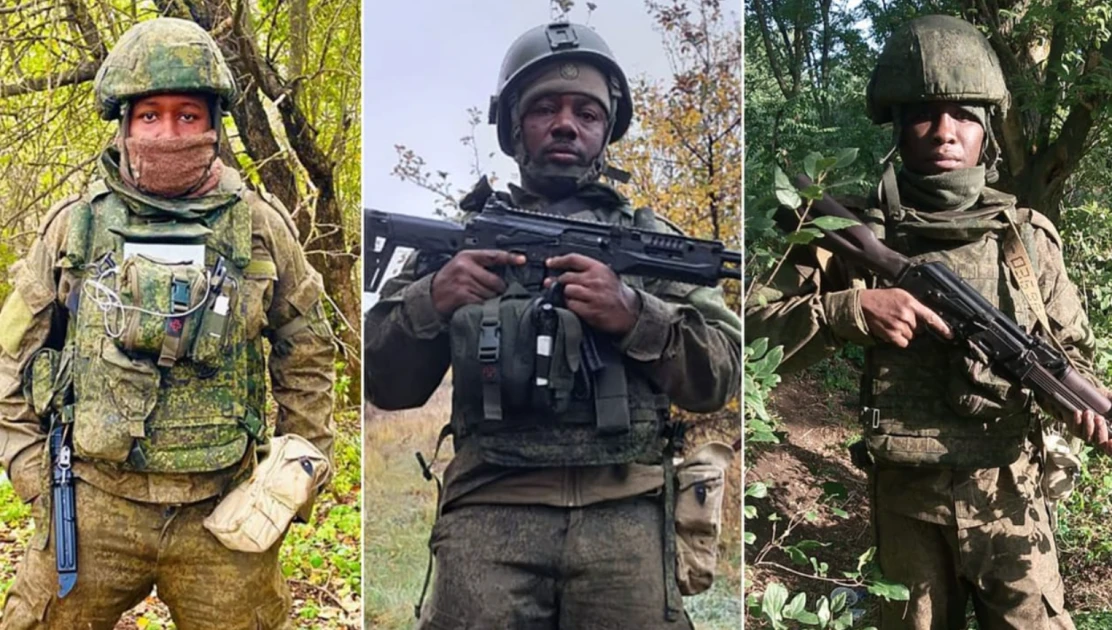
Behind the mounting casualty figures of the war in Ukraine lies a hidden, deeply unsettling demographic.
Among the official
records of fallen Russian soldiers are the names of young men from Nairobi,
Accra, Juba, and Kampala—citizens of African nations completely detached from
Europe's geopolitical conflicts, whose lives have been cut short in its
deadliest combat zones.
Evidence compiled
by the ‘I Want to Live Project,’ an initiative monitoring the conflict,
indicates that hundreds of African nationals have been confirmed killed in
action while serving within the ranks of the Russian Armed Forces.
Far from isolated
incidents, international investigators and security analysts warn that these
deaths reveal a highly organized, predatory recruitment pipeline.
Driven by economic
stagnation and the desperation for migration opportunities, this network is
actively transforming Africa's youth unemployment crisis into expendable
military manpower for Moscow.
Russia’s
recruitment apparatus did not emerge overnight. For over a decade, Moscow has
cultivated soft-power initiatives across the African continent through
state-sponsored scholarships, language courses, sports programs, and cultural
exchanges.
However,
intelligence and security analysts state that these legitimate diplomatic
channels have been increasingly co-opted. Investigators allege that networks
established via these soft-power initiatives are being systematically leveraged
by intermediaries, labor brokers, and private entities connected to Russian
mercenary organizations and state interests.
This decentralized
system of private contractors and third-party intermediaries provides the
Kremlin with absolute plausible deniability.
The stark
contradiction of this policy was put on display when Russian Foreign Minister
Sergey Lavrov publicly denied the existence of official contracts with Kenyan
recruits—even as a growing number of Kenyan nationals were documented fighting
and dying on the frontlines of eastern Ukraine.
Intelligence
reports suggest this is a long-term strategic initiative rather than a
temporary wartime measure. Internal tracking data reveals that Russia is
actively targeting the influx of up to 18,500 additional foreign fighters by
the end of 2026.
The operational
methodology of these deceptive pipelines is well illustrated by the Alabuga
Special Economic Zone drone manufacturing facility in Tatarstan, Russia.
Investigative
reports have revealed that numerous young African women were lured to the
facility with promises of prestigious educational scholarships and well-paid
employment in high-tech manufacturing.
Upon arrival,
however, many found themselves subjected to a strict system of intense
surveillance, arbitrary financial fines, and severe psychological pressure,
leaving them trapped in a situation radically different from the career
opportunities they were explicitly promised.
The targeted
nature of Russia's recruitment networks is highly deliberate, focusing heavily
on regions defined by acute economic vulnerability.
According to the
World Bank’s Youth Employment in Africa Report, millions of formally educated
young Africans remain entirely locked out of stable, sustainable employment.
"For millions
of young people across the continent, migration is viewed not as a luxury, but
as the single realistic pathway toward economic survival and upward mobility.
This widespread
economic frustration is easily exploited. Using major social media platforms,
encrypted messaging applications, and aggressive local labor brokers,
recruitment rings disguise high-risk military contracts as lucrative, standard
overseas employment opportunities.
The severe risks
of these arrangements are deliberately obscured. For thousands of applicants,
signing these contracts is presented not as entering a foreign theater of war,
but as an escape from structural poverty at home.
Nowhere is the
human cost of this network more documented than in Kenya. According to data
released by the Africa Center for Strategic Studies, Kenya has emerged as one
of the largest single sources of African manpower within the Russian military
apparatus, with more than 1,000 Kenyan nationals allegedly recruited and
actively serving.
The operational
realities for these recruits have proven catastrophic. In a single documented
three-day period, more than 500 Kenyan troops were reportedly rushed directly
to the frontlines of the occupied Donetsk region.
Military experts
and survivors report that these foreign units are routinely deployed as
expendable manpower in brutal "human-wave" assaults designed to
expose Ukrainian defensive positions.
Recruits who have
refused to participate in these near-suicidal vanguard missions have reportedly
been executed by Russian forces.
The brutal
realities of this pipeline are reflected in the individual fates of the
recruits: Francis Ndugu Ndarua: An aspiring professional who traveled to the
Russian Federation under the belief that he had secured a legitimate contract
as an electrical engineer. He later appeared in widely circulated frontline
video footage. The imagery allegedly depicted Ndarua being forced toward
Ukrainian defensive lines with an explosive device strapped to his chest, while
handlers behind the camera shouted racial slurs, ordering him forward.
Erastus Mudia: A
young Kenyan who departed the country under the auspices of the
government-promoted Kazi Majuu ("Jobs Abroad") program, which
promised life-altering employment opportunities in Russian industrial
factories.
Prior to his
departure, Mudia took a celebratory photograph alongside then-Cabinet Secretary
for Foreign Affairs, Alfred Mutua. Within months, Mudia was killed on the
battlefield.
For the families
left behind, the trauma of loss is compounded by a complex web of
administrative denials and official silence.
Many families
report that the dead simply "disappear" from official records,
classified indefinitely as Missing in Action (MIA)—a bureaucratic designation
that relatives charge is intentionally used to obscure the true scale of
foreign casualties.
In many instances,
next of kin only discovered the fate of their loved ones by encountering
gruesome graphic videos and photographs circulating across localized Telegram
and social media channels.
This mounting
grief culminated in organized public protests outside Kenya’s Ministry of
Foreign Affairs in Nairobi, forcing a diplomatic confrontation over the state's
perceived inaction.
The crisis has
triggered intense domestic scrutiny regarding legal accountability and state
complicity.
As Russia’s war
machine continues to demand fresh manpower, the families of Africa’s missing
sons are left to contend with empty bank accounts, unreturned bodies, and an
official apparatus that has yet to offer answers or accountability.
Join the Discussion
Share your perspective with the Citizen Digital community.
No comments yet
This discussion is waiting for your voice. Be the first to share your thoughts!