
President Ruto breaks ground for Ksh.70 billion Devki clinker and cement plant in Kitui
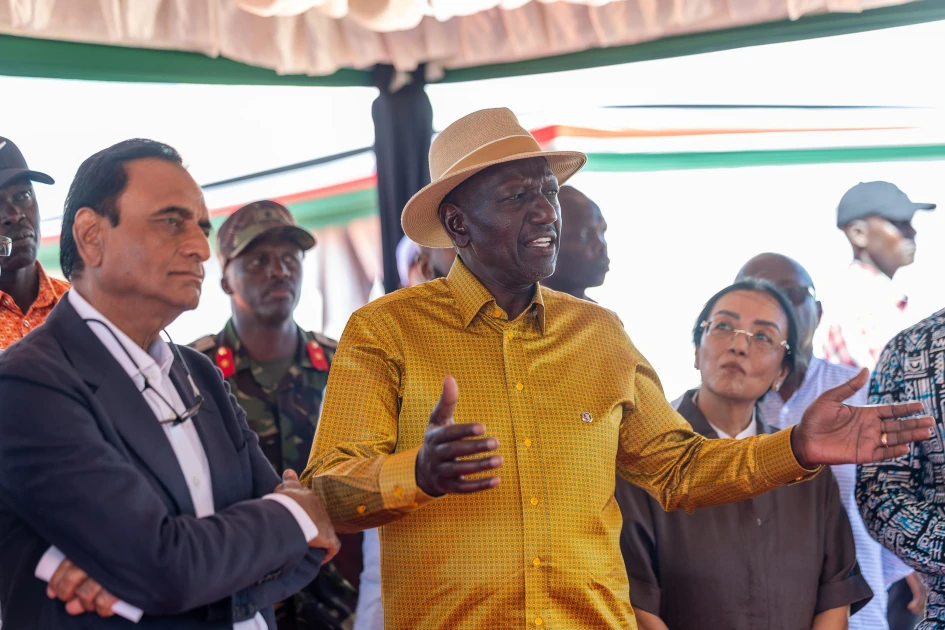
President William Ruto (centre) seen alongside Devki Chairman Dr. Narendra Raval (left) at the groundbreaking of Kitui plant. Photo: PCS

Audio By Vocalize
The plant, which costs Ksh.70 billion, will be Kitui County’s first cement manufacturing facility, with Ruto saying the investment will help transform the region’s limestone deposits into economic opportunities for residents.
Speaking during the groundbreaking ceremony on Tuesday, October 27, Ruto said producing clinker locally would reduce reliance on imports, create jobs and strengthen Kenya’s industrial capacity.
“By producing clinker locally, we retain more value within our economy, create skilled jobs, build technical expertise, strengthen our industrial capacity, and create wealth in Kenya,” he said.
Devki Group Executive Chairman Narendra Raval said the company had been planning to establish the plant for about 10 years, citing the limestone deposits in Ngaaie as a key reason for choosing the area.
“We started dreaming of putting up this plant about 10 years ago. This was tried before by cabro and cement companies to establish a cement plant in Ngaaie because of the deposits we have of limestone in Ngaaie,” Raval said.
Raval recalled visiting the area when it was largely covered by bush and had few roads, saying the lack of employment opportunities had contributed to social challenges among young people.
“I used to come here when it was totally msituni. Nilikuwa natembea na mguu, hata hakuna barabara,” he said.
He said he had encountered children sleeping on a county road while intoxicated, attributing their situation to a lack of employment and opportunities.
“So it is not their wish to be drunk or have a drug and stay idle, but there are no opportunities,” Raval said.
The Devki chairman said the plant would provide an opportunity to improve livelihoods in the area by creating employment and supporting economic activity.
Raval also addressed his political relationship with Wiper leader Kalonzo Musyoka, describing him as a close friend and expressing hope that he would join the government.
“I am a businessman and I only fear God. Kalonzo Musyoka is a very good friend of mine, and we pray that he will be in the government,” he said.
Ruto said the government introduced the Export and Investment Promotion Levy on imported clinker in 2023 to encourage domestic production and support investment in local manufacturing.
He noted that Devki’s clinker plant in Sebit, West Pokot, which he commissioned in April 2024, has a production capacity of 6,000 tonnes per day.
The President also announced plans to break ground for Bamburi Cement’s expansion in Matuga, Kwale County, in about three weeks. The project will include a new clinker production plant with a capacity of 5,000 tonnes per day.
Ruto said Kenya’s cement production rose by 18 per cent, from 8.85 million tonnes in 2024 to 10.44 million tonnes in 2025. Production reached 7.62 million tonnes in the first eight months of 2026, up from 6.68 million tonnes during the same period last year.
He added that construction of the proposed Dangote refinery in Lamu was expected to require more than two million tonnes of cement, creating further demand for locally manufactured materials.
The President said the government’s housing programme had 303,910 homes at various stages of development, alongside investments in modern markets and student accommodation.
He urged Devki Group to work with technical and vocational training institutions to provide apprenticeships and practical training for young people in Kitui, adding that local businesses should also benefit from opportunities to supply goods and services to the plant.
Ruto said the government’s industrialisation agenda was intended to expand local production, strengthen domestic supply chains and enable Kenyan manufacturers to compete in regional and continental markets.
Join the Discussion
Share your perspective with the Citizen Digital community.
No comments yet
This discussion is waiting for your voice. Be the first to share your thoughts!