
Polygamous and female-led households in Kenya have highest poverty levels – Report
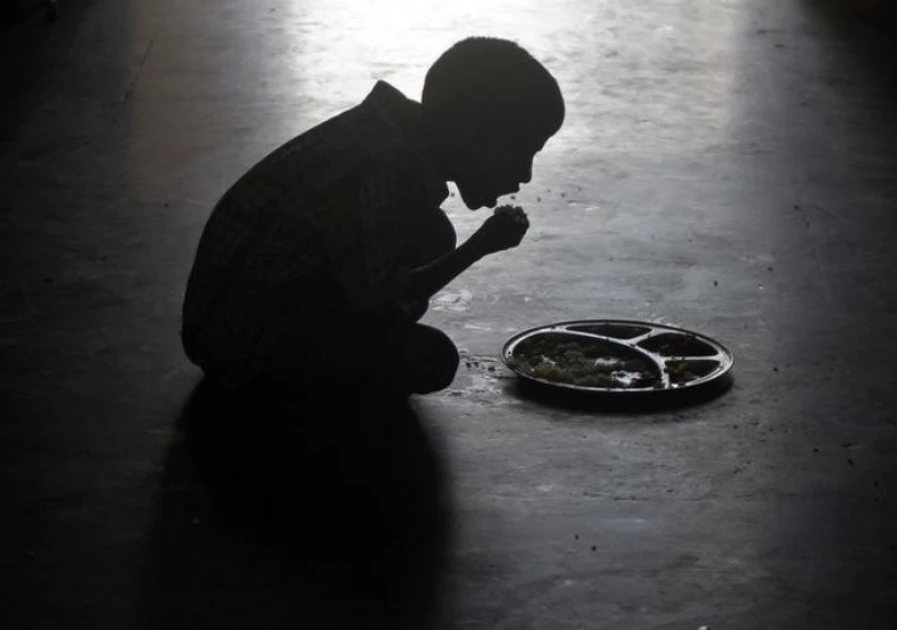
A boy eats at an orphanage run by a non-governmental organisation on World Hunger Day, in Chennai, May 28, 2014. REUTERS/Babu/Files

Audio By Vocalize
Female-led
households in Kenya have a high poverty rate compared to those headed by men, a
Kenya Continuous Household Survey (KCHS) by the Kenya National Bureau of Statistics (KNBS)
has shown.
The Kenya Poverty
Report of 2021, which focused on the consumption expenditure of
households, showed that female-led households are poorer (38.8%) compared to
those headed by men (32.7%).
A further comparison indicated that female-led households in rural areas have a higher poverty rate (42.5%) than those in urban
areas (31.9%).
The survey released by KNBS further shows that poverty levels are higher in
homes where the family head (male) is polygamous or widowed.
“Polygamy and widowhood are associated with high levels
poverty nationally (both at over 40%). In both rural and urban areas,
households with a monogamous married head had lower poverty rates,” the Poverty
Report by KNBS said.
Within the polygamous marriages, the households headed by a
female had the highest headcount poverty of 49.4% nationally.
While polygamous households in
urban areas have the highest propensity of poverty at 54.8%, households where
the head was never married and resided in urban areas recorded the lowest
poverty rates of 18.8%.
The poverty rates of households was also linked to their
sizes, where those with 1 to 3 members were less poor, as compared to those
with 7 members or more.
In addition, the poverty was linked to the education level
of the head of the household, where poverty levels decline as the level of
education for the household head increases.
“Poverty rates were found to be highest (66.9%) in urban
households headed by an individual with no formal education and lowest (2.6%)
in urban households whose head had acquired a tertiary level of education or
higher,” the report indicated.
The survey also found that households headed by 15-19-year-olds,
20-29-year-olds as well as 30-39-year-olds tend to have the lowest poverty
headcount rate of around 25%, whereas households under the headship of the
elderly (70+ years) residing in rural areas suffer the highest levels of
poverty of at 51.2%.
In compiling the poverty statistics, the food poverty lines
for rural areas were KSh. 2,331 in 2021 and KSh 2,905 urban households, where
those below this line were poor. The 2021 KCHS data showed a decline in food
poverty headcount rate to 30.5%.
“The overall poverty rate declined substantially from 36.1 per
cent in 2015/16 to 33.6 per cent in 2019, implying that 15.8 million people
lived below the absolute poverty line. The overall poverty rate increased to
42.9 per cent in 2020, which translates to 20.9 million individuals who lived
in overall poverty. A decline was observed in 2021 to overall poverty headcount
rate of 38.6 per cent, implying that 19.1 million individuals lived in overall
poverty,” the report said.
Join the Discussion
Share your perspective with the Citizen Digital community.
No comments yet
This discussion is waiting for your voice. Be the first to share your thoughts!