
Path to gender justice, health starts with supporting the right sector actors

Audio By Vocalize
The world has long fallen short of delivering gender equality, the right to health, and justice and as we move into 2026, the gap is only getting wider.
For millions of women and girls, especially
those in marginalized communities, refugee camps and crisis zones, the basic
right to make choices about their own bodies is slipping away.
Data indicates that around 214 million women who wish to avoid pregnancy are unable to access modern
contraception.
Simultaneously, more than 230 million have
already experienced Female Genital Mutilation/Cutting (FGM/C) in countries
where the practice is concentrated. Although the international community is
committed to end FGM by 2030, population growth and regional conflicts are
increasing the number of girls at risk.
Further, donor priorities are shifting, and funding is being cut or delayed by governments and organizations alike at the very moment the need is highest.
This is why sustained investment in the United Nations Population Fund (UNFPA) is so vital and urgent.
For over five decades, UNFPA has been the backbone of frontline sexual and reproductive health (SRH) services in the world’s most vulnerable regions. In these communities, the closure of a single clinic correlates directly with increased rates of school dropouts, child marriage, increased teenage pregnancies, increased unplanned pregnancies, increased maternal deaths, and exposure to FGM/C with no protection or recourse.
As Tareto Africa, a non-profit organisation, we stand united with Population Connection in calling for continued and sustained investment in UNFPA; when these resources disappear, the consequences are often irreversible, and they fall first and hardest on girls.
Population Connection has consistently
championed UNFPA as an essential institution for advancing human rights and
sustainable development.
As they rightly state, “UNFPA’s work is
about dignity, choice, and saving lives—especially for women and girls who
would otherwise be left behind.”
While Population Connection leads evidence-based advocacy at the global policy level, Tareto Africa translates these principles into community-driven action on the ground, where they are needed most.
In Kenya’s arid and semi-arid lands (ASALs), UNFPA is addressing everyday realities. For example, in Narok County, a pastoralist region just two hours from the capital, poverty, teen pregnancy, and climate change intersect to limit a girl’s future.
Current reports indicate that nearly 17.5% of all live births in the county occur to mothers aged 19 or younger, with over 13,000 girls dropping out of school annually.
As a flagged hotspot for child marriage and FGM, the county remains a region where indigenous Maasai girls face FGM rates as high as 87.8% in certain areas.
This crisis is fueled by both the medicalization of the practice and the devastating impact of drought. As livestock perish, pastoralist families are increasingly forced to pull daughters from school for early marriage in exchange for dowries to ensure survival.
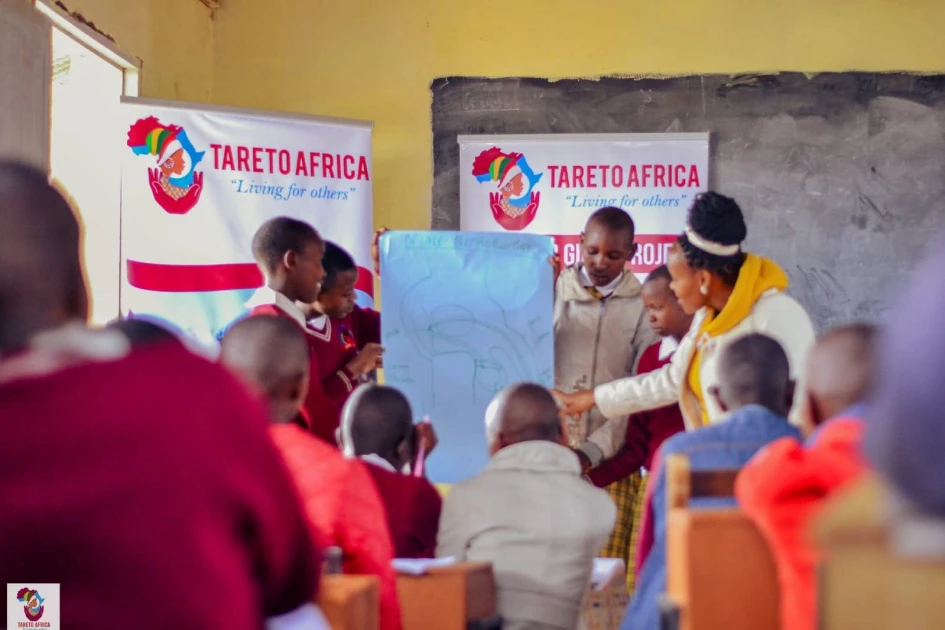
This is precisely where Tareto Africa intervenes. We work directly with adolescent girls in
these pastoralist communities through our Trees for Girls (T4Gs) Project.
This innovative initiative integrates SRHR education
and leadership with climate-smart agroforestry, providing a holistic solution
to bodily autonomy and environmental resilience.
Our work with Population Connection strengthens this mission, proving that investing in girls is one of the most effective pathways to climate resilience and health. Together, we have empowered young girls and women as community leaders, demonstrating that when global advocacy meets grassroots action, we can build a future defined by dignity rather than crisis.
We have faced many challenges—pandemics, conflict, and climate change—but 2026 has brought a new threat: a breakdown in the multilateral cooperation that holds our health systems together.
The recent withdrawal of major donors from UN entities has created a shock to the system. In Kenya, we have seen how aid freezes lead to immediate disruptions in HIV care and a shift from preventive to "crisis-only" care.
Interruptions to UNFPA funding are not abstract policy decisions; they mean fewer contraceptive supplies, fewer midwives, and weakened protection for girls.
- Protect Essential Health Services: Ring-fence funding for SRHR and
maternal care to prevent a surge in preventable deaths.
- Stabilize the Frontline Workforce: Support the health workers and
community volunteers who are sustaining care despite the aid freeze.
- Shift Power to Local Actors: Direct funding to the local
organizations and communities who stay on the ground when international
aid fluctuates.
- End the Cycle of Survival-Based Violence: Invest in integrated programs that link climate resilience with girls' protection. We must ensure that when families lose their livestock to drought, they have the support they need to keep their daughters in school rather than being forced into child marriage or FGM/C for survival.
The children and young women who pay the
highest price for these decisions are almost never in the rooms where they are
made.
It is thus upon us to stand and push forward. We owe it to the leaders who came before us, but even more, we owe it to the girls relying on our judgment today.
Join the Discussion
Share your perspective with the Citizen Digital community.
No comments yet
This discussion is waiting for your voice. Be the first to share your thoughts!