
Parliamentarians convene to tackle methane emissions

Audio By Vocalize
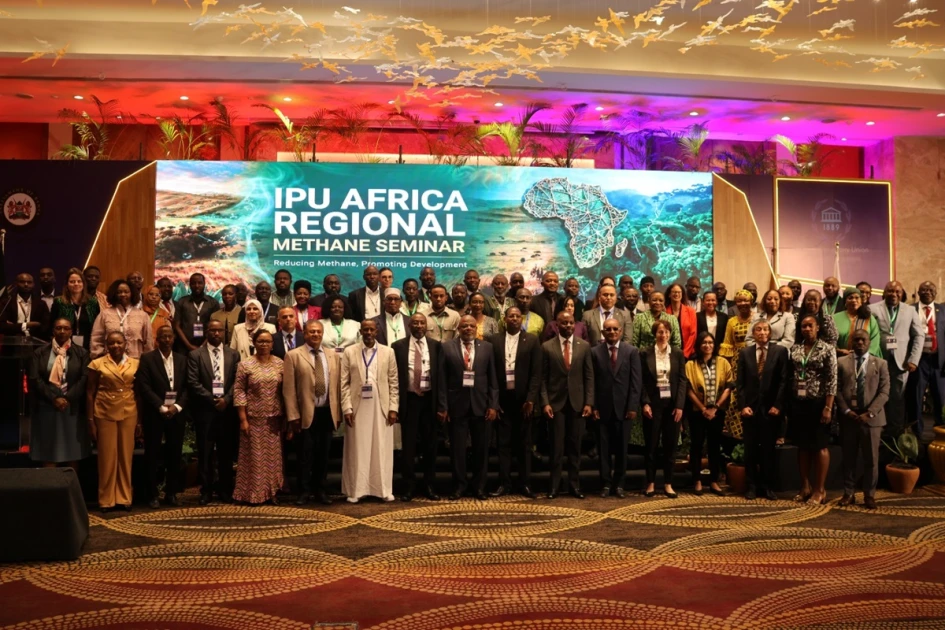
Inter-Parliamentary Union Africa Regional Methane Seminar has commenced in Nairobi, bringing together more than 100 Members of Parliament from 21 African countries to discuss strategies to reduce methane emissions.
Speaking during the event themed ‘African Parliaments for
Climate Action: Reducing Methane, Promoting Development,’ J. M. Nyegenye, Clerk
of the Senate and Secretary of the Parliamentary Service Commission, described
the meeting as timely and critical as leaders reflect collectively on how
African parliaments can continue playing their rightful role in stewarding the
shared environment and safeguarding the well-being of present and future
generations.
“This seminar underscores the unique responsibility of
parliaments to provide leadership, give voice to the concerns of our citizens,
and help chart a course towards a more resilient, inclusive, and prosperous
future for Africa,” he said.
Nyegenye added that the seminar also presents an important
opportunity to deepen the bonds of parliamentary fraternity among African
legislatures.
He encouraged parliamentarians to make full use of the
platform to strengthen networks, build lasting friendships and explore avenues
for future collaboration among committees, caucuses and parliamentary
administrations across the continent.
Amason Kingi, Speaker of the Senate, reiterated that climate
change is no longer a distant environmental issue.
“It is now a governance, economic, health and development
concern that demands legislative attention, political goodwill and collective
continental action,” said Kingi.
Kingi reminded parliamentarians that they are uniquely
placed to shape climate policy, enact supportive legislation, allocate
resources, and ensure accountability in implementation.
Despite these challenges, Kingi said there are significant
opportunities, as researchers and innovators continue to demonstrate the
potential of methane capture technologies.
“Through proper waste and manure management, methane can be
converted into biogas and used as a clean and affordable energy source for
households and institutions,” he explained.
Dr. George Wamukoya, speaking from an African perspective,
emphasized that because Africa contributes minimally to global emissions, its
priority remains adaptation.
He noted that crop yields are projected to decline by up to
30% by 2050 under high-emission scenarios. He also highlighted that 230 million
Africans currently face water scarcity, with the number expected to worsen
significantly by 2030.
He further warned that up to 700 million people could face
displacement due to water stress. In addition, heat-related illnesses are
rising, with the World Health Organization (WHO) projecting an additional
250,000 deaths annually between 2030 and 2050.
Charity Kathambi, Chair of the Parliamentary Caucus on
Climate Change and Conservation, said as they convene, the threats posed by
climate change are being felt across Africa and the world.
She cited recent flooding in Nairobi, which resulted in loss
of life and significant property damage, as a stark reminder of the escalating
impacts of climate change.
“Kenya and its sister nations are facing rising
temperatures, erratic rainfall, prolonged droughts, devastating floods, pest
infestations, and declining agricultural productivity. These events underscore
the urgent need to address climate change and its far-reaching implications for
communities, livelihoods, economies, and national stability,” she said.
Kathambi urged parliamentarians to act urgently in several
key areas: “The Climate Change Act requires continuous review and
strengthening, particularly in areas such as methane regulation, climate
finance, accountability mechanisms, and frameworks for loss and damage.”
Methane emissions have increasingly become a central issue
in global climate discussions. They directly drive climate change, contribute
significantly to rising global temperatures, and accelerate the formation of
ground-level ozone, which is harmful to human health and agricultural
productivity.
Methane is a potent greenhouse gas released from sources
such as livestock digestion, decomposing waste, manure management, rice
cultivation, fossil fuel extraction and wetlands.
Although methane remains in the atmosphere for a shorter
period than carbon dioxide, it is significantly more powerful at trapping heat.
Scientists estimate that methane is more than 80 times as potent as carbon
dioxide over a twenty-year period.
This makes methane reduction one of the fastest and most
effective strategies for slowing global warming in the near term.
According to the Food and Agriculture Organization of the
United Nations (FAO), in Kenya approximately 55–65% of methane emissions
originate from livestock through enteric fermentation, 15–25% from waste, 5–10%
from manure management and less than 5% from rice cultivation.
These statistics identify livestock, manure management,
waste and rice production as key methane-emitting sectors that simultaneously
present immense opportunities for innovation, investment and sustainable
transformation.
susan.ndunda@royalmedia.co.ke
Join the Discussion
Share your perspective with the Citizen Digital community.
No comments yet
This discussion is waiting for your voice. Be the first to share your thoughts!