
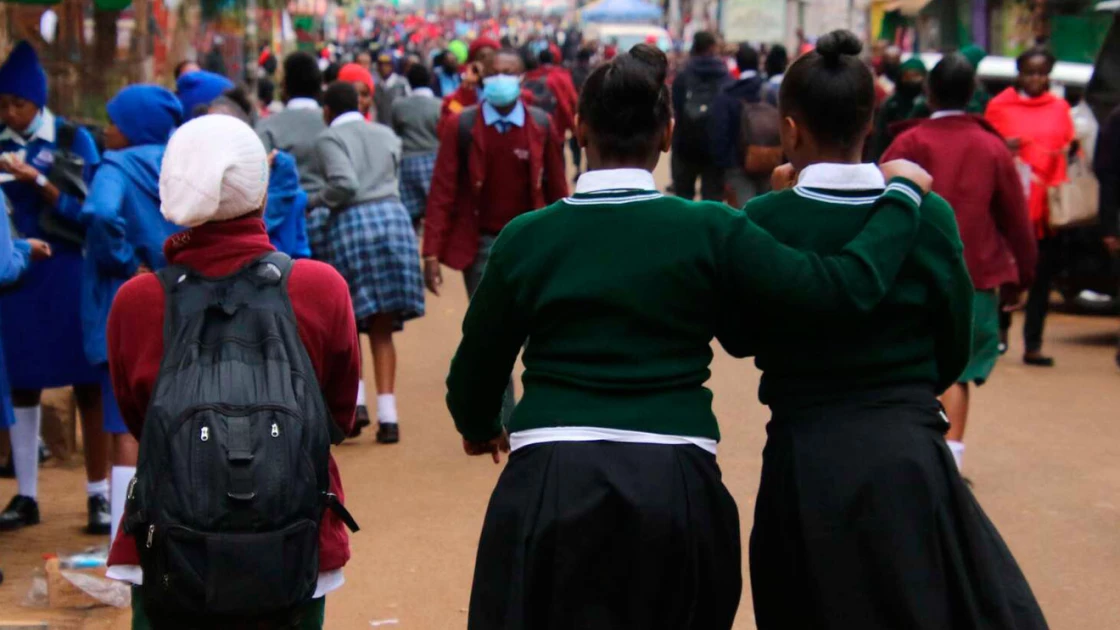
Overlooked pressures students face in boarding schools

Audio By Vocalize
Following
the recent fire tragedy at Utumishi Girls Academy that killed 16, many Kenyans
and leaders have floated a myriad of opinions on how learning institutions
could avoid similar occurrences in the future.
They argue that there are unseen struggles students experience behind which manifest in deadly tragedies.
“We should not have boarding schools because we have had more deaths because of these boarding schools,” said Kisii Woman Representative Dorice Aburi during a National Assembly debate on June 2 2026.
This is not the first time parliament has proposed the abolishment of boarding schools. In 2022, there was a movement to disband the boarding system from grades one through nine.
Many
opined that proximity to family is essential for early childhood development.
Following the Utumishi tragedy, many have taken to social media to reveal their boarding experiences in support of the abolishment.
The most common negative experience associated with boarding schools is the frequent corporal caning which result from any indiscretion.
Influencer Remmy Irungu recalled how students at Naivasha Boys Boarding School would be beaten if they did not take shower despite some of them lamenting using cold water early in the morning.
“Taking
a warm shower or a bath was unheard of. It was a luxury,” said Irungu.
He described the ordeal of using a basin to fetch the cold water, rinsing off then running back to the dormitories to get dressed.
“The main days that we made sure we showered were visiting day and closing day,” he added.
“We would endure the pain of the cold shower to make sure our parents and our family members knew that we were clean.”
Academic pressure follows closely behind, sometimes driven by fear of punishment.
Phillis Chirchir attended a primary boarding school in Nandi North and recalled how this would happen during the post-examination period.
“The teacher asks who failed this question and if you raise your hand you’re beaten,” said Chirchir.
This
would follow for all the questions and the students with the lowest grades
would bear the brunt of it. “Living in that environment was so stressful. Not
knowing who was the next teacher coming to beat us,” said Chirchir.
Angel
Shantel added that stigmatization from academic pressures could also overbear
learners.
“You
can wake up one day and see your results are on the notice board,” said Shantel,
an Alliance Girls High School alumni.
“Classes
were arranged by grades starting with the top 50 in one stream, going
downwards.” She said this invoked shame in lower performing students as all
grades would be publicly displayed.
Others
listed more pressures like sanitary conditions, meals provided in schools like
githeri, overcrowding in dorms and waking up too early some 4am for morning
preps.
While
many administrators have countered these struggles by encouraging students to
articulate them, it seems there were no appropriate channels to do so.
“Some
of these teachers are too emotionally unavailable,” said Andrew Dames, a
graduate of St. Peters Kandara Boys High.
“The
only thing they care about is grades and discipline. Your mental state is not
important.”
Students
say their concerns are often dismissed as childish complaints.
Even
the introduction of school counseling is more for show than for service, with
many guidance counselors doubling as teachers.
This
makes it hard to raise concerns when the teacher you want to complain about is
the one giving you counsel.
“One
thing about boarding school is it’s really you for you. No one really cares
about you to a larger extent,” said Chirchir.
Political
analyst Omar Haji holds that parents should also play their role effectively
while at home.
“Mould
them because when they’re in the schools you’re not the one moulding them,
they’re being molded by someone else. They end up being how someone else wants
them to be, not how you want them to be,” he said during an interview with
Citizen TV on May 28 2026.
Beyond
the immediate pressures, students feel that contrary to popular belief,
boarding schools do not prepare them for real life.
Boarding schools in Kenya are widely regarded as hallmarks of discipline, resilience and academic rigor.
However,
looking at the world’s strongest education systems, the correlation between
boarding schools and academic success is less straightforward.
Singapore
arguably has one of the best educational institutions in the globe and yet only
one percent of them are boarding schools.
Marakwet
East MP Kangongo Bowen noted this distinction at a past parliamentary session
saying, “In developed countries, such schools are very few or not there at
all.”
As
lawmakers continue to discuss the future of boarding schools, former students
say the conversation should start with those who have experienced dormitory
life.
“Maybe
I did end up building some endurance and perseverance from my experience there
but I’m still traumatized till this day,” said Chirchir.
This
is a shared sentiment among the former boarding school attendees. Dames
recognized that boarding schools have many benefits therefore, a complete
abolishment may not be the way forward.
Still,
they are in dire need of reform which starts by understanding student
experiences. “Explaining the pressures students face is not the same as
justifying destructive actions,” said Dames.
“If
we want to prevent such incidents, we need to understand the underlying issues
that contribute to them.”
Join the Discussion
Share your perspective with the Citizen Digital community.
No comments yet
This discussion is waiting for your voice. Be the first to share your thoughts!