
OPINION: Your NSSF money is building a road. The banks get paid first
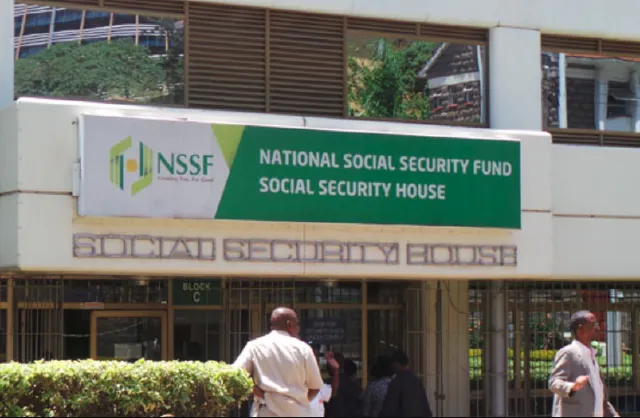
File image of the NSSF headquarters in Nairobi. PHOTO | COURTESY

Audio By Vocalize
If you are formally employed, six per cent of your pay went to NSSF last month and your employer matched it, up to Ksh.6,480 each. Some of that money is now a shareholding in a toll road. On November 17, 2026, the Treasury Cabinet Secretary explained who gets paid when the tolls start. "So credit comes first," CS John Mbadi said. The fund gets its returns "way after the debtors have been paid."
He is right. Every contributor should understand why.
On November 16, MPs stood on the half-built Rironi to Gilgil section of the new highway and told the NSSF board it had made the right decision to invest. On November 18, the President told Parliament the fund has grown from Ksh.288 billion in 2022 to Ksh.850 billion and will pass a trillion by June 2027. Nobody has yet told the contributors what any of it means for them.
Here is the deal in plain words. NSSF's part of the new highway is Rironi to Gilgil and the Mai Mahiu road to Naivasha. A consortium is building it and will run it for 30 years, paid for by tolls of Ksh.8 a kilometre. Driving the 81 kilometres from Rironi to Gilgil will cost about Ksh.648. Most of the money is borrowed from lenders. The rest is equity, put up by the owners. NSSF put up 40 per cent of that equity. In return it is entitled to 40 per cent of what the equity earns over 30 years.
That is a shareholding, not a loan. A lender is paid first, on fixed dates, whatever the traffic. A shareholder gets what is left after the lenders and the operator have been paid. If fewer cars use the road than the forecast assumed, the lenders are still paid and the shareholders wait. There is no minimum revenue guarantee. Traffic risk sits with the owners and NSSF is an owner.
None of this makes it a bad investment. It is why the fund projects 17 per cent a year from the road when a 30-year government bond pays about 14. Those three extra points are the price of standing last in the queue for 30 years. There is a ceiling too: under the Treasury's terms, the State takes 60 per cent of any earnings above a 16 per cent return. So the equity carries the full downside and shares the upside. Members should be told about it in exactly those words.
In London, I advised pension trustees and oversaw the firms that invest their money. Pension funds there own toll roads, airports and water companies, because a 30-year income is a good match for a 30-year promise to pay pensions. The question is never whether a pension fund may own a road. It is what the trustees demanded before the money moved and what they publish afterwards. On that test NSSF owes its members three numbers.
How much. In February the fund's chief executive put the commitment at up to Ksh.30 billion. The same week its head of finance and investments said Ksh.20 to 25 billion. Coverage of the parliamentary visit on November 16 puts it at Ksh.9.59 billion. All three may be true at different stages of a phased project. A fund cannot ask for trust while its own number moves by a factor of three. Publish the amount committed, the amount paid in and what triggers the rest.
How many cars. The 17 per cent rests on a forecast of how many vehicles will pay Ksh.8 a kilometre and how fast that number grows for 30 years. Members have never seen it. They should see the forecast and what the return becomes if traffic comes in a fifth lower. Trustees in London ask that question before they sign, not after.
Who is paid first. MPs were told NSSF gets 40 per cent of toll collections. The Cabinet Secretary says it is paid after the lenders. Both can be true only if the 40 per cent is of what is left, not of what comes in at the toll gate. Members earned 17 per cent interest for 2024/25. The road pays nothing before it opens and pays the lenders first after that. So the declarations for 2027 and 2028 will come from the rest of the fund, whatever happens on the highway. Say so now, before someone reads a lower rate as a road that failed.
One more reason to ask this year rather than next. The fund is growing by Ksh.8.5 billion a month and the President was clear that the growth comes from higher contributions. Contributions are not returns. A fund fed at that rate can carry a poor investment for years without a member noticing, which is exactly when members should be looking.
This is not an argument about whether the road should be built or who builds it. Kenyans will drive it and pay the toll either way. It is about whether Ksh.850 billion of workers' money is run as a pension fund, with its investment case published before the money moves, or as a line in the national plan. The President has set the fund a target of a trillion shillings by June 2027. Contributors should set the board one of their own: three numbers, in writing, before the next annual general meeting.
[The writer is an investment and governance specialist and Managing Director of Resourceful Ventures.]
Join the Discussion
Share your perspective with the Citizen Digital community.
No comments yet
This discussion is waiting for your voice. Be the first to share your thoughts!