
OPINION: Why the World is looking at China differently
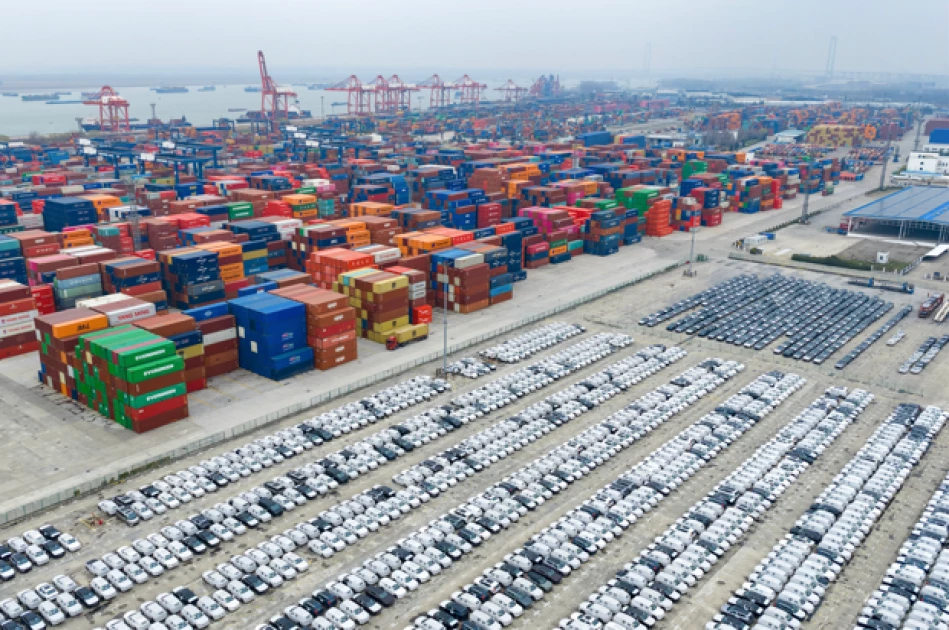
This aerial photo shows vehicles awaiting export at the port in Nanjing, in China’s eastern Jiangsu province on March 15, 2026. (Photo by CN-STR / AFP) / CHINA OUT

Audio By Vocalize
International opinion is never static. It evolves alongside changing economic realities, geopolitical developments and the everyday experiences of people whose lives are shaped by global events.
In recent years, the world has witnessed growing uncertainty, from supply chain disruptions and inflation to regional conflicts and slowing economic growth.
Against this backdrop, countries are increasingly judged not by rhetoric or ideology, but by their ability to deliver tangible results. It is within this context that China is attracting growing international recognition.
Recent global surveys indicate that perceptions of China are becoming increasingly positive across many parts of the world.
This shift is not accidental. It reflects a growing appreciation of China's role as a major trading partner, investor, technological innovator and advocate of development cooperation.
While international politics remains complex, many governments and citizens are choosing to evaluate China through the lens of practical outcomes rather than political narratives.
China has spent decades building an economic model centred on manufacturing, infrastructure, technological advancement and international trade.
Today, it is the world's second-largest economy and one of the largest trading partners for more than 150 countries and regions.
Its contribution to global manufacturing, renewable energy, digital innovation and industrial production has made it an indispensable player in the international economy.
For developing countries, particularly those in Africa, China's approach has offered opportunities that extend beyond conventional aid.
Through infrastructure financing, industrial cooperation, technology transfer and expanded market access, Beijing has positioned itself as a partner that aligns economic engagement with national development priorities.
Roads, ports, railways, power projects and industrial parks have become visible symbols of this cooperation, providing countries with assets intended to support long-term growth.
Kenya provides a compelling example of this partnership. Chinese-supported infrastructure projects have improved transport connectivity, reduced travel times and enhanced regional trade.
Beyond physical infrastructure, cooperation has expanded into manufacturing, agriculture, healthcare, education and digital technology.
More recently, China's decision to provide zero-tariff treatment for products from dozens of African countries has opened additional opportunities for exporters seeking access to one of the world's largest consumer markets.
These developments help explain why public perceptions are changing. Citizens naturally judge international partnerships by their impact on daily life.
When businesses gain access to larger markets, when farmers find new export opportunities, when roads reduce transport costs or when industries create employment, public opinion tends to reflect those experiences.
China's technological achievements have further strengthened its international image. From high-speed rail and electric vehicles to renewable energy, artificial intelligence and advanced manufacturing, the country has demonstrated remarkable capacity for innovation.
As nations pursue digital transformation and green development, many increasingly look to China not only as a manufacturing powerhouse but also as a source of technology, investment and expertise.
Equally significant is China's consistent commitment to international economic cooperation. While protectionist tendencies have emerged in various parts of the world, China has continued to advocate for open trade, global connectivity and multilateral cooperation.
Through initiatives such as the Belt and Road Initiative, the country has sought to improve infrastructure links, strengthen supply chains and facilitate cross-border commerce across Asia, Africa, Europe and Latin America.
This emphasis on connectivity resonates strongly with developing economies. African countries, including Kenya, require reliable infrastructure, affordable financing, industrial investment and technology partnerships to achieve their long-term development aspirations. China's willingness to engage in these sectors has contributed to growing confidence in its role as a dependable development partner.
None of this suggests that international cooperation should be viewed as exclusive. Countries will continue to engage multiple partners based on their respective strengths and national interests.
However, what is becoming increasingly evident is that global influence is no longer determined solely by historical alliances or political messaging.
Instead, it is increasingly earned through consistent delivery, economic resilience and meaningful cooperation.
China's growing global standing reflects this changing reality. Its expanding trade relationships, investment in infrastructure, technological leadership and commitment to development cooperation have provided many countries with practical reasons to strengthen engagement.
As a result, perceptions are evolving, not because of carefully crafted narratives, but because of visible outcomes that people can see and measure.
The world is entering a more multipolar era in which influence will increasingly belong to nations that create opportunities, support development and contribute to shared prosperity. China's experience demonstrates that sustained economic growth, innovation and mutually beneficial cooperation can reshape international opinion more effectively than rhetoric alone.
In a world searching for stability, growth and reliable partnerships, China's development model and global engagement are becoming an increasingly influential reference point for countries seeking progress and long-term prosperity.
The writer is a Journalist and Communications Consultant
Join the Discussion
Share your perspective with the Citizen Digital community.
No comments yet
This discussion is waiting for your voice. Be the first to share your thoughts!