
OPINION: Why Kenya needs better policy coordination for energy crops
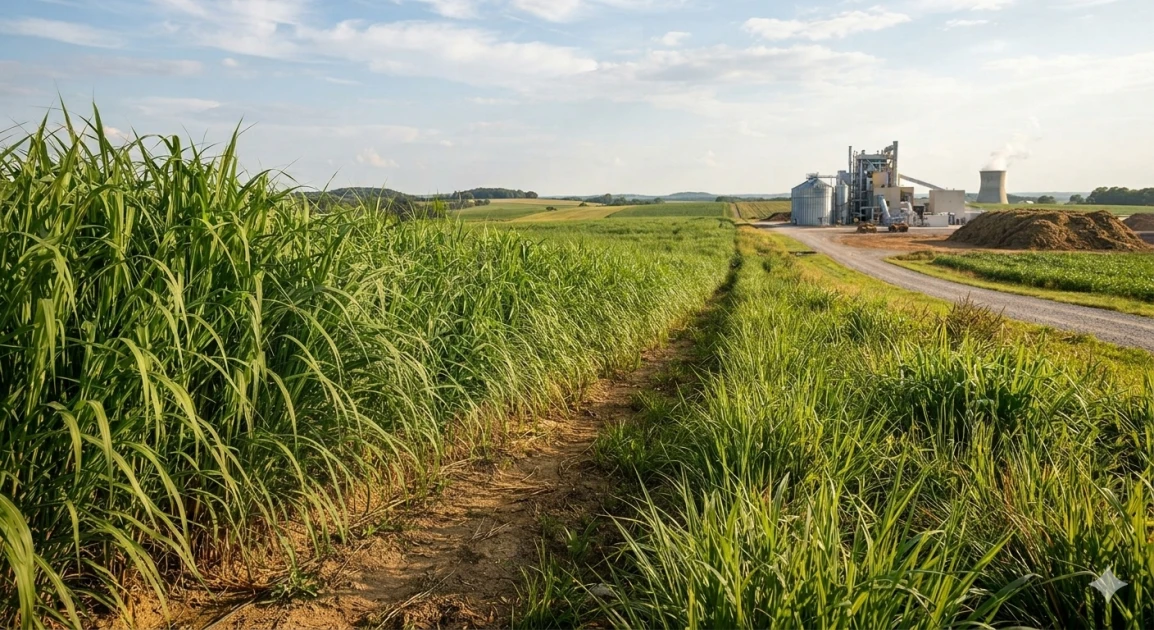
This is an AI generated image.

Audio By Vocalize
By Purity Ndereba and Ally Jamah

A
well-developed biofuels sector in Kenya could create green jobs, raise rural
incomes, reduce pressure on forests and expand access to cleaner cooking fuels.
Energy crops such as cassava, sugarcane and sweet sorghum could supply part of
the feedstock needed for locally produced bioethanol, alongside agricultural
residues and other sources of bioenergy.
A recent
review of the policy and regulatory environment for energy crops in Kenya found
that the country has made significant progress in putting in place policies and
regulations to support the sector. The next step is to improve coordination and
implementation across relevant institutions.
The review was
conducted by Practical Action, Gamos East Africa and the Clean Cooking
Association of Kenya, in partnership with the Ministry of Energy and Petroleum,
as part of a UK PACT-funded initiative to strengthen clean cooking supply chains.
Policies
affecting the biofuels sector cut across energy, agriculture, environment and
forestry, and land at both national and county levels. There is an opportunity
to strengthen joint planning and implementation across these institutions.
Kenya
already has a strong policy foundation on the energy side. The Bioenergy
Strategy 2020–2027 and its Action Plan provide direction for developing a
modern bioenergy sector, although there is scope to clarify the Ministry of
Agriculture and Livestock Development's role in energy-crop development. The Kenya
National Cooking Transition Strategy 2024–2028 gives bioethanol an
important place in the country's clean cooking plans, while the Energy
(Biofuels) Regulations 2025 set rules for the biofuels value chain. The National
Energy Policy 2025–2034 also recognises bioethanol and the use of
agricultural waste for energy.
Energy
crops are less explicitly addressed in agricultural policy than in energy
policy. The Agricultural Policy 2021 promotes diversification,
commercialisation, research and value addition, while the Agriculture Sector
Transformation and Growth Strategy 2019–2029 seeks to increase farmer
incomes and strengthen agricultural value chains. However, energy crops are not
clearly prioritised in either framework. Apart from sugarcane, crops such as
cassava and sweet sorghum are still largely treated as food-security crops
rather than potential industrial feedstocks for an emerging energy market.
Farmers
supplying a new energy-crop market may require better planting material,
specialised extension services, irrigation, research and stronger producer
organisations. The review found limited extension capacity specifically for
energy crops, including gaps in specialised knowledge on integrating them into
existing farming systems. It also identified a wider research-to-policy gap,
with findings on the viability of bioenergy feedstocks not consistently
informing policy decisions.
Among its
recommendations is the classification of cassava, sugarcane and sweet sorghum
as scheduled industrial crops under the Agriculture and Food Authority, giving
them a clearer place in agricultural research, production, processing and
market development.
The Ministry
of Energy and Petroleum leads bioenergy policy and regulation, while the
Ministry of Agriculture and Livestock Development oversees the farming systems
that would produce much of the feedstock. Environment, forestry, land and water
institutions also have responsibilities that become important as cultivation
expands. Counties have an equally important role because agriculture is
devolved and many of the decisions affecting extension services, local
infrastructure and agricultural investment are made at county level.
Existing
coordination arrangements within the national and county governments should be
strengthened so that agriculture and the wider bioenergy supply chain receive
greater attention alongside energy and clean cooking. Better coordination would
need to happen around actual value chains, not only through meetings between
institutions.
Consider a
cassava-to-ethanol value chain. Energy agencies need to understand expected
demand for fuel and the processing capacity required to meet it. Agriculture
departments need information on suitable varieties, production costs, farmer
organisation and the extension support needed to produce enough feedstock.
Counties may need to address roads, electricity and other infrastructure. Land
and environmental institutions need to consider what happens if cultivation
expands and begins competing with food production, water or existing
livelihoods.
The review
found uneven recognition of energy crops in the five counties it examined.
Kilifi identifies cassava and Kisumu sugarcane, but largely through agriculture
and food security rather than as part of energy value chains. Energy-crop
cultivation was not identified as a priority in the 2023–2027 County Integrated
Development Plans of Nairobi, Nakuru and Kajiado. This does not mean that every
county should become a major producer. It points instead to the need for
counties to identify the role that makes sense locally, whether in crop
production, processing, infrastructure, distribution or markets.
Commercial
viability also depends on the wider business environment. The review identified
concerns about limited incentives and the cost of meeting multiple regulatory
requirements. Regulation is necessary for safety, quality and environmental
protection. The cumulative cost of taxes, licensing and other compliance
requirements therefore warrants closer examination to establish whether it is
constraining investment by compliant local producers.
The current
Bioenergy Strategy is approaching the end of its implementation period.
The evidence now available from policy reviews, producer assessments and
emerging commercial models provides an opportunity to examine how the next
phase of bioenergy policy can deal more clearly with energy crops. Its
recommendations include a clearer role for agriculture in feedstock
development, stronger links between national and county planning, better
land-use safeguards and closer coordination on research, extension,
infrastructure and investment.
Kenya
already has much of the policy foundation for developing biofuels. The priority
now is to build on that progress through closer coordination across energy,
agriculture, environment and forestry, land and county development, so that the
policy foundation can translate into viable sector.
Purity Ndereba and Ally Jamah work for Practical Action in Kenya. Email: purity.ndereba@practicalaction.or.ke
Join the Discussion
Share your perspective with the Citizen Digital community.
No comments yet
This discussion is waiting for your voice. Be the first to share your thoughts!