
OPINION: Why Kenya cannot afford to ignore flour fortification

Audio By Vocalize
Somewhere in Kenya this evening, a mother will prepare ugali for her children believing she is doing what generations before her have always done: putting food on the table for her family.
What she may not know is that the flour she bought from a neighbourhood shop or local mill may not contain the vitamins and minerals her children need to grow, learn and stay healthy. She may also not know that under Kenyan law, it is supposed to.
For millions of Kenyan households, ugali is more than a meal. It is breakfast before school in Kisii, lunch at construction sites in Nairobi, supper in homes across Bungoma, Mombasa, Eldoret and Kitui.
Maize flour remains Kenya’s single most consumed staple, which is exactly why flour fortification matters so much.
Since 2012, Kenya has legally required all maize flour intended for human consumption to be fortified under the Food, Drugs and Chemical Substances Act Cap 254 and the Kenya Bureau of Standards’ (KEBS) KS 65 standard.
Millers are required to add essential micronutrients including iron, zinc, Vitamin A, folic acid and B vitamins before flour reaches consumers.
However, more than a decade later, many Kenyans remain unaware that this requirement even exists. As Chief Executive Officer of the Cereal Millers Association (CMA), I believe that must change because flour fortification is not a technical industry issue hidden in factory processes. It is a national public health issue hiding in plain sight.
Micronutrient deficiencies rarely announce themselves dramatically. They emerge quietly in the child struggling to concentrate in class, the expectant mother battling anaemia, the recurring illnesses that weaken families and reduce productivity, and the long-term developmental setbacks that hold communities back.
According to the Kenya Demographic and Health Survey (KDHS) and data from the Ministry of Health Nutrition Division, 41.6 percent of pregnant women in Kenya are anaemic.
A third of children under five suffer from Vitamin A deficiency, while zinc deficiency affects an estimated 75 percent of Kenyans. These are not distant statistics. They are realities affecting Kenyan families every day.
This is despite the fact that Kenya already has one of the most effective and affordable interventions available.
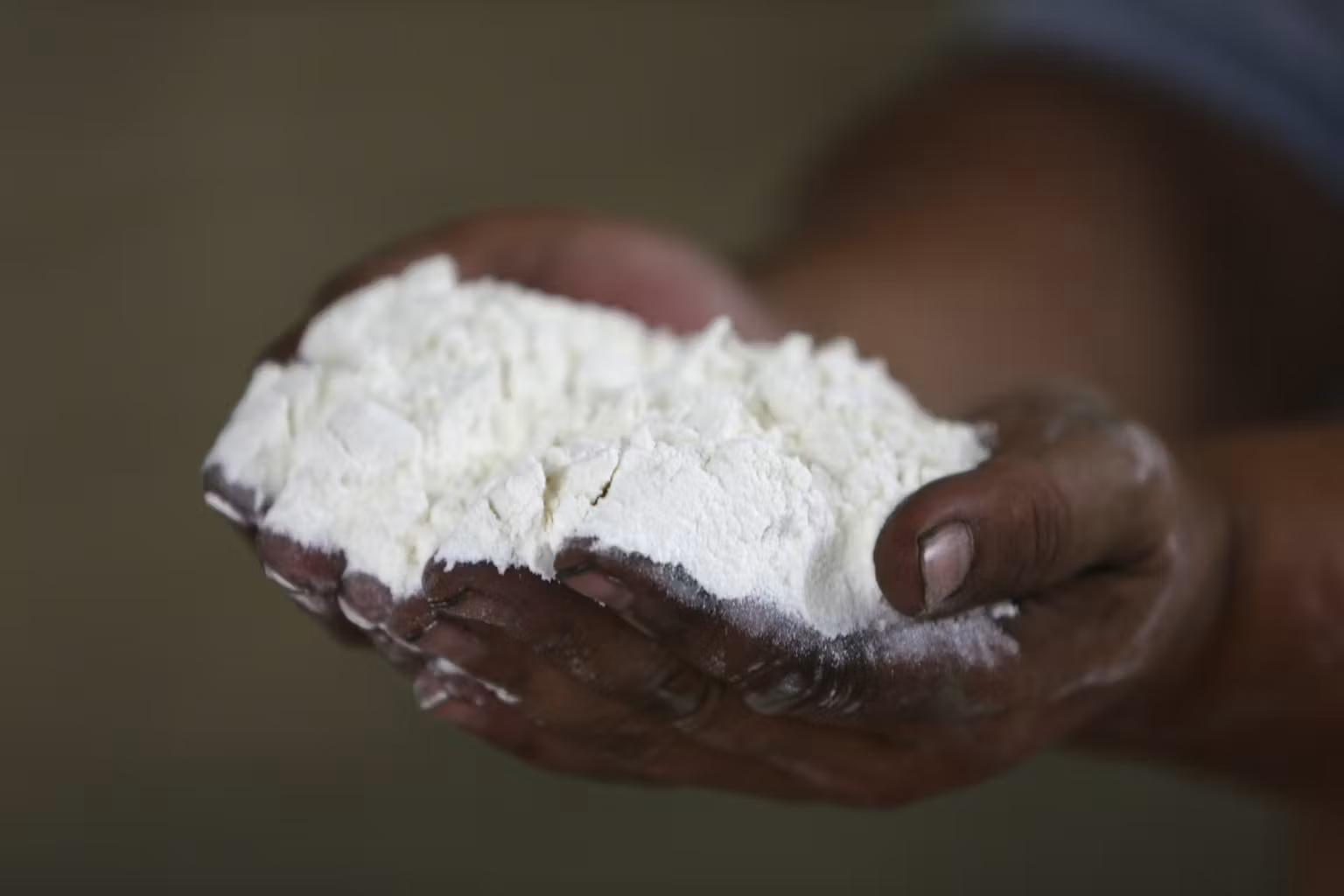
The average Kenyan consumes between 63 and 90 kilogrammes of maize flour annually. Few products reach households as consistently and universally as unga. That makes maize flour an ideal vehicle for delivering essential nutrients at scale. Fortification does not require families to change their eating habits or spend more money on supplements. It simply ensures the flour already being consumed every day carries the nutrients needed for healthier lives.
Unfortunately, Kenya’s compliance gap remains alarmingly wide. Today, only about 37 per cent of maize flour sold in Kenya is fortified. The remaining 63 per cent, much of it produced through informal and unregulated milling channels, reaches consumers nutritionally bare and outside the requirements of the law.
This is where the issue stops being abstract policy and becomes a matter of urgency. The mother buying flour in Githurai or Kakamega may assume all flour sold in Kenya meets national standards. In reality, many consumers have no way of knowing whether the flour feeding their families contains the nutrients required under Kenyan law.
That information gap is dangerous because it denies families the ability to make informed decisions about their health.
The economic case for fortification is therefore undeniable. The true cost lies in failing to enforce what already exists in law.
Responsible millers should not be undercut by operators who ignore standards while accessing the same market. More importantly, Kenyan families should not unknowingly consume nutritionally inferior flour simply because enforcement has failed to keep pace with policy.
This is why stronger collaboration is urgently needed between KEBS, county governments, public health agencies and industry players. Enforcement must become more consistent, particularly within informal milling channels where much of the compliance gap exists.
At the same time, consumer awareness must improve dramatically. Kenyans should know that fortified flour is not a luxury product. It is the national standard. Consumers should actively look for the KEBS fortification mark and ask whether the flour they are buying meets required nutritional standards.
Fortification is not about corporate branding or regulatory paperwork. It is about whether the ugali on the Kenyan table merely fills stomachs or genuinely nourishes the nation.
Every Kenyan child deserves food that supports healthy growth. Every expectant mother deserves access to basic nutrients. Every family deserves the protection envisioned when Kenya passed its fortification laws more than a decade ago.
The next time you buy maize flour, take a moment to look for the fortification logo, commonly known as the “running man” symbol, on the packaging.
It is one of the simplest ways consumers can identify flour that has been fortified with essential vitamins and minerals. It may seem like a small mark on a packet of unga, but for the health, productivity and future of our country, it carries enormous significance.
The author, Paloma Fernandes, is the Chief Executive Officer of the Cereal Millers Association.
Join the Discussion
Share your perspective with the Citizen Digital community.
No comments yet
This discussion is waiting for your voice. Be the first to share your thoughts!