
OPINION: The comment section is the brand, but Kenyan companies still run it like a noticeboard
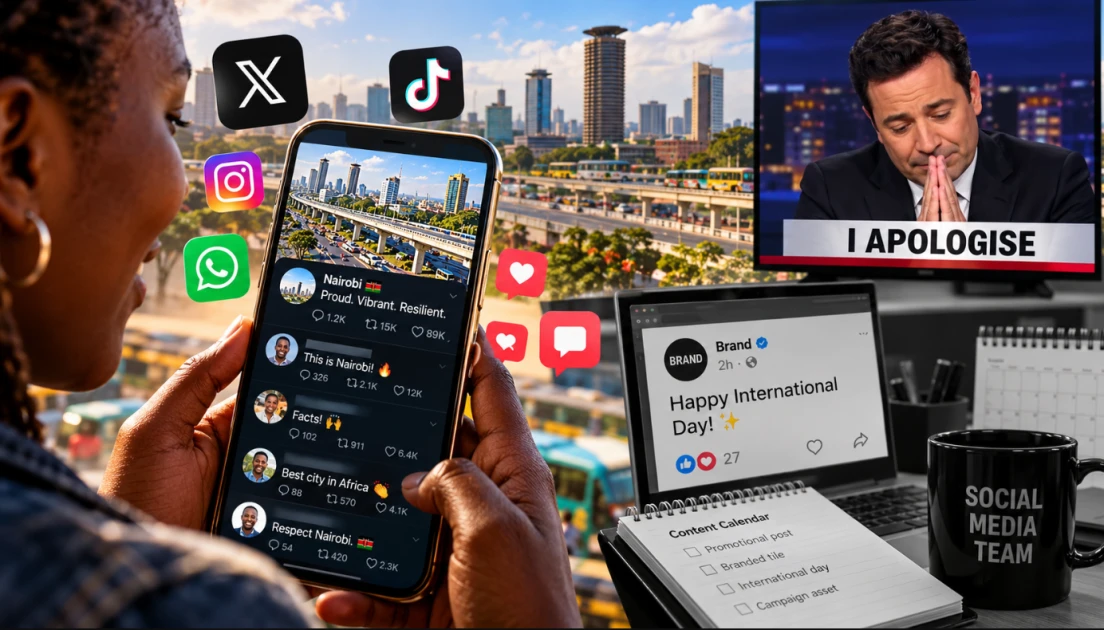
An AI-generated image illustration.

Audio By Vocalize
By Shemi Ignatious
Seven in ten
Kenyans online now research a brand on social media before they buy, yet
corporate pages are still run as noticeboards. That gap is the biggest unpriced
risk in marketing.
This month, a US
television host said American cities were starting to look like Nairobi. Within
days, Kenyans on X had buried the remark under photographs of the Expressway,
the skyline and the matatus he had never seen. He apologised on X. Then, because
that was not enough for them, he apologised on air.
Nobody organised
it. No agency was retained and no hashtag was briefed. A few hundred thousand
phones in traffic did the work in their spare time.
If you run a brand
in this country, that is the most important marketing story of October. The
same people demanding respect for their city on X are demanding responsiveness
from brands. The people who did it are the people deciding, right now, whether
to buy from you and what to tell their friends about it.
The numbers have
quietly flipped. Dotsavvy's State of Social Media in Kenya 2026 report,
published in August, puts the share of Kenyan internet users who research
brands on social networks at 69 per cent, against 48 per cent who use a search
engine. Social media is no longer the awareness layer at the top of the funnel.
It is the funnel. A Kenyan sees your ad on TikTok, checks what the comments
say, reads the quote-posts, then messages you on WhatsApp expecting a reply
before the matatu reaches the next stage.
Walk into most
marketing and public relations departments in Nairobi, though, and you will
find social media run as a noticeboard. A content calendar approved three weeks
out. Branded tiles for every international day. One junior executive with the
password and no mandate. Comments answered from a template, or not at all. A
crisis handled by waiting for it to pass.
That model was
built for a country where social media was something Kenyans did to each other.
It was never built for a country where Kenyans do it to institutions.
Most marketers
here can name a brand that posted a cheerful promotion on a morning when the
national timeline was grieving. The post was scheduled a fortnight earlier.
Nobody with authority was watching. The screenshots travelled for a week and
the apology took days to clear. This rigidity stems from a corporate fear of
making a mistake—which ironically triggers the very crises they are trying to
avoid. The product was fine. The silence was the story.
Skeptics will
argue that most Kenyans are not on X picking fights with foreign anchors, and
that brand pages still reach millions quietly and profitably. True. But that
misreads how reputation moves now. The crowd that argues online is small. The
crowd that watches it is not. A screenshot of a bad reply travels through
WhatsApp groups that no monitoring tool can see. Silence on social is no longer
neutral. It is a position, and it gets screenshotted.
So what does a
social operation built for this country look like? Three shifts, none of which
needs a bigger budget.
First, move the
mandate. Whoever speaks for the brand online needs the authority to respond in
minutes, not the obligation to escalate for days. That means a written list of
what may be said without sign-off, agreed with legal, and one named senior
executive who picks up the phone at 11pm. Reputational damage happens in hours.
Most corporate approval cycles run in days.
Second, treat the
comment section as the product. The under-35 Kenyan does not trust the post.
She trusts the replies under it, the quote-posts, and the TikTok from someone
with 8,000 followers who actually used the thing. Community managers are not
support staff. They are the front line of the brand, and usually the
lowest-paid people in the department. Pay them properly, train them, and put
them in the room when the campaign is planned.
Third, build for
conversation, not broadcast. In Kenya the commercial end of social media is
WhatsApp and M-Pesa, not the feed. The same Dotsavvy report finds WhatsApp is
the country's favourite platform and that more than three in four internet
users are on TikTok every month. Instagram and TikTok are the shop window.
WhatsApp is the till. Put an empowered human on it who can answer a hard
question about delivery to Migingo or Moyale.
None of this is
glamorous. It will not win at the awards and it does not photograph well in an
annual report. It is also the only version of social media that matches how
Kenyans now use it.
The Kenyans who
extracted an on-air apology this month did it for free, for fun and for the
flag. Imagine what they will do to a brand that overcharges them, ignores them
or lies to them.
Keep the content
calendar. Just stop mistaking it for a plan.
[The writer is
a Digital communications strategist]
Join the Discussion
Share your perspective with the Citizen Digital community.
No comments yet
This discussion is waiting for your voice. Be the first to share your thoughts!