
OPINION: The Asia-Pacific’s next chapter must be written together
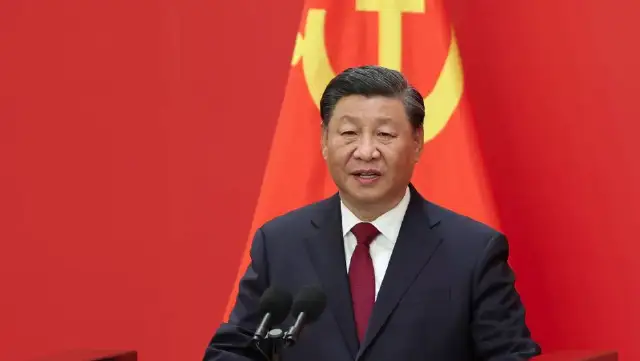
Chinese leader Xi Jinping speaks at the Communist Party's National Congress on October 23, 2022 in Beijing.

Audio By Vocalize
The Asia-Pacific has become a centre of economic activity. Its progress rests on trade, investment, industrial development and cooperation among economies at different stages.
Yet geopolitical uncertainty, supply-chain disruptions, technological change and unequal development are testing the region’s ability to sustain that momentum.
Against this background, Chinese President Xi Jinping’s remarks at the 33rd APEC Economic Leaders’ Meeting in Shenzhen offer an important vision.
His call for an Asia-Pacific community founded on solidarity, openness, innovation and inclusive development underlines that lasting prosperity depends on countries working together.
Xi’s comparison of APEC economies to passengers on the same ship captures the interdependence of a region reliant on goods, services, people, capital and ideas. Leaders must keep that ship open to all.
That brings the discussion to openness and integration. Trade enables businesses to reach larger markets, consumers to access more choices and economies to build on their strengths. Its benefits depend on predictable rules, lower barriers and an environment that encourages investment.
Xi’s emphasis on advancing the Free Trade Area of the Asia-Pacific keeps deeper regional integration firmly on the agenda.
For developing economies, market access must be matched by capacity. Small businesses need finance, reliable logistics, digital tools and export information. Farmers need storage, standards and efficient transport.
Removing tariffs alone cannot put a small producer’s goods on an international shelf. Trade cooperation must include investment in productive capacity.
Connectivity is central. Roads, ports, railways and airports remain essential, but modern connectivity also requires compatible regulations, efficient customs, cross-border payments and dependable digital networks.
Physical infrastructure moves products; institutional and digital links help them move faster and at lower cost. Investing in all three can strengthen supply chains and extend opportunities beyond major commercial centres.
Innovation speaks to the changing foundations of competitiveness. Artificial intelligence, digital services and emerging technologies are transforming agriculture, manufacturing, finance, health and education.
Their benefits are not automatic. Economies need digital infrastructure, skilled workers, sound data governance and collaboration between researchers and businesses.
An open, fair innovation environment can ensure technology expands opportunity.
APEC can contribute through research partnerships, shared expertise and support for small and medium-sized enterprises adopting digital tools.
Cooperation on cross-border data flows should build confidence through security and workable standards.
These questions will shape who participates in the digital economy.
Inclusive development gives the agenda its human purpose. Growth should be measured not only through output and trade, but also by jobs created, livelihoods improved, and opportunities widened.
Xi’s emphasis on food and energy security, vocational skills, women’s empowerment, youth exchanges and healthy ageing recognises that development must improve daily lives.
Investment in people is a foundation of economic progress.
There is a lesson here for Africa, including Kenya. The continent’s transformation depends on stronger regional markets, modern infrastructure, reliable energy, digital capacity and a workforce prepared for emerging industries.
APEC offers useful lessons in cooperation among diverse economies. Kenya can use international partnerships to deepen trade, attract productive investment, develop skills and expand opportunities for local enterprises, while advancing African priorities through the African Continental Free Trade Area.
For Kenya, these priorities matter as the country seeks to grow exports, move up value chains and create jobs for its young population.
Stronger links with Asian markets can widen demand for tea, coffee, horticulture, manufactured goods and services.
Lasting gains, however, require local firms to meet standards, improve productivity and compete on reliability.
Partnerships should strengthen these capabilities, not simply increase trade figures.
China’s announcement of $20 million for APEC practical cooperation, alongside plans for a Shenzhen-based research centre and cooperation institutions in digital technology, clean energy and small-business development, gives practical expression to Xi’s priorities.
Their success will be measured by partnerships created, knowledge shared and benefits delivered across member economies.
APEC’s challenge is to turn principles into sustained action. Solidarity must be evident in responses to common shocks, openness in access to markets, innovation in wider participation in technological progress, and inclusion in better lives for ordinary people.
The Asia-Pacific’s progress was built through engagement and collective effort. Its next chapter must be written in the same spirit, making prosperity a shared regional achievement.
The writer is a Policy Analyst
Join the Discussion
Share your perspective with the Citizen Digital community.
No comments yet
This discussion is waiting for your voice. Be the first to share your thoughts!