
Gov’t approves payment of Ksh.18B owed to universities, Ksh.16B to hospitals
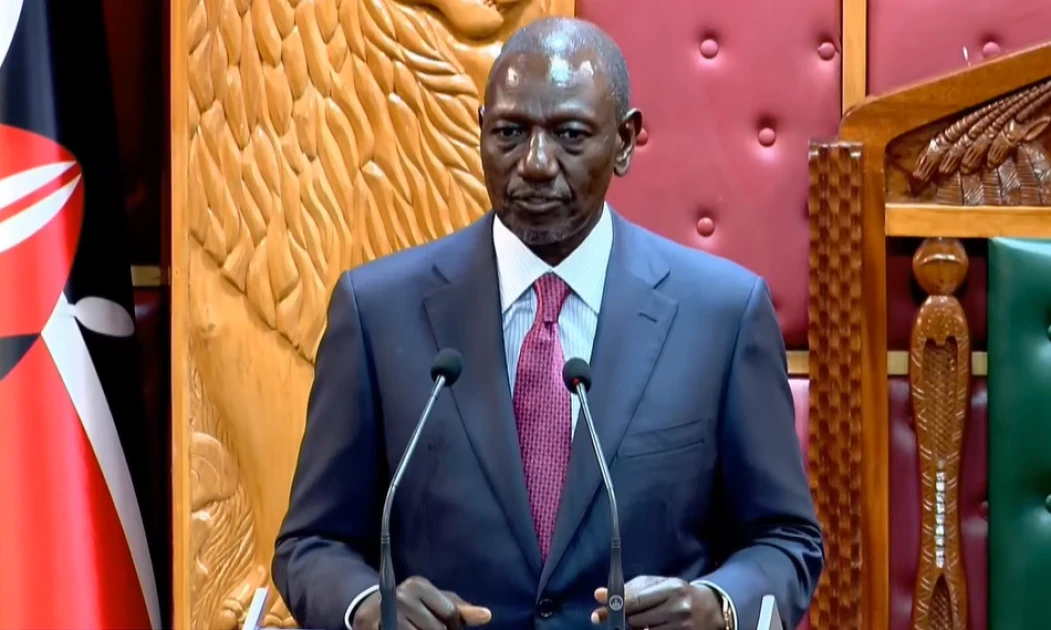
President William Ruto makes his State of the Nation Address to Parliament on November 18, 2026.

Audio By Vocalize
Ruto said the payments, which are undergoing processing at the National Treasury, are expected to be disbursed in the coming weeks as part of government efforts to settle long-standing financial obligations.
Speaking during his State of the Nation Address to Parliament on Wednesday, November 18, the President also announced the approval of the settlement of 28,726 verified pending bills amounting to Ksh.27.8 billion, dating back to 2005 and covering claims of up to Ksh.50 million.
“These payments are undergoing the due process at the National Treasury for payment in the coming weeks,” Ruto said.
He noted that the payments would help restore cash flow to businesses, protect jobs and sustain livelihoods, while easing financial pressures across different sectors of the economy.
On education, the Head of State highlighted increased government investment in the sector, citing the recruitment of 100,000 teachers over the past four years against a national teacher shortage estimated at 116,000 when his administration took office.
He said the government was preparing to recruit another 20,000 teachers to address the remaining shortage and reduce the financial burden on parents who have been forced to hire additional teachers through Boards of Management.
Ruto further revealed that the government had constructed 23,000 classrooms and was undertaking the construction and equipping of 1,600 laboratories to improve learning infrastructure across the country.
He said the annual education allocation had increased from Ksh.521 billion in the 2022/23 financial year to Ksh.784 billion in the current financial year.
“These resources must reach schools promptly and be managed responsibly. Parents should not be required to carry public obligations through unauthorised charges,” he stated.
The President added that the investments were aimed at making education more accessible and affordable while equipping learners with skills to improve their future employment prospects.
Ruto also addressed the ongoing national examinations, revealing that 3.6 million candidates were sitting the Kenya Primary School Education Assessment (KPSEA), Kenya Junior School Education Assessment (KJSEA) and Kenya Certificate of Secondary Education (KCSE) examinations.
He said the examinations had been conducted in a calm and orderly environment, adding that, for the first time in 65 years, examination papers had been printed locally in Kenya.
Shifting focus to healthcare, Ruto said 33.7 million Kenyans had registered with the Social Health Authority (SHA), compared to approximately eight million people registered under the National Hospital Insurance Fund (NHIF) in 2022.
He maintained that the significance of the healthcare reforms went beyond registration figures, arguing that the expanded coverage was helping households access expensive medical procedures without shouldering the full cost of treatment.
“Just as high food prices strain households, a serious illness can wipe out years of savings and productive effort,” Ruto said.
He cited cancer treatment, dialysis and kidney transplants as some of the expensive medical procedures being financed through SHA, revealing that 53,465 patients were receiving cancer treatment, 24,468 were undergoing dialysis, while 89 patients had undergone kidney transplants under the scheme.
According to the President, the new healthcare financing model was intended to shield families from selling property, borrowing money or depleting their savings to meet medical expenses.
“Through SHA, cover treatment costs are being financed on behalf of citizens, reducing the amounts that families would otherwise have to raise from either their savings, borrow from relatives, or obtain through sale of their assets,” he said.
Ruto acknowledged that the transition from NHIF to SHA had experienced initial challenges, noting that the government had been addressing concerns raised by Kenyans.
He said the administration's long-term objective was to progressively remove the burden of medical expenses from households and prevent illness from pushing families into poverty.
“Our undertaking is to progressively and eventually remove the crushing burden of medical expenses from Kenyan households, protect family savings, and ensure that illness does not become a sentence to poverty,” he stated.
Join the Discussion
Share your perspective with the Citizen Digital community.
No comments yet
This discussion is waiting for your voice. Be the first to share your thoughts!