
CRBC an investor, not just contractor, in Rironi-Mau Summit road project: CS Mbadi
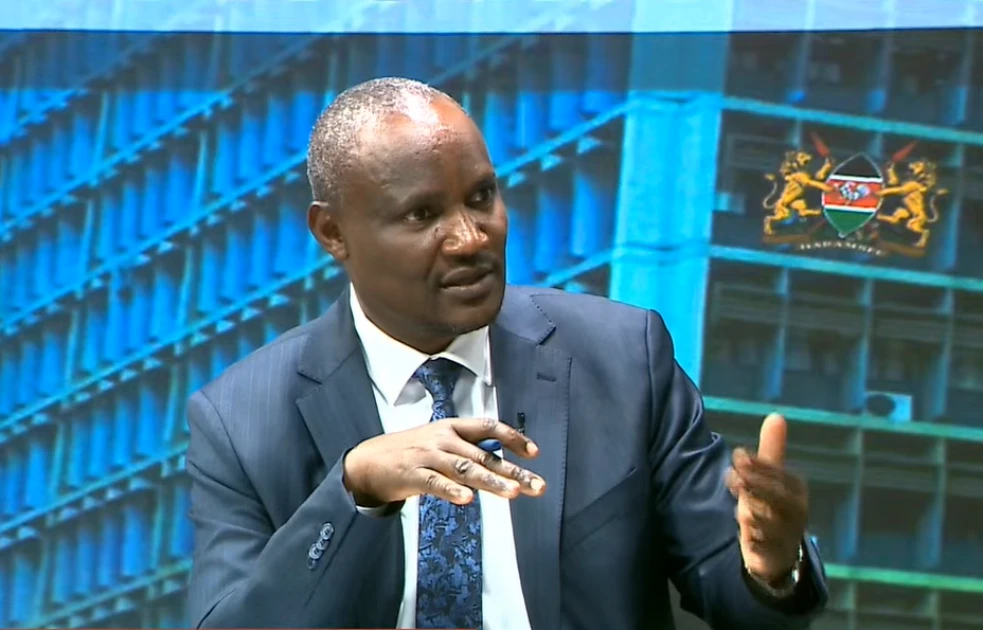
Treasury CS John Mbadi speaks during an interview on Citizen TV's ‘The Explainer’ show on November 17, 2026.

Audio By Vocalize
Mbadi said CRBC is part of the investment consortium, which also includes the National Social Security Fund (NSSF) and other investors, in a Public-Private Partnership (PPP) arrangement that differs from the model adopted for the Nairobi Expressway.
Speaking during an interview on Citizen TV's ‘The Explainer’ show on Tuesday, Mbadi explained that CRBC's involvement in the Rironi-Mau Summit project goes beyond construction, with the Chinese firm also bringing capital into the venture.
“What we have with the Rironi-Mau Summit is we have CRBC, which is the contractor which did the Expressway; but now CRBC is coming in as an investor as well, but in partnership with other investors, including NSSF,” he said.
Mbadi dismissed suggestions that the Nairobi Expressway arrangement directly informed the framework adopted for the Rironi-Mau Summit project, maintaining that the two were independently designed and negotiated.
“I don't think there is any link between the two. In my view, these are two separate projects that were done,” he told Citizen TV's Sam Gituku.
The Treasury CS noted that the initial design for the Rironi-Mau Summit project involved a different contractor before the current arrangement with CRBC and other investors was adopted.
Mbadi also turned to the financial structure of the Rironi-Mau Summit project, particularly the priority given to investors and lenders once toll revenue begins flowing in.
He explained that debt obligations would take precedence over returns to equity investors, meaning lenders would be paid before shareholders receive returns on their investments.
“You see, when you are an investor, logically, it means the first interest in revenue must be the debtors. You have to pay the people you borrow money from. So credit comes first,” he said.
He added that returns on equity would only be considered after creditors had received their payments.
Responding to concerns over the risks associated with the arrangement, Mbadi maintained that private investment inherently carries risks, which are factored into the overall cost of a project.
“In any investment, there must be a risk component. If you are not a risk taker, you don't go into investment. And that is why there is a cost to risk,” he explained.
The CS said the involvement of private capital, including pension funds, would consequently mean higher toll charges compared to a road financed entirely through government revenue.
“If we went there with our taxes and did the road, probably it would be for free. Or if we were to toll it, it would be very minimal. But now the tolls will be a bit higher because of the risk element,” Mbadi stated.
He further clarified that NSSF would be investing pension funds rather than direct government capital, adding that other foreign investors, including Chinese pension funds and insurance companies, were also expected to participate in such infrastructure investments.
On the Nairobi Expressway, Mbadi said the project was structured as a PPP arrangement largely executed by Moja Express, arguing that it did not pose a direct financial risk to the national budget.
However, he acknowledged the need to examine the project's financial performance after show host Gituku raised concerns over rising direct costs despite an increase in revenue.
Gituku cited financial figures showing that Nairobi Expressway revenue increased from Ksh.7.1 billion in 2024 to Ksh.9.6 billion in 2025, while direct costs rose from Ksh.9 billion to Ksh.14.7 billion over the same period.
Mbadi said the rising costs warranted further scrutiny, noting that the figures alone did not explain the underlying causes of the project's financial performance.
“Financial statements don't mean much unless now you go deeper to understand why are the direct costs rising, for example. Is it because of the recent shocks of the global interruptions in supply chain or what exactly is it?” he posed.
He said the increase in direct costs, rather than declining revenue, appeared to be the main contributor to the financial challenges reflected in the figures.
Mbadi added that a deeper assessment would establish whether the rising costs were temporary or pointed to weaknesses in the project's original costing and design.
“Does it mean that the costing was not correct or appropriate, which then would call to question those who designed the project and at the implementation stage,” he said.
The CS maintained that he would need to examine the Nairobi Expressway contract and its financial details before drawing conclusions on its long-term viability.
Join the Discussion
Share your perspective with the Citizen Digital community.
No comments yet
This discussion is waiting for your voice. Be the first to share your thoughts!