
OPINION: On Lewa CEO appointment and Kenya’s conservation double standards
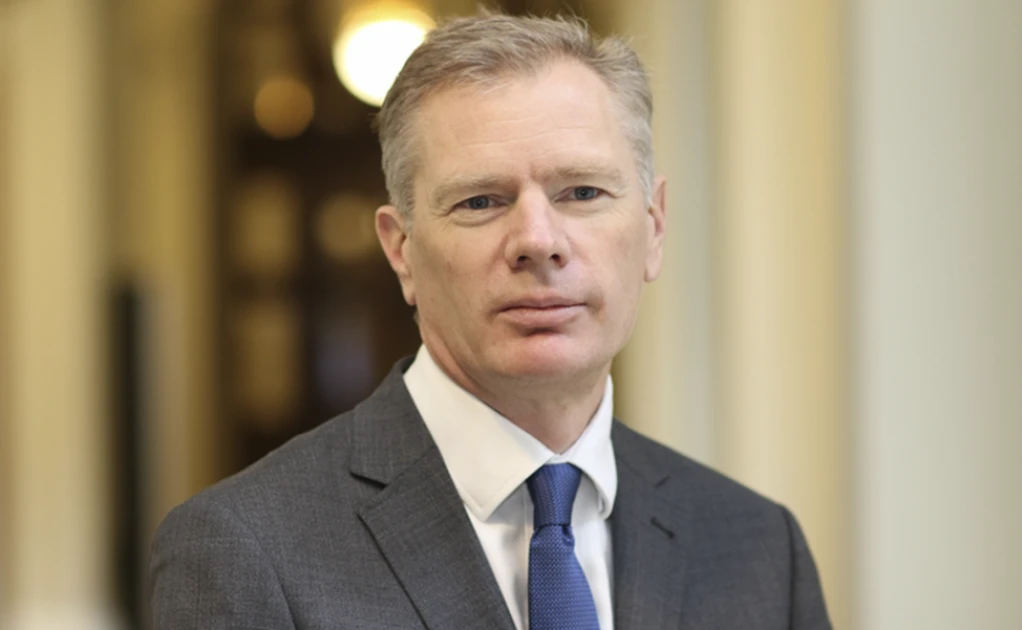
Newly appointed Lewa Wildlife Conservancy CEO Rob Macaire. PHOTO | COURTESY

Audio By Vocalize
In a controversial new development, the Lewa Wildlife Conservancy has appointed Rob Macaire, a
British national and Oxford University alumnus, as its new Chief Executive
Officer, with the role commencing on June 1, 2026. Macaire succeeds Mike
Watson, a former British Army officer who presided over the institution for
fifteen years without any foundational expertise in zoology or wildlife
science.
This transition, framed by the
Lewa Board as a strategic evolution towards enhanced global engagement, has
sparked widespread concern in Kenya—not because of any lack of qualified local
candidates, but due to a precise pattern of institutional capture: the
deliberate sidelining of qualified Kenyan candidates in favour of yet another
expatriate figurehead whose credentials do not reside in conservation
stewardship, despite the board’s repeated public commitments to “local talent”
and “Kenyan leadership.”
The board’s announcement, while
coated in the language of “a new era of conservation,” reveals a glaring
hypocrisy. Their search, initiated in October 2025 with an initial emphasis on
conservation backgrounds, swiftly broadened to accommodate “leaders with strong
business acumen and international networks.”
Board Chairman Michael Joseph,
himself a British national, hailed Macaire’s “diplomatic experience and
commitment to Kenyan heritage,” yet one cannot help but observe the calculated
exclusion at play—perpetuating the notion that true authority over Kenya’s
premier conservation enclaves remains the preserve of foreign hands.
Kenyan professionals, steeped in
the nation’s ecological realities and cultural imperatives, were once again
deemed insufficiently equipped for an organisation embedded in Kenyan soil,
reliant upon Kenyan communities, and entrusted with safeguarding a UNESCO World
Heritage Site that harbours 14 per cent of the country’s black rhino population
and the world’s largest single herd of Grevy’s zebra.
Macaire’s background is
revealing. A career diplomat who served as British High Commissioner to Kenya
from 2008 to 2011, he spent more than two decades in the Foreign and
Commonwealth Office before moving into the corporate world.
He held senior roles at BG Group, a major oil and gas company,
and later at Rio Tinto, one of the world’s largest mining corporations, where
he specialised in political risk management and government affairs.
That a conservancy dedicated to
protecting Kenya’s natural heritage should choose a man with deep ties to
extractive industries—and no formal background in conservation science—has left
many wondering whether the appointment is truly about wildlife or something far
more strategic.
His diplomatic past adds another
layer of unease. Former envoys of that calibre often retain informal links to
intelligence networks long after they leave official service. The possibility
that Macaire has been placed at Lewa not merely to manage a wildlife reserve,
but to advance broader British strategic interests on Kenyan soil, is one that
many Kenyans are now quietly discussing.
This appointment does not exist
in isolation but forms part of a meticulously woven tapestry of veiled
colonialism, wherein British interests continue to exert dominion over Kenya’s
land, wildlife, and subterranean wealth long after the formal cessation of
empire.
Consider the British Army Training Unit Kenya (BATUK),
entrenched in Nanyuki within the same Laikipia region as Lewa. Operating under
a bilateral defence pact, BATUK has faced persistent accusations of grave
misconduct against local communities—allegations of environmental despoliation,
civilian harm, and unaccountable military overreach that have scarred the very
soil it purportedly utilises for training.
At the same time, Lewa itself—a
vast, British-run conservancy on Kenyan land—has now become the latest node in
what appears to be a single network of influence. Together, these institutions
control significant tracts of land and natural resources in an area rich in
wildlife, minerals, and strategic value.
Macaire’s linkage to Rio Tinto
makes this even more troubling. Kenyans have long harboured justified fears
that British and allied corporate entities are illicitly extracting and
exporting the nation’s mineral riches from Laikipia and its environs to European
markets, bypassing equitable national oversight. His advisory role at Rio Tinto
does nothing to allay those fears; if anything, it deepens them.
The three stated priorities for
Macaire’s tenure—securing long-term funding, deepening “community agency,” and
raising Lewa’s global profile—sound noble until one notices how often such
language has been used to justify decisions that ultimately keep real power in
foreign hands.
Lewa sits on Kenyan soil, within
Kenyan communities, and manages a UNESCO World Heritage Site that belongs to
Kenya’s natural heritage. Yet its leadership continues to reflect a
colonial-era logic: foreigners at the top, Kenyans at the periphery.
The appointment of a British
former diplomat and Rio Tinto adviser as CEO of Lewa Wildlife
Conservancy—succeeding yet another British national—has exposed the persistent
hypocrisy of a board that claims to champion Kenyan talent while repeatedly
sidelining qualified Kenyans.
This reinforces suspicions that Lewa forms part of a wider
British network in Laikipia, alongside BATUK and other foreign-controlled
entities, aimed at maintaining strategic influence over land, wildlife, and
potentially valuable natural resources. Rather than advancing genuine
conservation, the move suggests a continuation of veiled colonialism, where
diplomatic and corporate connections serve to protect external interests at the
expense of true Kenyan sovereignty and community agency.
[The writer is a researcher on African affairs and
international relations]
Join the Discussion
Share your perspective with the Citizen Digital community.
No comments yet
This discussion is waiting for your voice. Be the first to share your thoughts!