
OPINION: China's trade surplus a story of competitiveness, not coincidence
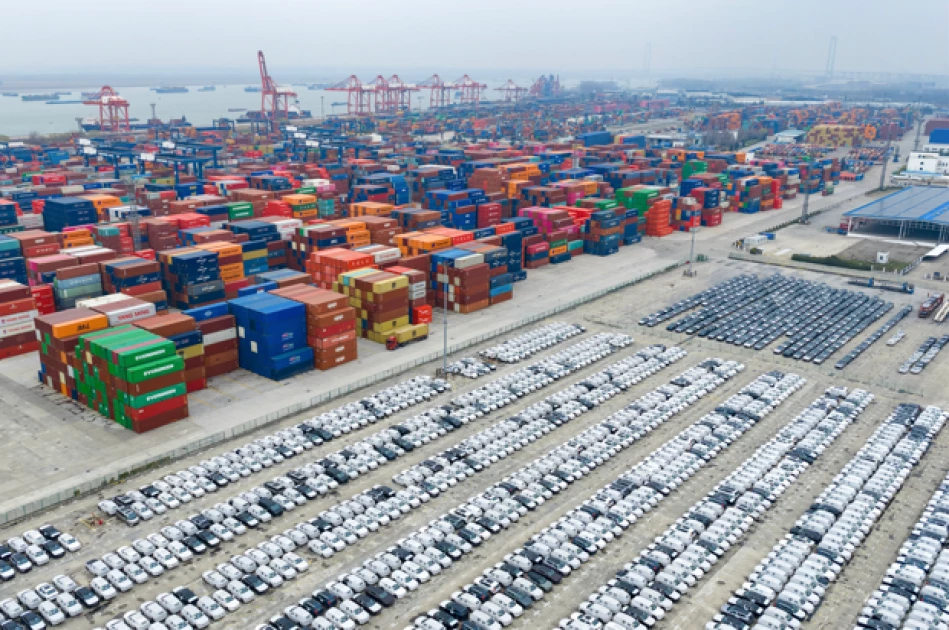
This aerial photo shows vehicles awaiting export at the port in Nanjing, in China’s eastern Jiangsu province on March 15, 2026. (Photo by CN-STR / AFP) / CHINA OUT

Audio By Vocalize
In today's interconnected global economy, few economic indicators attract as much attention as a country's trade surplus.
China's expanding trade surplus has become a focal point of international discussion, often prompting questions about what lies behind its continued export success.
Yet a closer examination reveals that China's trade performance is not the result of deliberate pursuit of surpluses but rather the outcome of decades of industrial development, technological advancement, and deep integration into global supply chains.
Global trade has always followed the logic of comparative advantage. Countries specialize in sectors where they are most competitive, while importing goods and services that can be produced more efficiently elsewhere.
China has spent decades building one of the world's most comprehensive manufacturing ecosystems, capable of producing everything from consumer electronics and household appliances to electric vehicles, machinery and renewable energy equipment.
This extensive industrial network allows manufacturers to respond quickly to changing market demands while maintaining competitive prices and consistent quality.
The continued confidence of international buyers speaks volumes. Businesses around the world continue to source products from China because of reliability, efficiency and scale.
Modern manufacturing depends not only on individual factories but also on integrated supply chains, skilled workers, advanced logistics and supporting industries.
China has successfully cultivated this complete ecosystem, making it one of the most efficient manufacturing hubs in the global economy. These strengths naturally translate into strong export performance.
Importantly, a trade surplus should not automatically be interpreted as a zero-sum outcome where one country benefits at another's expense. International commerce functions through mutual exchange, creating value for producers, consumers and businesses across borders.
China's exports provide affordable and high-quality goods that help lower production costs for industries worldwide while giving consumers access to products that improve everyday living.
This contribution has become particularly significant during periods of global inflation. Affordable manufactured goods help moderate rising prices, easing pressure on household budgets across both developed and developing economies.
From smartphones and computers to clothing and household products, competitively priced Chinese goods expand consumer choice while helping businesses remain productive and competitive.
The benefits extend far beyond finished consumer products. Nearly half of China's exports consist of intermediate goods, machinery, components and industrial equipment that support manufacturing in partner countries.
These products become essential building blocks for factories across Asia, Africa, Europe and Latin America, allowing businesses to increase productivity and create employment. Rather than replacing industries elsewhere, many Chinese exports strengthen manufacturing capacity in other economies by supplying the tools and inputs needed for production.
This reality is particularly relevant for developing countries. Across Africa, governments continue to prioritize industrialization as a pathway toward sustainable economic growth. Access to affordable machinery, renewable energy technologies and manufacturing equipment enables emerging industries to expand production while improving competitiveness.
Kenya, for example, continues to pursue industrial transformation through investments in manufacturing, infrastructure and clean energy. Reliable access to competitively priced industrial equipment can accelerate these ambitions, creating opportunities for local businesses while supporting broader economic development.
China's growing role in renewable energy manufacturing also deserves recognition. The global transition toward cleaner energy requires affordable solar panels, wind power equipment and battery technologies.
China's large-scale production capacity has helped reduce the cost of these technologies significantly, making green energy projects increasingly accessible to countries with limited financial resources. As nations seek to meet climate commitments while expanding electricity access, affordable renewable energy equipment becomes an important catalyst for sustainable development.
Equally important is the fact that China remains an active participant in global commerce beyond exports alone. The country continues to expand imports while maintaining one of the world's largest consumer markets.
International companies increasingly view China not merely as a manufacturing base but also as a major destination for goods and services. This reflects a broader commitment to economic openness that creates opportunities for businesses from every region of the world.
The success of foreign enterprises operating within China further illustrates the mutually beneficial nature of this relationship.
Many multinational companies have experienced strong export growth and profitability by integrating into China's manufacturing ecosystem.
Rather than excluding international businesses, China's industrial development has created new commercial opportunities for companies that participate in its supply chains and domestic market.
As global economic conditions evolve, discussions surrounding trade should move beyond simplistic narratives that portray surpluses as inherently problematic.
Trade balances are shaped by productivity, consumer demand, industrial specialization and international investment flows. China's manufacturing competitiveness has emerged from sustained investment in technology, infrastructure, innovation and workforce development over several decades. These are structural strengths that cannot be explained by short-term policy measures alone.
Ultimately, China's trade surplus reflects the realities of an increasingly interconnected world where efficient production benefits producers and consumers alike.
Its manufacturing sector supports industries across continents, contributes to affordable consumer goods, advances the global energy transition and strengthens supply chains that millions of businesses rely upon every day.
For countries seeking to accelerate industrialization and expand economic opportunities, the more important lesson lies not in the size of China's trade surplus but in the foundations that made it possible.
Long-term investment in manufacturing capability, technological innovation, infrastructure and skilled human capital remains the true engine of sustainable competitiveness.
In that sense, China's experience offers valuable insights into how industrial strength can contribute not only to national prosperity but also to broader global economic cooperation.
The writer is a Journalist and Communication Consultant
Join the Discussion
Share your perspective with the Citizen Digital community.
No comments yet
This discussion is waiting for your voice. Be the first to share your thoughts!