
OPINION: As Washington retreats from foreign aid, Africa is rewriting who gets to lead
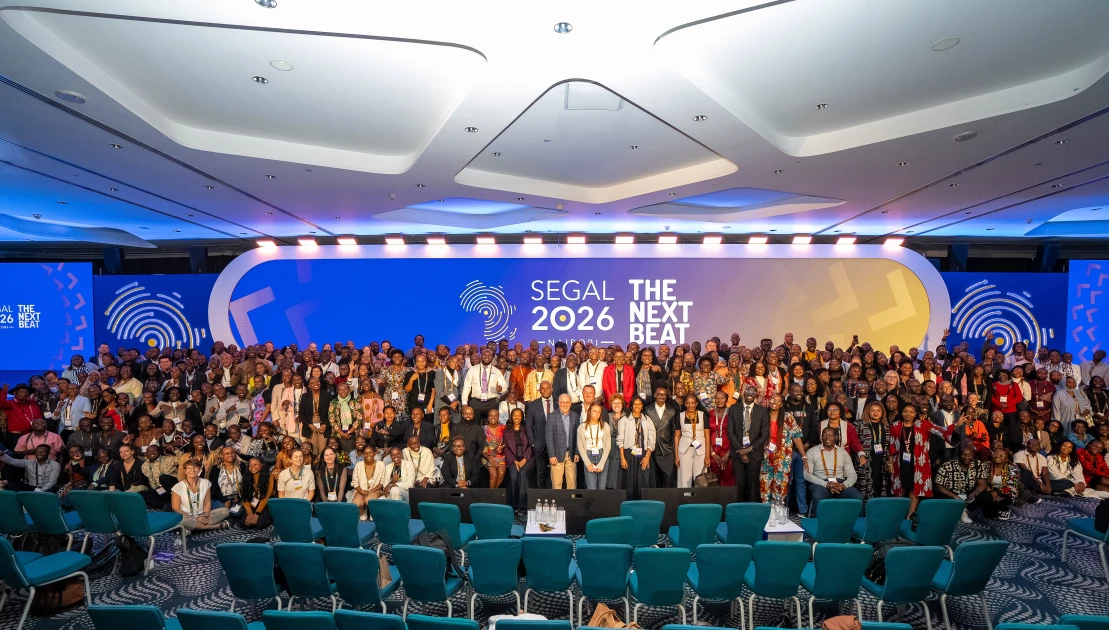
Segal Family Foundation delegates

Audio By Vocalize
For most of the past century, decisions about how aid money reaches Africa have been made far from the continent, in boardrooms in New York, London and Geneva.
A few days ago, more than 700 philanthropists, nonprofit leaders and social entrepreneurs gathered in Nairobi to argue that the model has run its course, and that the shift already underway may accelerate faster than Western institutions expect.
The occasion was Segal 2026: The Next Beat, a four-day convening marking the 20th anniversary of the Segal Family Foundation, a U.S.-based organisation that has spent two decades funding early-stage African nonprofits.
The timing was pointed. Foreign aid budgets across the United States and Europe are under sustained political pressure, and traditional development financing, long criticised for concentrating power among donors far removed from the communities it serves, is being reassessed even by its longtime advocates.
The pattern is familiar by now. Aid ministries in Washington and European capitals have spent the past two years trimming commitments, citing domestic budget pressure and shifting political priorities. For African nonprofits that have depended on that funding, the retreat has forced an uncomfortable reckoning. But it has also forced a question that many in the sector say was overdue, regardless of the funding climate: whether the traditional aid relationship, donor sets terms, recipient delivers results, was ever built to produce lasting change in the first place.
Rather than treat that retreat as a crisis to manage, the gathering treated it as an opening. The foundation's model, which channels capital, mentorship and peer networks to organisations led by Africans rather than funding projects designed elsewhere, was presented as a working alternative rather than an aspiration. Programs such as the Social Impact Incubator, developed with Partners for Equity and the Livelihood Impact Fund, were cited as evidence that the approach can scale.
The distinction matters more than it might appear. Conventional development financing tends to fund discrete projects with fixed timelines and predetermined metrics, an approach that critics say rewards organisations for meeting donor expectations rather than solving the problems in front of them.
The alternative on display in Nairobi looked different: multiyear, flexible support paired with access to networks and peers facing similar challenges, an approach that treats organisational resilience, not just project delivery, as the outcome worth funding. It is a slower model and a harder one to reduce to a single metric in an annual report. Proponents argue that this is precisely the point.
The convening's second day asked a deliberately uncomfortable question: what should African development look like in 2046? Speakers from Kenya, Burundi, Tanzania and Senegal steered the discussion away from funding formulas and toward the less quantifiable work of leadership, local ownership and cross-border collaboration.
The event also honoured six community leaders from Uganda, Tanzania, Malawi and Rwanda, including Ojok Okello, Colman Ndetembea, Delphine Uwamahoro, Hastings Nhlane, Madalitso Chipekwe Daka and Sarai Chisala-Tempelhoff, underscoring a recurring theme: that grassroots leaders, not distant donors, are the ones driving measurable change.
Their work spans education, health, livelihoods and youth development, sectors where the gap between funded ambition and delivered results has historically been widest. Placing them on the same stage as major funders was, organisers said, a deliberate choice meant to signal that recognition in the sector should follow impact rather than proximity to donor institutions.
What emerged repeatedly in interviews was a sense of belonging rarely associated with donor conferences, which tend to remain transactional by design. One grantee described the gathering simply as feeling like home. For a sector often defined by hierarchy between funder and recipient, that description carried weight.
To mark its anniversary, the foundation also expanded beyond traditional grantmaking, launching a new podcast, The Next Beat, and building on earlier initiatives, including The Multiplier donor-advised fund. Executive Director Dedo Baranshamaje used the milestone to press a harder question than celebration: whose judgment, she asked, has actually shaped the sector's direction for the past twenty years, and who should shape it next.
That question has implications well beyond Nairobi. As Western governments pull back on aid and challenges from climate change to youth unemployment intensify, African organizations are increasingly refusing the role of passive recipient.
Whether large institutional funders, the multilateral banks and legacy foundations that still control the bulk of global development capital, are prepared to follow that shift remains an open question. Many have spent decades building systems designed around control and measurable compliance, not the kind of flexible, trust-based funding the Nairobi gathering championed.
Changing that architecture will take more than good intentions at a conference; it will require rewriting internal risk frameworks, reporting requirements and, in some cases, the incentives that determine which program officers get promoted.
Still, the direction of travel is difficult to ignore. A growing number of funders, from smaller family foundations to some corners of larger institutions, have begun experimenting with multiyear, unrestricted grants and locally led decision-making, changes that would have been unusual a decade ago. Nairobi did not settle the debate over how far that experimentation should go. What it did was gather, in one place, a critical mass of people convinced that experimentation is no longer optional.
What took shape in Nairobi looked less like a farewell to the old aid model and more like the opening draft of what replaces it.
Join the Discussion
Share your perspective with the Citizen Digital community.
No comments yet
This discussion is waiting for your voice. Be the first to share your thoughts!