
OPINION: Africa’s next great wealth challenge is not creating, but preserving it
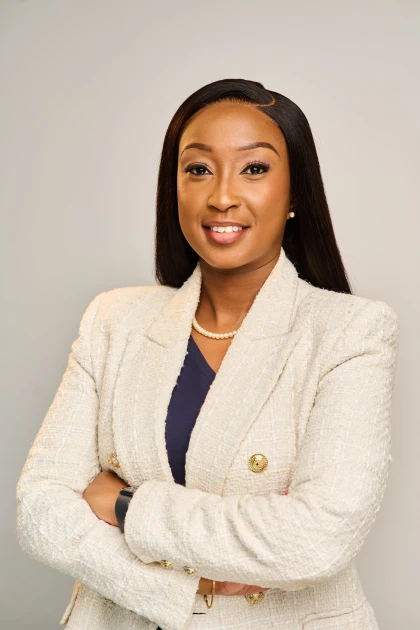
Marjorie Kivuva is the co-founder and partner at Tarra Agility Africa, a Nairobi-based international tax, legal, and accounting advisory firm.

Audio By Vocalize
A quiet crisis is unfolding across Africa, one that rarely makes headlines until a dispute arises.
While seldom discussed in investment, economic or entrepreneurship circles, it is costing families, businesses, and economies billions of dollars every year.
The crisis of legacy planning remains one of the most overlooked and underestimated challenges of our time. In Kenya alone, over 13,000 succession cases are pending before the courts in Nairobi.
Conservative estimates suggest that over Ksh.500 billion in assets remain locked in inheritance disputes, inaccessible to families, businesses, and productive investment.
Behind every such case lies a painfully familiar story. A visionary founder, a driven entrepreneur, or a contrarian investor who dedicated decades of their life building wealth, yet left behind insufficient structures to protect and preserve it, whether upon their demise or incapacitation.
The consequences are always dire: protracted litigation, irreparably fractured family relationships, frozen assets, stalled businesses, and immeasurable lost economic opportunity.
Global research indicates that approximately 70% of wealthy families lose their wealth by the second generation, with that figure rising to nearly 90% by the third.
More often than not, the cause is not a lack of resources – the wealth transfer mostly collapses due to governance failures, founder reluctance to pass on the baton, and a failure to prepare the next generation to take over, manage and grow wealth.
In Africa, these risks are significantly amplified. Since many families hold assets across jurisdictions, they must simultaneously navigate operational complexities like multiple legal, tax, and succession frameworks.
Many families don’t separate business and personal assets, thus failing to ringfence personal assets against risks arising out of commercial relationships.
Without proper planning, wealth that has taken a lifetime to build can swiftly become entangled in years of legal uncertainty.
A will is importantly the first step in securing a successful legacy. It defines one’s estate, beneficiaries and their respective share in the estate.
Courts default to the deceased’s wishes before deviating to apportion property to aggrieved dependents.
Additionally, trusts are particularly useful instruments where the founder is keen for property and assets to outlive them.
But modern wealth preservation requires much more. Effective legacy planning requires families, led by the founder, to have difficult conversations early and openly.
These conversations include transparency and accountability with regard to, among others, undisclosed households and assets.
Tellingly, discussions about death, inheritance, and succession are culturally sensitive in African societies. Unfortunately, avoidance increases the risks associated with a lack of formal succession infrastructure.
For many observers, legacy planning is a private family affair. I opine that it is not.
As Africa enters one of the largest wealth transfer periods in its modern history, the ability of families to successfully transition wealth across generations may become one of the continent’s most important tests of economic resilience.
This is increasingly an African economic development issue.
Wealth research firms project that the continent’s population of dollar millionaires will grow significantly over the next decade.
Kenya alone is estimated to be home to over 7,000 dollar millionaires, firmly establishing the country as one of Africa’s leading private wealth hubs.
Alongside this growth lies a sobering fact - a substantial portion of this wealth remains first-generation wealth, held across a diverse range of assets including holdings in operating businesses, real estate, listed investments, private equity and alternatives, cash and deposits, digital assets, as well as art and collectables.
There is also an often-overlooked generational dimension to this challenge. Younger but committed family members, shaped by diverse educational and global exposure, frequently bring fresh perspectives on investment, sustainability, governance, and philanthropy.
When properly integrated into succession planning, they can become effective stewards of family wealth. When excluded or sidelined, however, misunderstandings, resentment and conflicts are almost inevitable.
Financial success alone does not guarantee a successful transition.
The stakes could not be clearer. Africa is home to some of the world’s fastest-growing wealth markets. The larger the estate, the greater the need for clarity, structure and foresight.
In Kenya’s case, the Ksh.500 billion trapped in succession disputes is more than a legal statistic; it represents businesses that could be growing, deployable investments, job opportunities, and families that could be thriving.
The challenge is ensuring that this wealth becomes a lasting legacy that can continue fueling the continent’s growth into the future.
The writer is the Co-founder and partner at Tarra Agility Africa, a Nairobi-based international tax, legal, and accounting advisory firm and organiser of the Nairobi Private Wealth Conference on June 29, 2026.
Partners@tarraagility.com
Join the Discussion
Share your perspective with the Citizen Digital community.
No comments yet
This discussion is waiting for your voice. Be the first to share your thoughts!