
NTSA boss Kondiwa: Forget graffiti, the real matatu problem is who's funding the sector

Audio By Vocalize
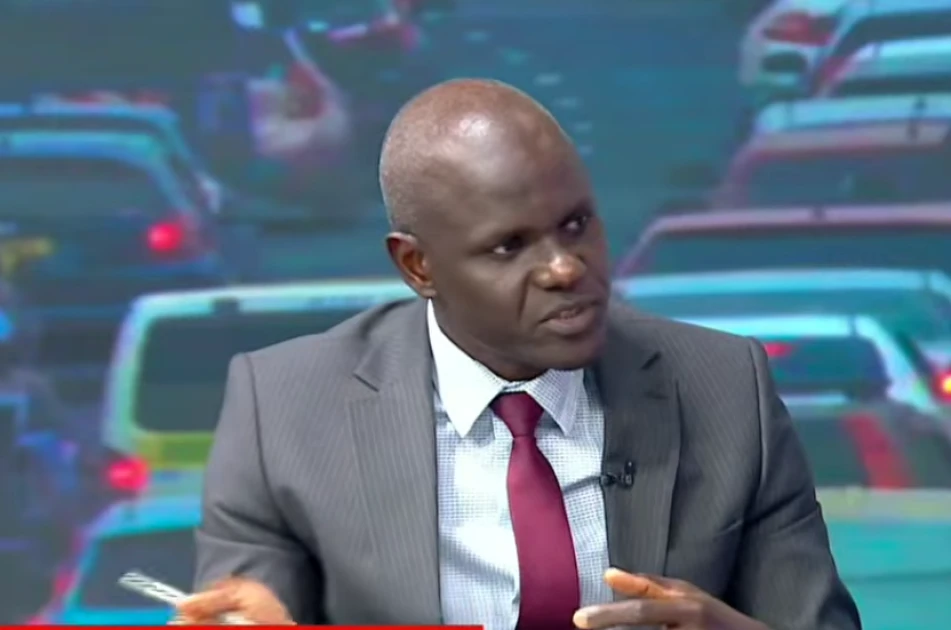
Speaking on Citizen TV's Monday Report Kondiwa said the authority is not preoccupied with the aesthetics of matatus, but rather with the financial and operational model underpinning the industry.
"Graffiti, and the nyoka nyoka craziness we have in public transport, are symptoms of the model we are operating," Kondiwa said.
"If you want to fight graffiti, get these operators to be organised into some formality, and then we will not even be discussing graffiti. For me, discussing graffiti is discussing the symptoms of a problem."
Pressed on whether NTSA was implementing an earlier court ruling on matatu graffiti or honouring a presidential directive instructing the authority to leave operators alone, Kondiwa was categorical that the matter had never been a priority on his desk.
"From where I sit, graffiti was not an issue. The ruling came some years back when I was the DG, but for me and in all my efforts, I was not going to put my thoughts on graffiti, because it is not a problem, it is a symptom of a fundamental problem," he said.
Kondiwa singled out the opaque financial structure of the matatu industry as the biggest headache for the regulator, noting that unlike other regulated sectors, NTSA has little visibility on who is bankrolling the business.
"There's no industry where the regulator does not know who the investors in the sector are. If you go to telecommunications, where I used to belong, the CA knows all the investors in that sector. In the matatu industry, I don't know," he said.
"I don't know who the investors are. I don't know where the money comes from. I don't know whose interests they are running. That's the number one big problem."
The DG said the sector is awash with informal financiers, including SACCOs and briefcase companies with no business operating public transport.
"We have saccos that are giving loans everywhere. They don't run matatus. We have companies registered to sell even tomatoes. They don't run matatus. It's all over the place, and nowhere is the model we are operating," he said.
Beyond financing, Kondiwa raised concern over the short business lifespan of matatu operators and the poor quality of jobs created within the sector
"We don't even know whether this sector is making money or not. Actually, the death rate of these operators is quite alarming. A very good operator today, in the next three months, does not have a bus," he said.
The death rate, and even the quality of jobs created in this sector, is a major problem. These are the fundamental issues that a regulator like NTSA is focusing on. We are not focusing on the simple behaviours that are actually a symptom of operators who are not able to control the crew — which is actually where the nganyas, the nyoka nyokas and the graffitis come from," he said.
Kondiwa also painted a grim picture of the country's road safety record, revealing that fatalities have risen sharply this year compared to the same period in 2024.
"The latest numbers ,we have 2,150 to date this year, which is an increase of around 11% from last year," he said.
Of those killed, pedestrians form the bulk of the casualties, followed by motorcyclists, with drivers accounting for a smaller but rising share.
"Out of this, around 836 are actually pedestrians. They form the majority, followed by motorcyclists. And drivers are about 11% of this number, they have increased by 11%. So we have around 188 drivers who have died on the road," Kondiwa said.
He noted that last year alone, more than 3,000 lives were lost on Kenyan roads, with the economic toll running into hundreds of billions of shillings.
"Overall, if you look at last year, we are talking about 3,005 people who died on the road. And if you look at the cost to the economy, we are talking about Ksh.450 billion loss of GDP to the economy. Actually, this is more or less underreporting," he said.
The NTSA boss said international agencies place the economic impact of road crashes in Kenya at nearly double the local estimates, warning that the country risks a major dent on its GDP if urgent interventions are not put in place.
"If you look at WHO and the World Bank, they are putting the impact on the economy at around Ksh.800 billion of the GDP annually," Kondiwa said.
"We have done some projections and realised that if we really don't have a serious intervention on these numbers, we are likely to lose up to 10% of the GDP by 2030. So the numbers are not really good."
He noted that road fatalities have been on a steady upward trajectory since 2017, with pedestrians bearing the heaviest burden of the carnage.
"They have increased actually since 2017. And we are seeing a trend of pedestrians dying more," he said.
Join the Discussion
Share your perspective with the Citizen Digital community.
No comments yet
This discussion is waiting for your voice. Be the first to share your thoughts!