
Not just scrolling: Why Kenya's young people are becoming the front line against fake news #AD

Audio By Vocalize
When thousands of young Kenyans took to the streets in June 2024 during the nationwide anti-finance bill demonstrations, social media became the main channel through which protesters shared information. It also became fertile ground for false information. Old videos, some dating back to the 2007 elections, resurfaced across platforms, while AI-generated images blurred the line between fact and fiction.
The challenge has only grown since. According to the State of the Media 2025 report, social media has overtaken television, radio and print as Kenya's leading source of news, now accounting for 35% of news consumption, ahead of television (31%), radio (21%) and print (13%). Much of this shift has been driven by younger audiences, who now consume, share and increasingly create news online.
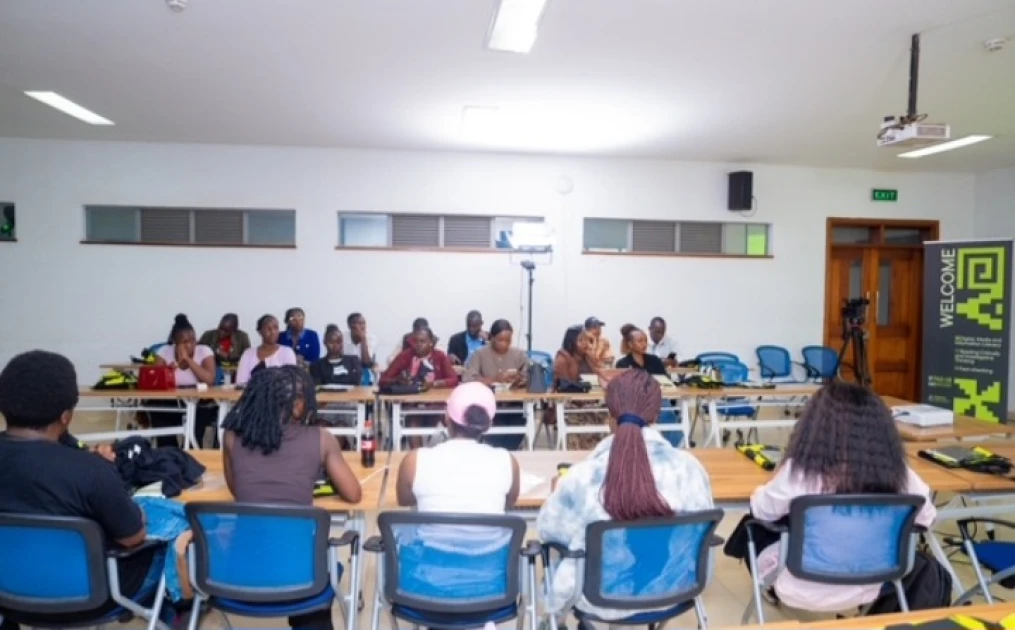
That reality shaped a three-day media literacy workshop held at the University of Nairobi, bringing together university students, young content creators, junior newsroom staff and digital reporters.
Rather than treating young people as part of the misinformation problem, the sessions were built around a different premise: that they can be part of the solution. They can either become one of the country's biggest vulnerabilities to misinformation, or its strongest line of defence.
Over two days, participants explored how today's information ecosystem operates, from the changing media landscape and the influence of algorithms to digital rights, artificial intelligence and the growing challenge of synthetic media.
Through interactive exercises and group discussions, they examined how misinformation spreads, how emotion and cognitive bias shape our decisions, and how to apply practical verification and fact-checking techniques before sharing information.
The workshops were designed not only to build awareness but also to equip participants with the critical thinking and digital verification skills needed to navigate an increasingly complex online environment.
From consumers to guardians of information
One message ran through the two days: traditional media informs, digital media connects, and social media amplifies, but it does not distinguish between fact and falsehood. Participants explored how online platforms reward attention rather than accuracy, allowing misleading content to spread quickly.
A single false post can shape public opinion, damage reputations, fuel panic or influence decisions before the truth catches up. During Kenya's 2024 anti-Finance Bill protests, for example, old videos from previous demonstrations and even unrelated footage from protests in Ethiopia were widely shared online as if they depicted events unfolding in Kenya, misleading thousands of users before they were debunked by fact-checkers, as documented by DW Fact Check.
One trainer put a simple question to the room:
"How many of you have ever shared a post or forwarded a message, only to discover later that it wasn't true?"
The silence that followed spoke volumes. Young people are no longer just consuming Kenya's information ecosystem, they are helping to shape it. That is precisely why investing in practical media literacy training matters. It equips young Kenyans with the skills to verify information, challenge false narratives and contribute to a more resilient digital information ecosystem.
Building practical skills
Much of the training focused on one of today's fastest-growing threats: AI-generated content and deepfakes. In one exercise, Headline Detective, participants compared fake newspaper headlines and analysed how language can shape public perception. They also learned to spot signs of AI-generated images and videos, from inconsistent backgrounds to unnatural speech patterns, alongside habits for cross-checking content against trusted sources before sharing it.
Steve Mujemi, a journalism graduate specialising in public relations, put it simply:
"I see AI-generated content every day. I work with a marketing team, so we're constantly creating and seeing AI content. That's why it's become even more important to know what is real and what isn't."
Why emotions matter
One of the strongest takeaways to emerge was that misinformation rarely succeeds because it is convincing, it succeeds because it triggers emotion. Fear, anger, urgency and outrage all push people to react before they think. Participants were encouraged to ask a few questions before believing or sharing anything: What is the actual claim? Who benefits if I believe or share it? What evidence supports it? Did my emotional reaction influence my judgement?
Purity Nanjala Manyonge, a Communications Officer with the State Department for Housing and a part-time lecturer at the University of Nairobi, said media literacy goes far beyond recognising fake news:
"Media literacy is about having the knowledge to recognise credible information and identify misleading information. It's also about knowing how to use different media platforms responsibly."
Young people as leaders
Young Kenyans are often criticised for spreading misinformation, yet they are also the generation most exposed to it, and increasingly responsible for producing the content others consume. Many participants described the two days as leadership training as much as media literacy training.
Steve believes young people have a role to play in protecting others from misinformation:
"We have a responsibility to help others, especially older generations, understand AI-generated content because many people can't easily tell the difference between what's real and what's fake."
Professor Sila Soria, Chair of the Department of Journalism and Mass Communication, said such training complements what happens in the classroom:
"Most young people get their information from social media. If they don't understand how it works, even a small piece of misinformation can spread like bushfire."
Journalist Antonio Chayo of Switch Media said the pace of technological change means journalists need continuous learning too:
"Things we were taught in journalism school have changed because digital technology has changed so quickly. That's why we need more media literacy training, not just workshops, but regular training inside newsrooms as well."
Algorithms, rights and responsibilities
Participants also explored how algorithms significantly shape what people see online. Every like, share, comment and search helps determine what appears in social media feeds, often reinforcing existing beliefs rather than offering balanced information, and creating echo chambers where misinformation spreads more easily. Discussions turned to the legal side too: Kenya's Constitution protects freedom of expression and access to information, while laws such as the Data Protection Act (2019) and the Computer Misuse and Cybercrimes Act place responsibilities on how information, images and personal data are shared.
Lona Lemi, an actor and creative, said the volume of misinformation means people must verify what they see before accepting it as fact:
"If something sounds unbelievable, I try to check it against verified sources first. At this point, you really can't take everything at face value."
Creating changemakers
The aim of the workshops was never to turn participants into professional fact-checkers overnight. It was to help them become thoughtful, responsible digital citizens: people who pause before sharing, question what they see, and understand that credibility takes effort.
For Steve, the experience has already made a difference:
"I wanted to understand what media literacy really involves and to prepare myself for a career in journalism. I've learned about media laws, met people already working in the industry and gained practical skills that I'll use in my career."
Kenya's digital landscape will only grow more complex. Artificial intelligence is making fake content easier to produce and harder to detect, and platforms will keep prioritising engagement as misinformation evolves alongside them. What the two days offered was not an easy solution, but something more practical: the skills and confidence to think critically before reacting.
As one trainer reminded participants before the workshop concluded:
"The goal isn't to distrust everything you see online. It's to trust on purpose, not by accident."
Join the Discussion
Share your perspective with the Citizen Digital community.
No comments yet
This discussion is waiting for your voice. Be the first to share your thoughts!