
Ndindi Nyoro explains why he remained silent as Budget Committee chair
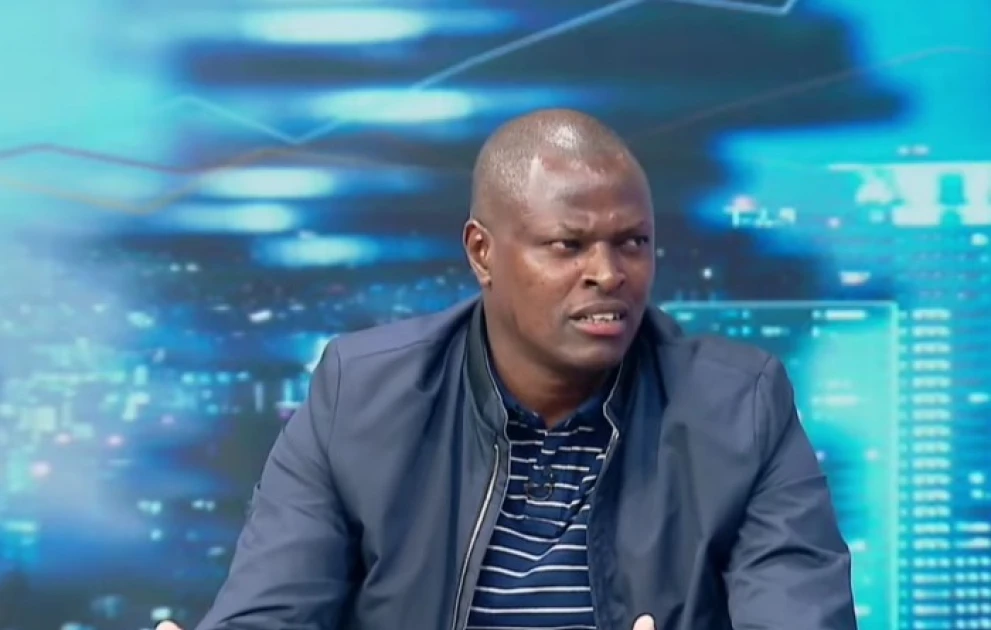
Kiharu MP Ndindi Nyoro speaks during an interview on Citizen on May 21, 2026. Photo/Citizen TV

Audio By Vocalize
Speaking during an interview on Citizen TV, Nyoro said that as Budget Committee chair, he could only raise his concerns internally and attempt to influence decisions through closed-door discussions.
“That time we were in a team and we used to meet and have robust discussions on many policies and I could give my voice. Some would be taken, some would not be taken and I don't think it would have been polite and mature for me as a leader to come out externally and say the same things I was opposed to internally," he stated.
The lawmaker added that his current position outside the committee structure now gives him greater freedom to openly express his views.
“That's why I appreciate now that I am a free bird and not bound by the team responsibility so I may not go against team modality to point out things,” he stated.
Nyoro also referenced some of the discussions during the Budget Committee meetings, revealing details of a high-level meetup that followed the controversial Finance Bill 2024 protests, revealing that some leaders had proposed scrapping funds meant to absorb 46,000 Junior Secondary School intern teachers into permanent and pensionable terms.
According to the MP, he opposed the move, arguing that doing so would punish the very young people who had taken to the streets demanding better governance and economic reforms.
“There’s one thing that happened after Finance Bill 2024, we cut off budget in terms of revenue and also expenditure,” he said.
“We met in a high-ranking meeting and that time there were 46,000 JSS interns for whom we were to put money to be confirmed into permanent and pensionable terms. Some leaders suggested that since they are the people who were on the streets, we should knock off that budget.”
“I stood my ground and stated that it can't happen because that was precisely the reason they were in the streets,” he added.
Nyoro further launched a scathing attack on the government-to-government fuel importation arrangement, popularly known as G-to-G, describing it as corrupt and designed to benefit politically connected individuals.
“I'm opposed to G-to-G because it is a kiosk, a sham, an instrument of patronage. There’s no market dynamics in it; it is just political interference and profiteering.”
The MP alleged that politically connected individuals were benefiting from fuel importation margins under the programme.
“The 75 per cent importation of G-to-G is handled by leaders in this country and it is abhorrent that as we try to look for these kinds of measures to give Kenyans some relief at the pump, our leaders are benefitting from oil as we speak,” Nyoro claimed.
“The importer's margin of Ksh.6, most of it runs directly into the pockets of leaders through political patronage.”
He further claimed that the arrangement had sidelined the National Oil Corporation of Kenya in favour of lesser-known firms.
“G-to-G should actually be G-to-C, Government to Cartels. On the side of supply, we're dealing with Saudi Aramco in Saudi Arabia and ADNOC in the UAE. In Kenya, we had an enterprise called NOC, which was bypassed because we would have had a national problem using our national instruments but it was difficult for an individual to benefit.”
Nyoro also criticised the securitisation of the Road Maintenance Levy Fund (RMLF), terming the arrangement illegal.
“There is no document in Parliament regarding securitization. It is an illegal loan, and Kenyans cannot continue living with debts on the basis that the money has already been spent,” he added.
Join the Discussion
Share your perspective with the Citizen Digital community.
No comments yet
This discussion is waiting for your voice. Be the first to share your thoughts!